
US Federal Reserve Holds Interest Rates Steady Amid Inflation Concerns
What happened
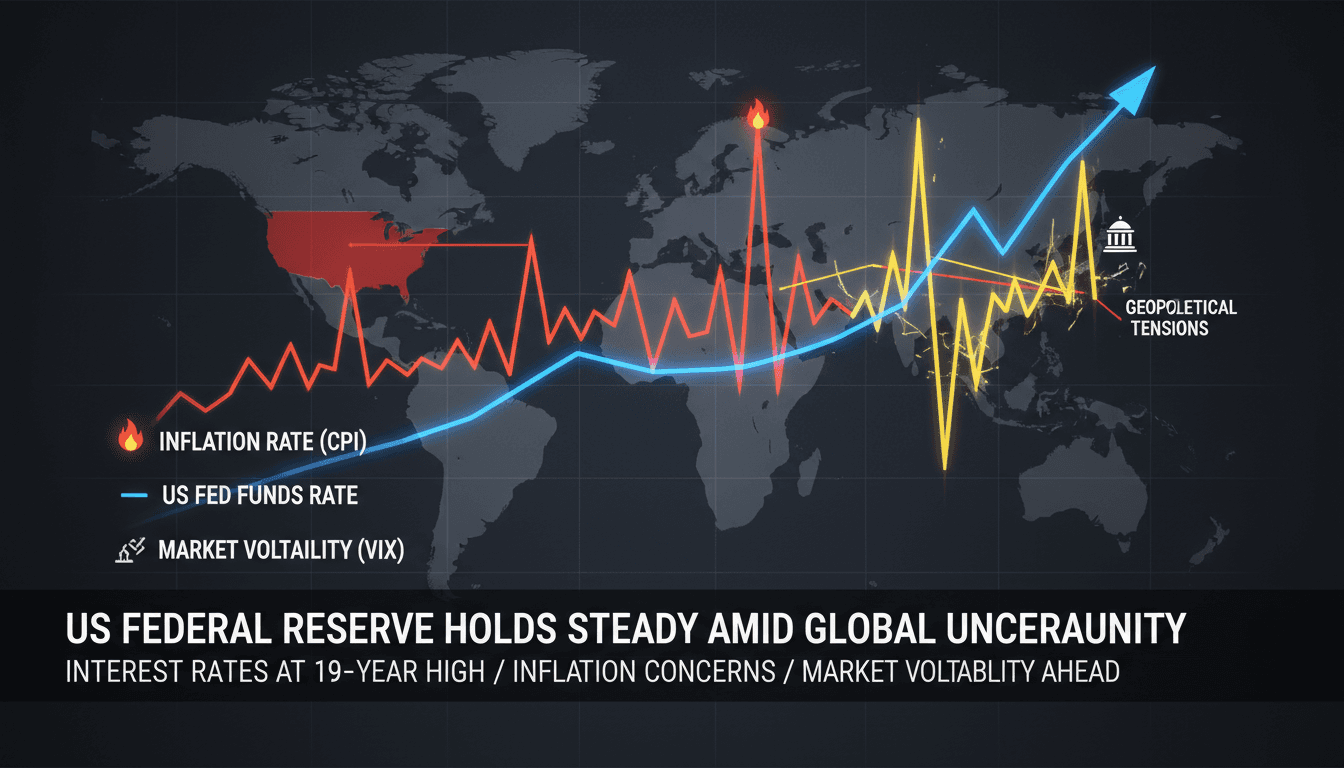
The US Federal Reserve has opted to maintain its key interest rate, resulting in government borrowing costs reaching a 19-year high. This decision comes amid persistent inflation, which is currently reported at 3.5%, significantly above the Fed's target of 2%. The Fed's choice was not unanimous, as it faced three dissents, indicating differing opinions on the appropriate direction for monetary policy.
The ongoing geopolitical tensions, particularly the US-Iran conflict, are contributing to inflationary pressures, complicating the Fed's decision-making process. As the central bank navigates these challenges, the implications for market stability and investor confidence remain significant.
The Context
The current inflation rate of 3.5% reflects a broader economic landscape that has been influenced by various factors, including supply chain disruptions and geopolitical conflicts. The Fed's decision to hold interest rates steady comes at a time when market participants are closely monitoring economic indicators for signs of future policy changes. The internal dissent within the Fed highlights the complexity of the current economic environment and the differing views on how best to address inflation.
As the Fed operates under new leadership, its reliance on economic data rather than clear forward guidance adds another layer of uncertainty. This approach may lead to increased market volatility as investors react to evolving economic conditions and geopolitical developments.
Takeaway
Looking ahead, investors should prepare for potential market fluctuations as the Fed continues to address inflation concerns and geopolitical risks. Monitoring economic data will be crucial for understanding future Fed policy changes, particularly in light of the ongoing US-Iran conflict. Stakeholders should remain alert to how these factors may influence market conditions and borrowing costs in the coming months.
As the Fed navigates this complex landscape, the interplay between economic indicators and geopolitical events will be critical in shaping monetary policy and market stability.
Stock market news, investing ideas, and trading analysis.
"TheStreet provides market news and retail-investor-focused analysis."
— A47 Editor
Fed interest-rate decision rocks Wall Street's inflation fears
The Federal Reserve concluded its July meeting without raising interest rates or providing forward guidance, despite ongoing inflation concerns. Chairman Kevin Warsh emphasized the Fed's commitment to achieving a 2% inflation target, which has not be...
News from the United States including domestic politics, society, and culture.
"The Guardian is known for its progressive editorial stance and in-depth analysis, often advocating for social justice, environmental issues, and liberal values."
— A47 Editor
First Thing: US government borrowing costs hit new high as strikes on Iran resume
US government borrowing costs have reached their highest level since 2007 following the Federal Reserve's decision to maintain its key interest rate steady amid rising inflation concerns. This decision has led to significant declines in stock markets...
International coverage from The Guardian's global desks.
"The Guardian is known for its progressive editorial stance and in-depth analysis."
— A47 Editor
First Thing: US government borrowing costs hit new high as strikes on Iran resume
US government borrowing costs have reached their highest level since 2007 following the Federal Reserve's decision to maintain its key interest rate steady amid rising inflation concerns. This decision has led to significant declines in stock markets...
Editor-curated FT homepage stories spanning markets, business, world, and opinion.
"The Financial Times is a globally respected business publication with a centrist/center-left tone and strong markets focus."
— A47 Editor
US borrowing costs hit 19-year high as Fed defies inflation fears
US borrowing costs have surged to a 19-year high as the Federal Reserve opted to maintain interest rates despite rising inflation fears linked to the ongoing conflict in Iran. This decision has left investors anxious about potential future rate hikes...
Business, markets, economy, and corporate news with strong UAE and regional relevance.
"Emirates 24|7 business coverage tends to center UAE markets, property, regulation, and regional economic developments."
— A47 Editor
Fed's 'hawkish hold' clouds outlook for stocks and bonds
The US Federal Reserve has opted to keep interest rates steady in a range of 3.50% to 3.75%, a decision that has not alleviated market concerns. This 'hawkish hold' was marked by three dissents among policymakers, indicating potential future rate inc...