
Gold prices decline as U.S. Treasury yields rise
What happened
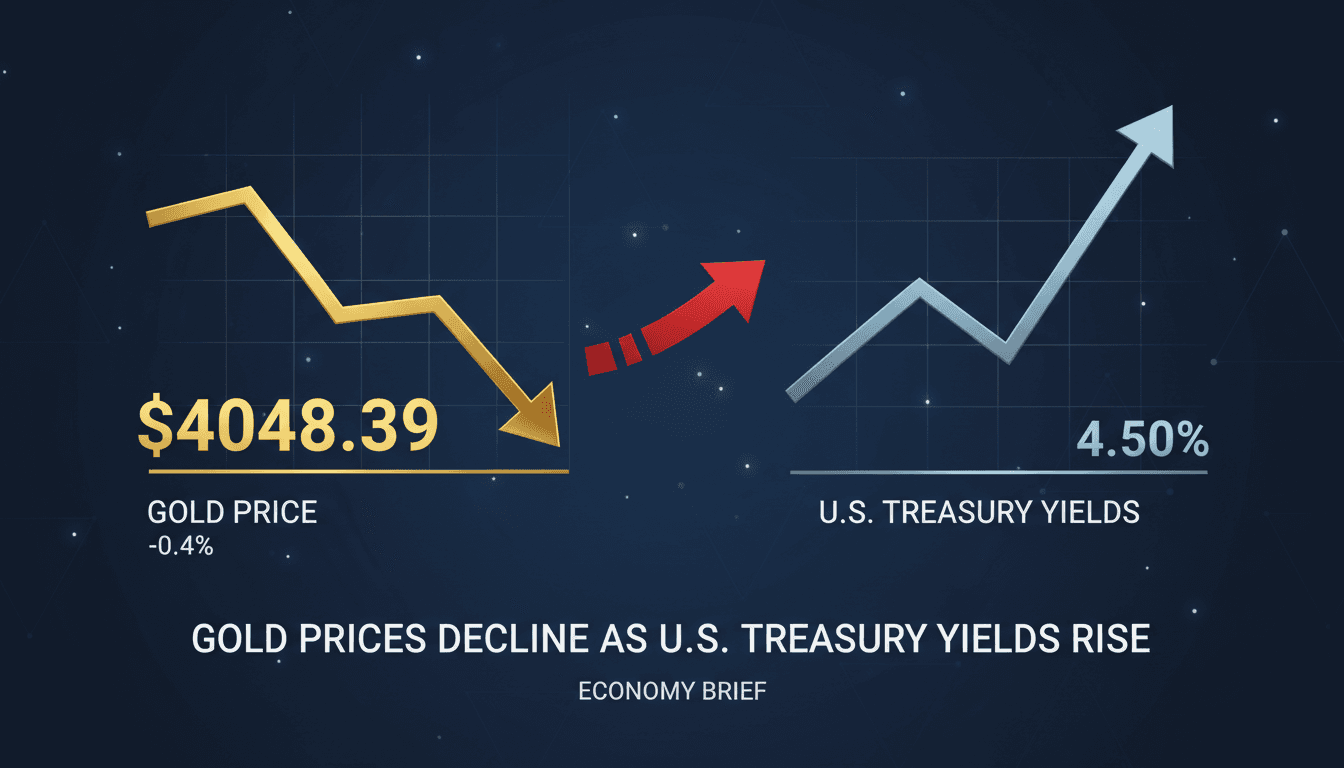
On Thursday, gold prices fell by 0.4% to $4048.39 per ounce, driven by increasing U.S. Treasury yields. This decline follows the Federal Reserve's decision earlier in the week to keep interest rates unchanged, which has prompted investors to reassess their strategies. The market is reacting to comments from Federal Reserve Chairman Kevin Warsh regarding inflation, further influencing evaluations of gold's value.
The current price reflects a broader trend where rising Treasury yields typically diminish gold's appeal as an investment. As yields increase, investors often shift their focus to interest-bearing assets, leading to downward pressure on gold prices.
The Context
The Federal Reserve's recent decision to maintain interest rates has sparked speculation about future monetary policy and its implications for inflation. Investors are closely monitoring upcoming inflation data, which could significantly impact the Fed's stance on interest rates. Rising Treasury yields are a critical factor in this dynamic, as they generally make gold less attractive compared to other investments.
Market participants are now navigating a complex landscape where economic indicators will play a pivotal role in shaping gold prices. The interplay between inflation expectations and interest rates will be crucial for stakeholders in the precious metals market.
Takeaway
Looking ahead, market participants will continue to assess the impact of U.S. economic indicators on gold prices. The upcoming release of inflation data is particularly significant, as it could influence both investor sentiment and the Federal Reserve's future decisions. Further comments from Federal Reserve officials regarding interest rates will also be closely watched, as they may provide additional context for market movements.
As the economic landscape evolves, gold prices may experience fluctuations based on these developments. Investors should remain alert to potential volatility as they navigate this shifting environment.
Pan-Arab political news and analysis.
"Al-Quds Al-Arabi is a London-based Arabic newspaper known for political coverage."
— A47 Editor
الذهب ينخفض مع ارتفاع عوائد سندات الخزانة الأمريكية
Gold prices fell on Thursday due to rising yields on U.S. Treasury bonds, as markets assess comments from Federal Reserve Chair Kevin Warsh regarding inflation control, following the central bank's decision to keep interest rates unchanged this week....
Pan-Arab news coverage spanning politics, business, sports, and regional affairs.
"Asharq Al-Awsat reflects a broad Arab editorial perspective with strong attention to regional geopolitics."
— A47 Editor
الذهب يتراجع مع ارتفاع عوائد السندات وترقب بيانات التضخم الأميركية
Gold prices declined on Thursday due to rising U.S. Treasury yields, as markets continued to assess comments made by Federal Reserve Chairman Kevin Warsh. This downward trend reflects investor concerns regarding inflation and interest rates, which ar...
Arabic-language coverage of international news and geopolitics.
"RT Arabic is a Russian state-funded outlet often criticized for promoting Kremlin-aligned narratives."
— A47 Editor
الذهب يتراجع متأثرا بارتفاع عوائد السندات الأمريكية
Gold prices declined on Thursday, influenced by rising yields on U.S. Treasury bonds and comments from the Federal Reserve Chairman regarding inflation. This drop reflects ongoing market reactions to economic indicators and monetary policy signals.