
Kevin Warsh appointed as new chair of the Federal Reserve
What happened
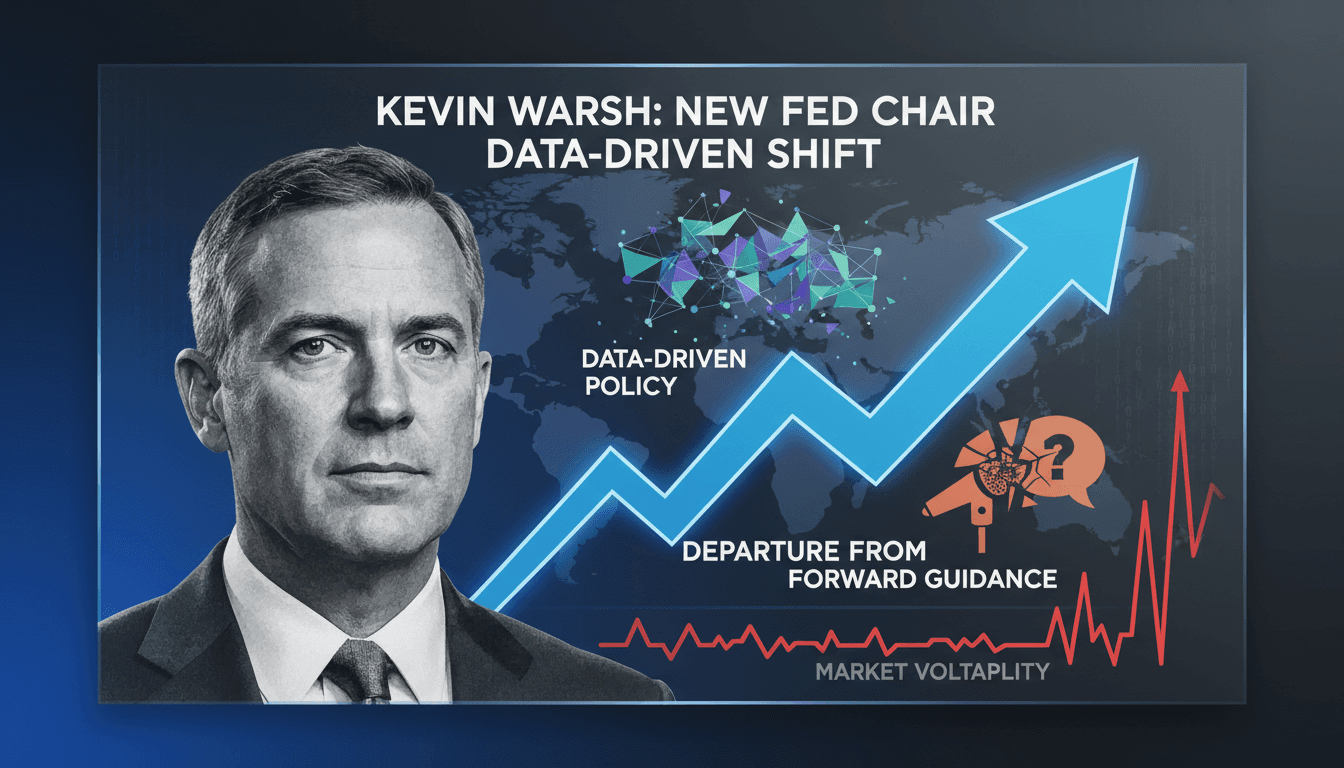
Kevin Warsh has officially taken over as the new chair of the Federal Reserve, marking a significant change in leadership. In his first press conference, he announced a departure from the previous administration's detailed forward guidance, which had been a hallmark of Jerome Powell's tenure. This shift comes amid ongoing confusion regarding inflation measurements, with conflicting figures complicating the economic landscape.
Warsh's strategy emphasizes a more responsive approach to incoming economic data, which could lead to a more reactive Federal Reserve. The uncertainty surrounding inflation rates, particularly the reported figure of 3.7%, highlights the challenges that lie ahead for both the Fed and market participants.
The Context
Warsh's ascension to the role of Federal Reserve chair represents a notable departure from the previous leadership style. His approach is expected to prioritize data-driven decision-making, which contrasts sharply with the detailed guidance that characterized Powell's era. The current economic climate is fraught with confusion regarding inflation, as varying reports complicate the Fed's ability to set clear policy directions.
This transition occurs at a critical time when market participants are grappling with the implications of fluctuating inflation rates. The Fed's shift in strategy could have far-reaching effects on financial markets, as investors adjust to a new normal in monetary policy.
Takeaway
As Warsh implements his new strategy, market participants will need to closely monitor upcoming economic data releases that could influence Federal Reserve policy. The focus will be on how these data points affect the Fed's decision-making process and the broader implications for stocks and bonds.
The transition to Warsh's leadership is likely to create volatility in financial markets, as investors adapt to a more reactive Federal Reserve. Observing market reactions to Warsh's statements and decisions will be crucial in understanding the future trajectory of monetary policy.
Capitol Hill news, legislation, and policy insight.
"The Hill specializes in U.S. politics and policy, with a focus on Capitol Hill developments and a reputation for insider reporting."
— A47 Editor
Kevin Warsh’s mission: reviving the era of monetary restraint
Kevin Warsh has been sworn in as the new chair of the U.S. Federal Reserve, succeeding Jerome Powell, during a ceremony led by President Donald Trump. His confirmation by the Senate, with a vote of 54-45, comes at a time of rising inflation and econo...
Corporate leadership, finance, technology, and market trends.
"Fortune covers financial trends, leadership, and innovation with a pragmatic editorial approach."
— A47 Editor
Kevin Warsh’s first big press conference shines a spotlight on confusion over how the Fed actually measures inflation
Kevin Warsh's inaugural press conference as Chairman of the Federal Reserve highlighted the ongoing confusion surrounding inflation measurements, with conflicting figures suggesting inflation rates of 3.7% and 2.2%. This discrepancy raises questions ...
Global business headlines with AI angles.
"General business outlet that frequently covers AI."
— A47 Editor
Fed's 'Hawkish Hold' Leaves Wall Street Guessing. Stocks and Bonds Could Pay the Price
The Federal Reserve, under newly confirmed Chair Kevin Warsh, has shifted away from the detailed forward guidance previously established during Jerome Powell's tenure, opting instead to rely on incoming economic data to inform future decisions. This ...