
European gas inventories reach lowest level in 17 years amid Middle East conflict
What happened
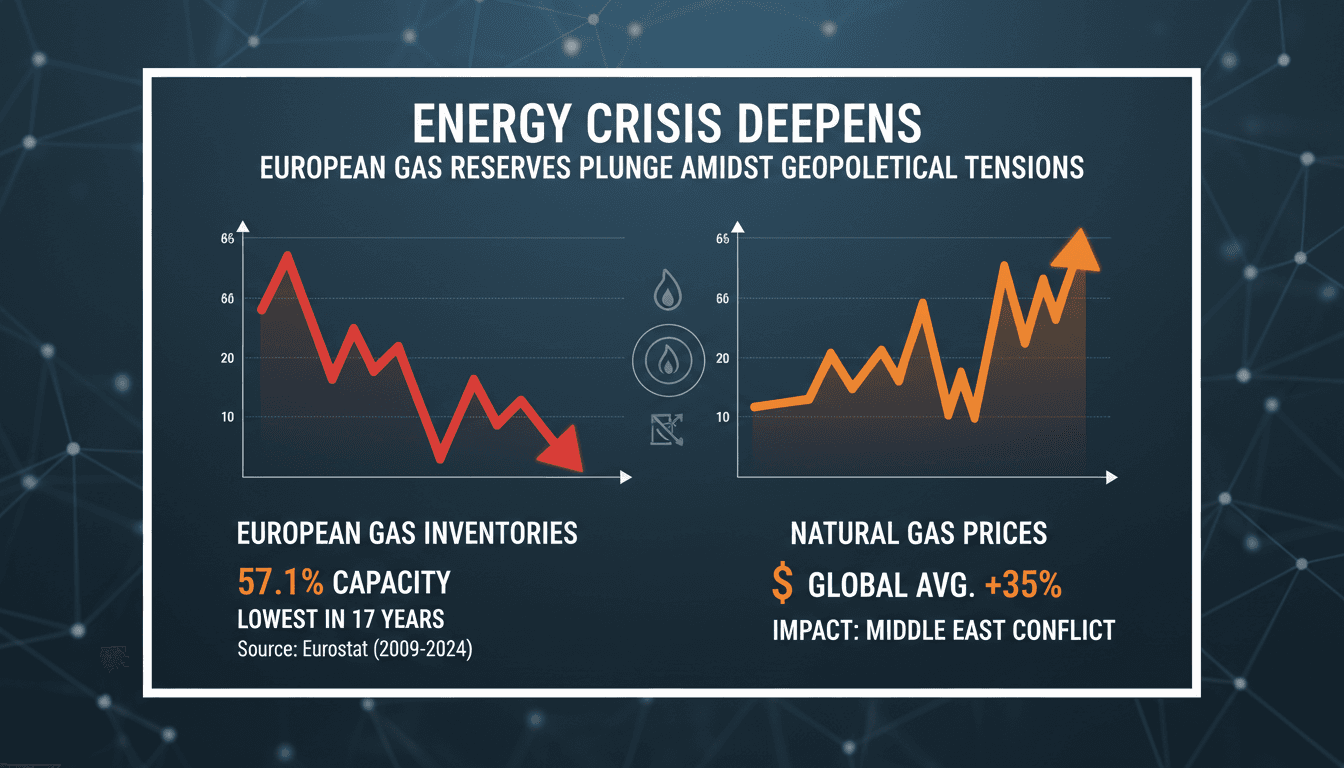
European gas inventories have fallen to their lowest level in 17 years, reaching 57.1% capacity as of August 1, 2026. This significant decline is attributed to rising prices and supply shortages, which have been exacerbated by the ongoing conflict in the Middle East. The current gas prices in Europe have surged by 55% year-on-year as of July 2026, remaining approximately 80% higher than pre-war levels.
This alarming trend has raised concerns among European governments as they prepare for the winter months. With inventories at such a low level, the urgency to secure energy supplies has intensified, prompting discussions about potential strategies to replenish gas storage.
The Context
The geopolitical landscape, particularly the conflict in the Middle East, has had a profound impact on gas supply and pricing in Europe. As tensions escalate, the availability of gas has become increasingly precarious, leading to significant price hikes. The average gas price in Europe reached $637 per 1000 cubic meters in July 2026, reflecting the market's response to these supply challenges.
Governments are now facing mounting pressure to stimulate gas storage replenishment, especially in key markets like Germany. The timing of this crisis is critical, as the onset of winter typically increases demand for heating, further complicating the energy landscape.
Takeaway
As winter approaches, European governments must navigate the complexities of high gas prices and low storage levels. The situation remains precarious, with potential for further price increases if supply issues persist. Stakeholders should monitor gas price trends closely, as well as any government interventions aimed at boosting gas storage.
The coming months will be crucial for ensuring energy security in Europe, and the actions taken now will have lasting implications for both consumers and the broader economy.
Sports reporting with a focus on Saudi and regional competitions.
"Okaz sports coverage is broad and audience-friendly, with strong attention to Saudi teams and leagues."
— A47 Editor
أدنى مستوى لمخزونات غاز أوروبا في 17 عاماً
European gas inventories have dropped to their lowest level since 2009, with a filling rate of 57.1% at the beginning of August, attributed to rising prices due to the ongoing Middle East conflict and supply shortages. This situation poses significan...
Arabic-language coverage of international news and geopolitics.
"RT Arabic is a Russian state-funded outlet often criticized for promoting Kremlin-aligned narratives."
— A47 Editor
مخزون الغاز في أوروبا يسجل أدنى مستوى له على الإطلاق
Recent data from Europe indicates that the average filling level of underground gas storage in the European Union has reached a record low of 57.11% as of August 1. This marks the lowest level ever recorded for gas reserves in the region.
Arabic-language economic and business reporting with strong UAE market relevance.
"Emarat Al Youm business coverage often centers UAE property, banking, consumer issues, and economic policy."
— A47 Editor
أسعار الغاز في أوروبا تقفز 55% خلال يوليو أسعار الغاز في أوروبا تقفز 55% خلال يوليو
Natural gas prices in Europe surged by 55% year-on-year in July 2026, reaching an average price of $637 per 1,000 cubic meters. This significant increase highlights the volatility in the energy market and its impact on consumers and businesses alike.