
Japan and US Conduct Joint Intervention to Support Yen Against Dollar
What happened
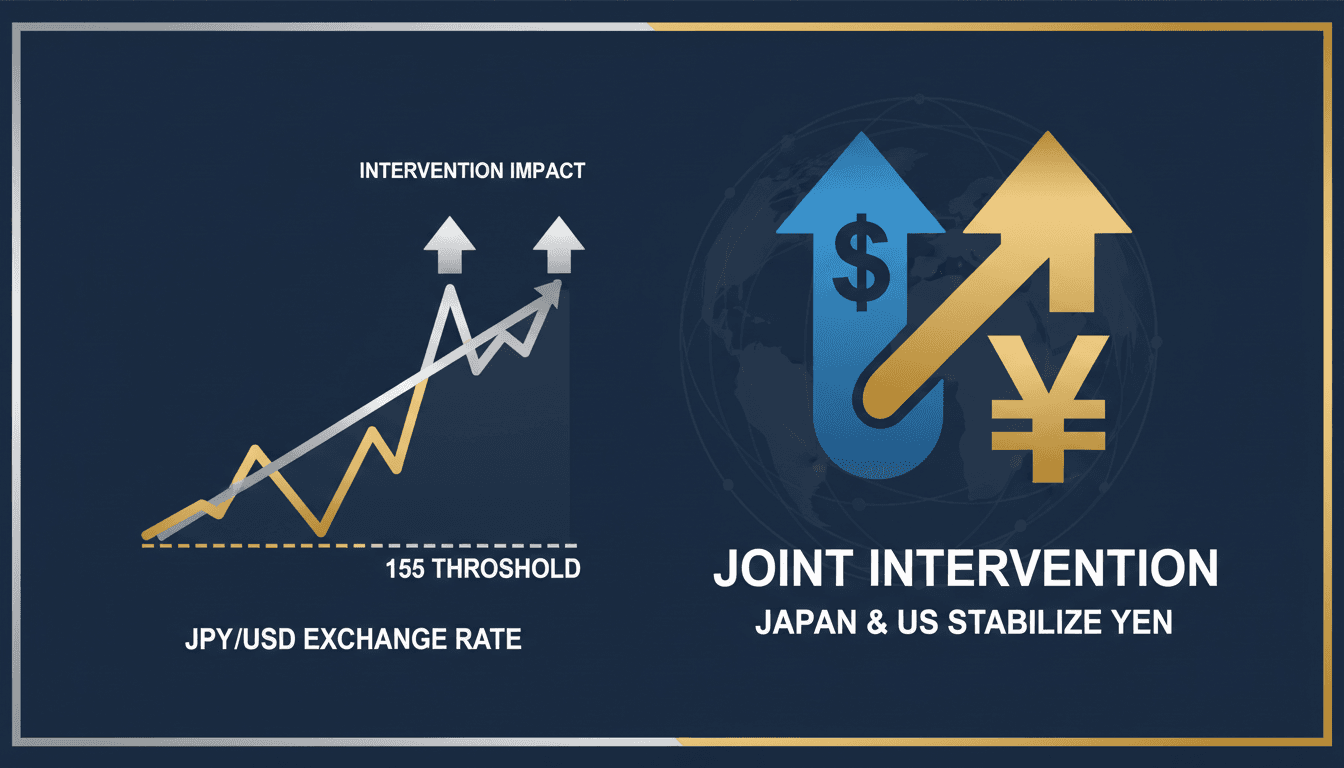
Japan executed a historic joint intervention with the US to stabilize the yen, which has faced significant depreciation against the dollar. This coordinated effort aims to bolster the yen's value, particularly as it approaches the critical 155 per dollar threshold. Analysts are closely watching this level, viewing it as a significant test for the yen's potential recovery.
The intervention reflects ongoing concerns about the yen's strength and the dollar's robust performance in the currency market. As the dollar's reserve currency status evolves, the implications of this intervention could resonate beyond immediate market reactions.
The Context
The dollar's strength is projected to continue, according to a recent Reuters poll, raising concerns among investors regarding the yen's ability to recover. The joint intervention comes at a time when the dollar-yen exchange rate had previously approached the 155 mark during earlier interventions. Analysts suggest that while official interventions may provide temporary relief, the long-term outlook remains uncertain.
As the dollar's status as a reserve currency diminishes, global markets may experience shifts that impact various economies. The collaboration between Japan and the US underscores the importance of coordinated efforts in addressing currency volatility.
Takeaway
In the coming weeks, market participants will closely monitor the yen's performance against the dollar, particularly its ability to break below the critical 155 level. Should the yen weaken further, additional interventions by Japan may be necessary to stabilize the currency. The evolving dynamics of the dollar as a reserve currency will also be a focal point for investors.
As the market adjusts to this intervention, the trajectory of both the yen and the dollar will be crucial in determining future financial stability. Observers should remain alert to potential shifts in global currency dynamics as these developments unfold.
Macro commentary, policy analysis, growth/inflation themes, and global outlooks.
"Contextual macro coverage that complements day-to-day market headlines."
— A47 Editor
US dollar to retain strength, yen intervention no game changer: Reuters poll
A recent Reuters poll indicates that the US dollar is expected to maintain its strength, despite ongoing interventions in the Japanese yen, which has recently fallen to a 40-year low against the dollar. This situation has prompted coordinated measure...
Editor-curated FT homepage stories spanning markets, business, world, and opinion.
"The Financial Times is a globally respected business publication with a centrist/center-left tone and strong markets focus."
— A47 Editor
The real message in the yen intervention
The Japanese yen has recently fallen to a 40-year low against the US dollar, prompting significant intervention measures from both the US Treasury and Japan to stabilize its value. This unprecedented action reflects a coordinated effort to address th...
Global markets, investing, and macroeconomics from a premier financial newsroom.
"Bloomberg is respected for in-depth financial reporting and data-driven analysis."
— A47 Editor
After Historic Intervention, 155 Emerges as Yen’s Next Big Test
Japan and the United States have executed a historic joint intervention in the currency market to stabilize the Japanese yen, which has recently fallen to a 40-year low against the US dollar. This intervention has shifted market focus to whether the ...