
Canada's trade surplus reaches four-year high driven by gold exports
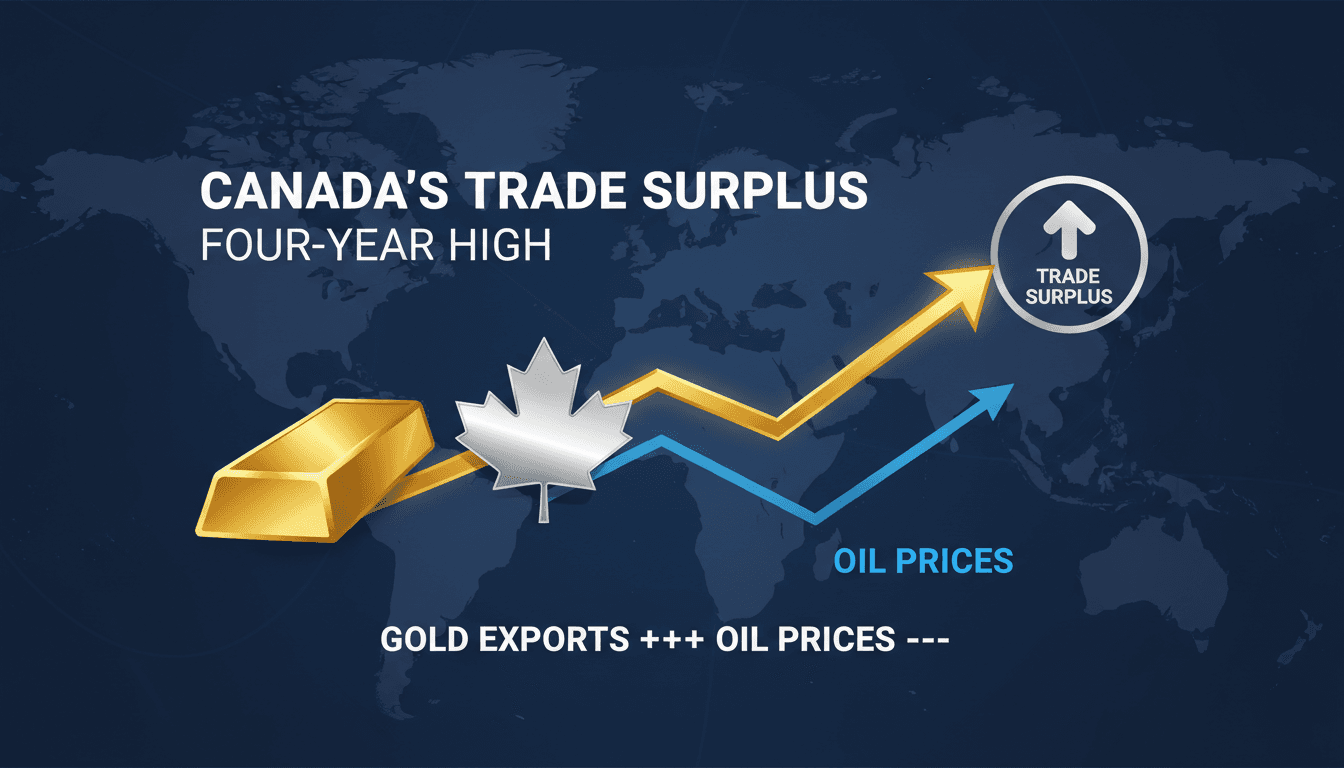
Here's what it means for you.
Canada's trade surplus reaching a four-year high signals a robust performance in the export sector, particularly in gold. This development may influence market dynamics, as strong export figures can bolster the Canadian economy and enhance investor confidence. Policymakers will need to monitor commodity price fluctuations closely, as they could impact future trade balances. The sustained increase in exports, despite declining oil prices, highlights the resilience of Canada's trade structure. This trend may encourage businesses to explore new markets and diversify their export portfolios.
What happened
In June, Canada experienced a significant widening of its trade surplus, marking a four-year peak. This growth was primarily driven by a notable increase in exports, particularly gold shipments, which helped offset a decline in oil prices. The weaker Canadian dollar also contributed to the higher value of exports, while imports remained at an all-time high, indicating strong demand for foreign goods.
The trade surplus expansion reflects a positive shift in Canada's trade balance, showcasing the country's ability to capitalize on global demand for its commodities. This development is particularly relevant as it comes amid fluctuating oil prices, which have historically impacted Canada's trade dynamics.
The Context
Canada's trade surplus growth is set against a backdrop of rising exports, which have now increased for five consecutive months, reaching record levels. The surge in gold shipments has been a critical factor in this expansion, particularly as oil prices have declined. The weaker Canadian dollar has further enhanced the value of these exports, making Canadian goods more competitive in international markets.
Imports hitting an all-time high during this period underscores the robust demand for foreign products, suggesting that while exports are thriving, domestic consumption remains strong. This duality in trade dynamics is essential for understanding the broader economic landscape in Canada.
Takeaway
Looking ahead, Canada's trade dynamics will likely continue to be influenced by global commodity prices and demand, especially for gold and oil. Monitoring trends in these markets will be crucial for assessing future trade balances and economic health. Additionally, shifts in import patterns may emerge as global economic conditions evolve, potentially impacting domestic industries.
The ongoing strength in exports could provide opportunities for Canadian businesses to expand their reach and diversify their offerings. Stakeholders should remain vigilant about currency fluctuations, as these could affect export competitiveness moving forward.
National coverage of politics and current events across Canada.
"Global News is a mainstream Canadian outlet with a centrist editorial stance, focusing on factual reporting."
— A47 Editor
Canada’s weaker loonie helped drive a wider trade surplus in June: StatCan
Canada's trade surplus with the world expanded in June, driven by a rise in exports and a decline in imports, as reported by Statistics Canada. The weaker Canadian dollar contributed to an increase in the dollar value of exports, marking a positive s...
Social/economic commentary and analysis relevant to business and markets.
"WSJ blends data-driven economic insight with commentary on policy and society."
— A47 Editor
Canada Goods-Trade Surplus Widens Slightly With Record Exports, Imports
Canada’s trade surplus with the world has reached a four-year high, driven by a fifth consecutive month of rising exports, particularly in gold shipments, which offset a decline in oil prices and record-high imports.
Social/economic commentary and analysis relevant to business and markets.
"WSJ blends data-driven economic insight with commentary on policy and society."
— A47 Editor
Canada Goods-Trade Surplus Widens Slightly With Record Exports, Imports
Canada’s trade surplus has widened slightly, reaching a four-year high, as exports increased for the fifth consecutive month, driven primarily by a surge in gold shipments. This growth comes despite a decline in oil prices and record-high imports, hi...