
Gold prices surge amid U.S. jobs data and Strait of Hormuz tensions
What happened
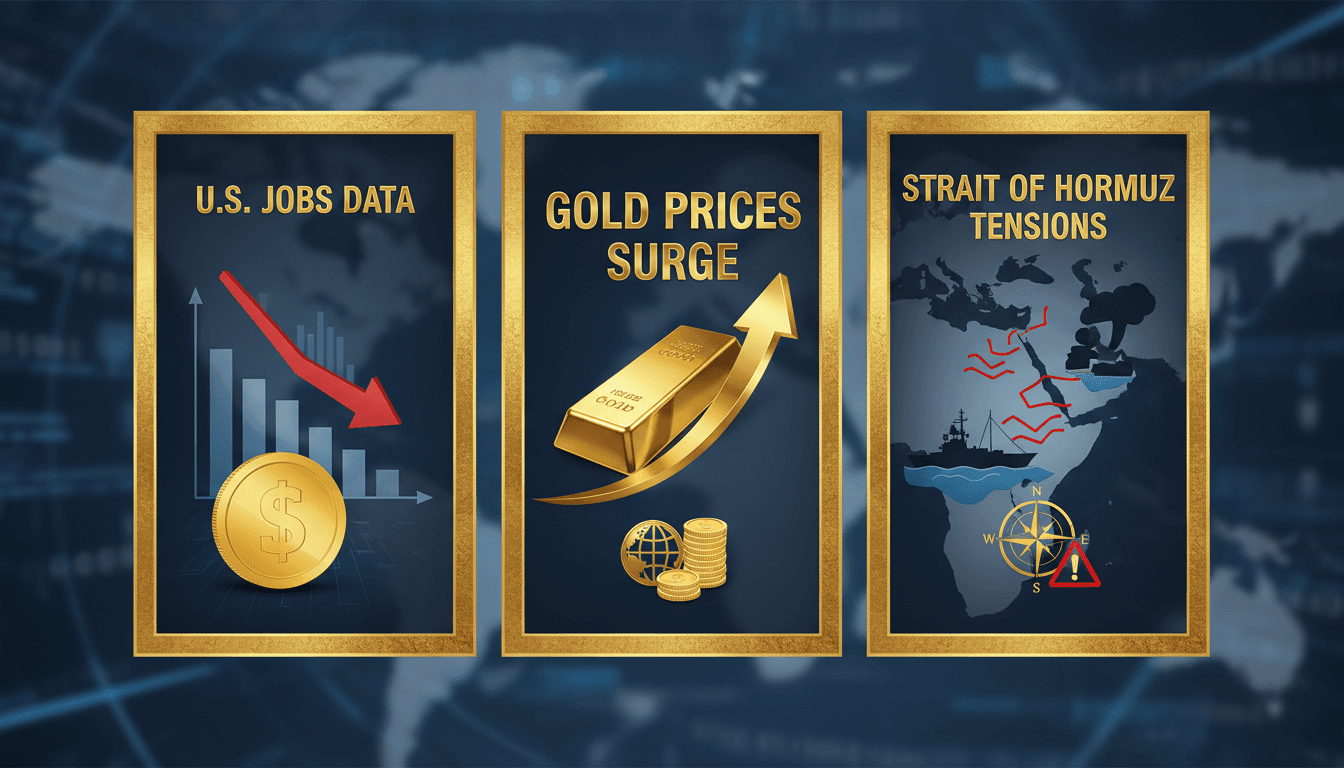
Gold is on track for its best weekly performance since late January, reflecting a notable shift in market dynamics. This surge is largely attributed to recent U.S. jobs data, which has diminished expectations for immediate Federal Reserve interest rate hikes. Additionally, rising geopolitical tensions in the Strait of Hormuz are contributing to the market's cautious outlook.
Traders are closely monitoring these developments as they assess the potential impact on global markets. The combination of economic indicators and geopolitical risks is prompting a bullish sentiment for gold, reinforcing its status as a safe-haven asset.
The Context
The recent U.S. jobs data has played a pivotal role in shaping market expectations regarding Federal Reserve interest rates. With the likelihood of immediate rate hikes reduced, investors are recalibrating their strategies. Concurrently, an Iranian attack in the Strait of Hormuz has raised concerns about its ramifications for global trade and economic stability.
These factors are particularly relevant as traders navigate a complex landscape of economic uncertainty. The gold market's response underscores the asset's appeal during turbulent times, as investors seek to hedge against potential risks.
Takeaway
Looking ahead, traders will continue to monitor both economic indicators and geopolitical events to gauge gold's future trajectory. Potential announcements from the Federal Reserve regarding interest rates will be critical in shaping market sentiment. Furthermore, developments in the Strait of Hormuz will likely influence global market conditions and investor confidence.
As the interplay between these factors unfolds, gold may maintain its attractiveness as a hedge against uncertainty. The ongoing assessment of economic data and geopolitical risks will be essential for understanding market movements in the coming weeks.
Oil, metals, and agriculture: supply/demand headlines, OPEC chatter, inventories, and price action.
"Solid tape for energy and metals traders tracking macro and micro catalysts."
— A47 Editor
Gold set for best week since late January after jobs data dents Fed rate hike bets
Gold is poised for its best week since late January, buoyed by recent jobs data that has diminished expectations for further interest rate hikes by the Federal Reserve. This shift in market sentiment has led to increased demand for gold as a safe-hav...
Regional and international reporting focused on Middle Eastern politics, diplomacy, and economics.
"Asharq Al-Awsat is a Saudi-owned international newspaper reflecting mainstream Gulf political perspectives."
— A47 Editor
Gold Heads for Best Week Since January, US Jobs Data in Focus
Gold prices are poised for their best week since January, driven by a softer U.S. dollar and declining oil prices, with current prices around $4,175.53 per ounce. Investors are closely monitoring upcoming U.S. jobs data, which is expected to influenc...
Global markets, investing, and macroeconomics from a premier financial newsroom.
"Bloomberg is respected for in-depth financial reporting and data-driven analysis."
— A47 Editor
Gold Steady as Traders Assess Impact of Hormuz Flare-Up on Rates
Gold prices remained steady as traders evaluated the implications of a reported Iranian attack in the Strait of Hormuz on the Federal Reserve's interest rate strategy. The market's cautious stance reflects ongoing geopolitical tensions and their pote...