
Oil prices decline sharply amid geopolitical tensions
What happened
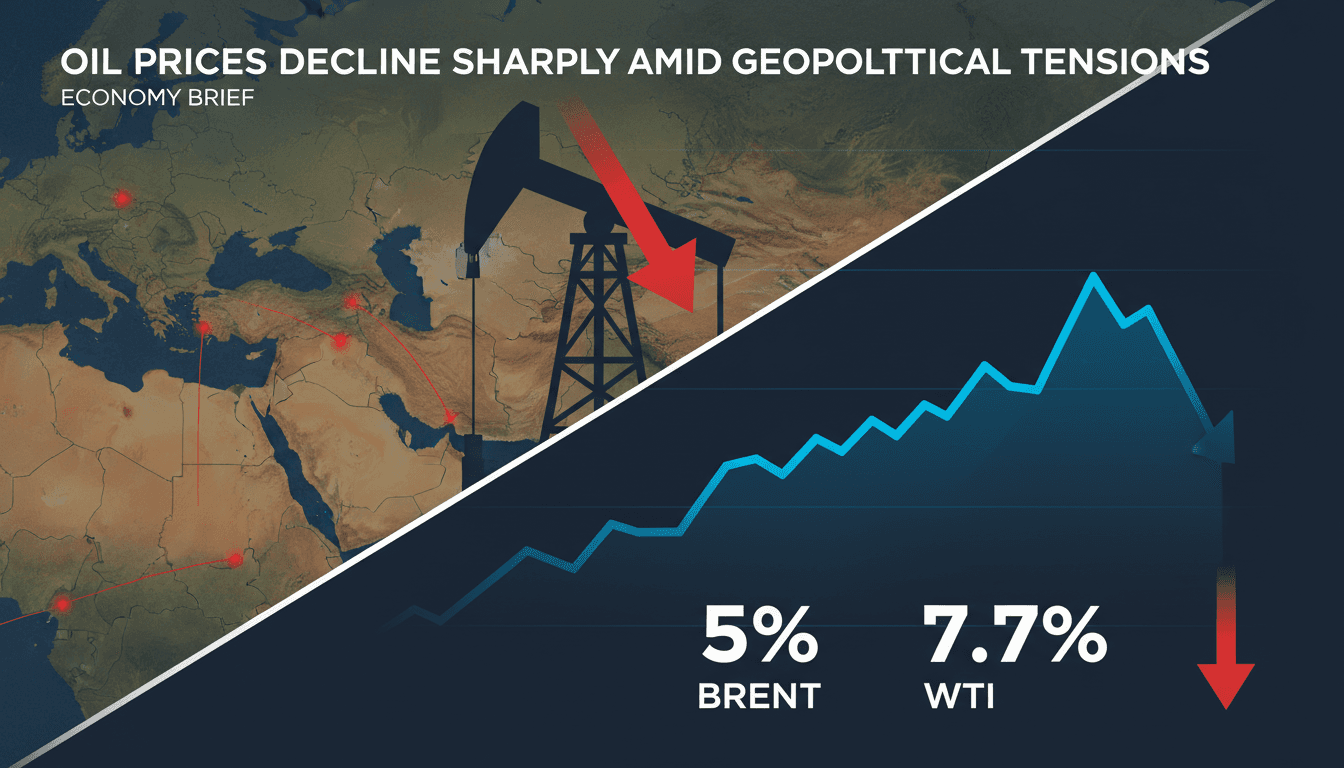
Oil futures experienced notable fluctuations this week, culminating in a significant decline overall. While Brent crude saw a slight rise on Friday, it ultimately settled at $83.55, reflecting a 5% drop for the week. WTI crude fared worse, ending at $78.18, down 7.7% for the same period.
The declines were primarily driven by ongoing geopolitical developments that have affected market sentiment and demand. Despite a brief recovery, both Brent and WTI ended the week significantly lower, indicating persistent concerns about the oil supply chain.
The Context
Geopolitical factors have been a major influence on oil prices this week, contributing to a volatile market environment. The fluctuations in Brent and WTI prices highlight the interconnectedness of global events and energy markets. As traders assess the implications of these developments, the focus remains on how they will shape future demand and supply dynamics.
The recent price movements come at a time when market participants are keenly observing OPEC's potential responses to declining prices. Economic data releases in the coming weeks will also play a critical role in determining the trajectory of oil prices.
Takeaway
Looking ahead, market participants should closely monitor geopolitical developments as they continue to influence oil prices. The potential for OPEC to intervene in response to declining prices could significantly impact market dynamics. Additionally, upcoming economic data releases will be crucial in assessing oil demand and overall market health.
As the outlook for oil prices remains uncertain, traders will be vigilant for any signs of stabilization or further declines in the coming weeks. The interplay between geopolitical tensions and market sentiment will be key in shaping future price movements.
Markets desk coverage, trading insights, and investor updates.
"WSJ’s markets reporting provides in-depth analysis and context for investors."
— A47 Editor
Oil Futures Settle Higher, But Down on the Week
Oil futures rose on Friday, with West Texas Intermediate (WTI) settling at $78.18 a barrel, up 1.2%, while Brent increased by 1.3% to $83.55. However, both benchmarks finished the week down, with WTI declining 7.7% and Brent down 5%. This fluctuation...
Sports reporting with a focus on Saudi and regional competitions.
"Okaz sports coverage is broad and audience-friendly, with strong attention to Saudi teams and leagues."
— A47 Editor
تراجع أسعار النفط.. وبرنت عند 79.08 دولارًا
Oil prices have declined today, influenced by geopolitical developments. Brent crude futures fell by 37 cents, or 0.5%, to $79.08 per barrel, while West Texas Intermediate crude futures dropped by 53 cents, or 0.7%, to $74.69 per barrel.
Business, markets, economy, and corporate news with strong UAE and regional relevance.
"Emirates 24|7 business coverage tends to center UAE markets, property, regulation, and regional economic developments."
— A47 Editor
Oil extends declines after steep losses in previous two sessions
Oil prices continued to decline on Wednesday, with Brent crude futures dropping 92 cents to $78.44 a barrel and US West Texas Intermediate futures losing $1.07 to $74.70 a barrel. This marks a significant downturn, with both benchmarks experiencing o...