
U.S. crude oil inventories rise unexpectedly by 2.5 million barrels
What happened
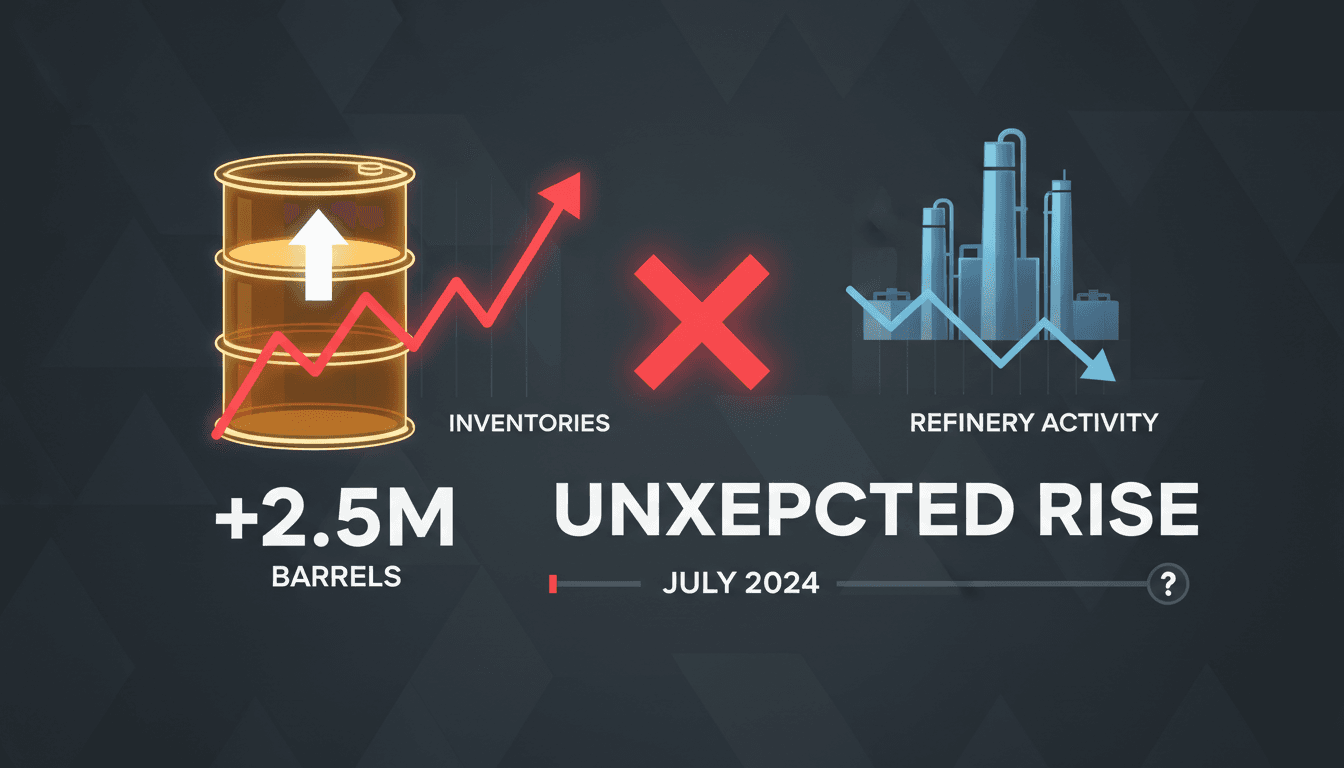
U.S. crude oil stockpiles rose by 2.5 million barrels for the week ending July 31, contrary to analyst predictions of a decrease. This unexpected rise highlights a significant shift in inventory levels, suggesting a potential slowdown in demand. The increase comes at a time when refinery activity has also seen a slight decline, further complicating the market outlook.
The data was reported by the U.S. Energy Information Administration, which typically provides insights into the state of the oil market. Analysts had anticipated a decrease of 1.2 million barrels, making this rise particularly noteworthy. The implications of this inventory increase could resonate throughout the oil market in the coming weeks.
The Context
The rise in crude oil inventories is significant as it reflects broader trends in market demand and refinery operations. With analysts predicting a decrease, this unexpected outcome raises questions about the current state of oil consumption. Stakeholders, including investors and policymakers, will be keenly observing these trends to understand their potential impact on oil prices.
Refinery activity has been declining slightly, which may contribute to the increased stockpiles. As refineries process less crude oil, the surplus in inventories could indicate a mismatch between supply and demand. This situation is critical for market participants who rely on accurate forecasts to make informed decisions.
Takeaway
As inventory levels rise, market participants should closely monitor refinery activity for further insights into demand trends. Upcoming reports on global oil consumption will also be crucial in understanding the broader implications of this inventory increase. The potential for continued scrutiny of market demand trends could shape the future direction of oil prices.
In the coming weeks, analysts will likely focus on how these developments affect overall market dynamics. The interplay between inventory levels and refinery output will be essential in assessing the health of the oil market.
Pan-Arab news coverage spanning politics, business, sports, and regional affairs.
"Asharq Al-Awsat reflects a broad Arab editorial perspective with strong attention to regional geopolitics."
— A47 Editor
مخزونات النفط الأميركية تزيد 2.5 مليون برميل على عكس التوقعات
The U.S. Energy Information Administration reported on Wednesday that crude oil inventories in the United States increased by 2.5 million barrels for the week ending July 31, contrary to expectations, amid a slight decline in refinery activity.
U.S. business news, corporate developments, and economy.
"The Wall Street Journal is respected for deep financial and economic reporting with a center-right editorial perspective."
— A47 Editor
U.S. Crude Oil Inventories Post Weekly Increase
U.S. crude oil inventories increased by 2.5 million barrels for the week ending July 31, contrary to expectations of a decrease of 1.2 million barrels. This unexpected rise indicates a potential shift in market dynamics, reflecting weaker demand for ...
Key macro releases (CPI, jobs, PMIs), surprise indexes, and market implications.
"Great for data-print awareness and instant read-through to rates and risk assets."
— A47 Editor
Crude oil inventories rise unexpectedly, signaling weaker demand
Crude oil inventories in the U.S. have risen unexpectedly by 2.5 million barrels for the week ending July 31, contrary to forecasts predicting a decrease of 1.2 million barrels. This increase indicates a potential shift in market dynamics, suggesting...