
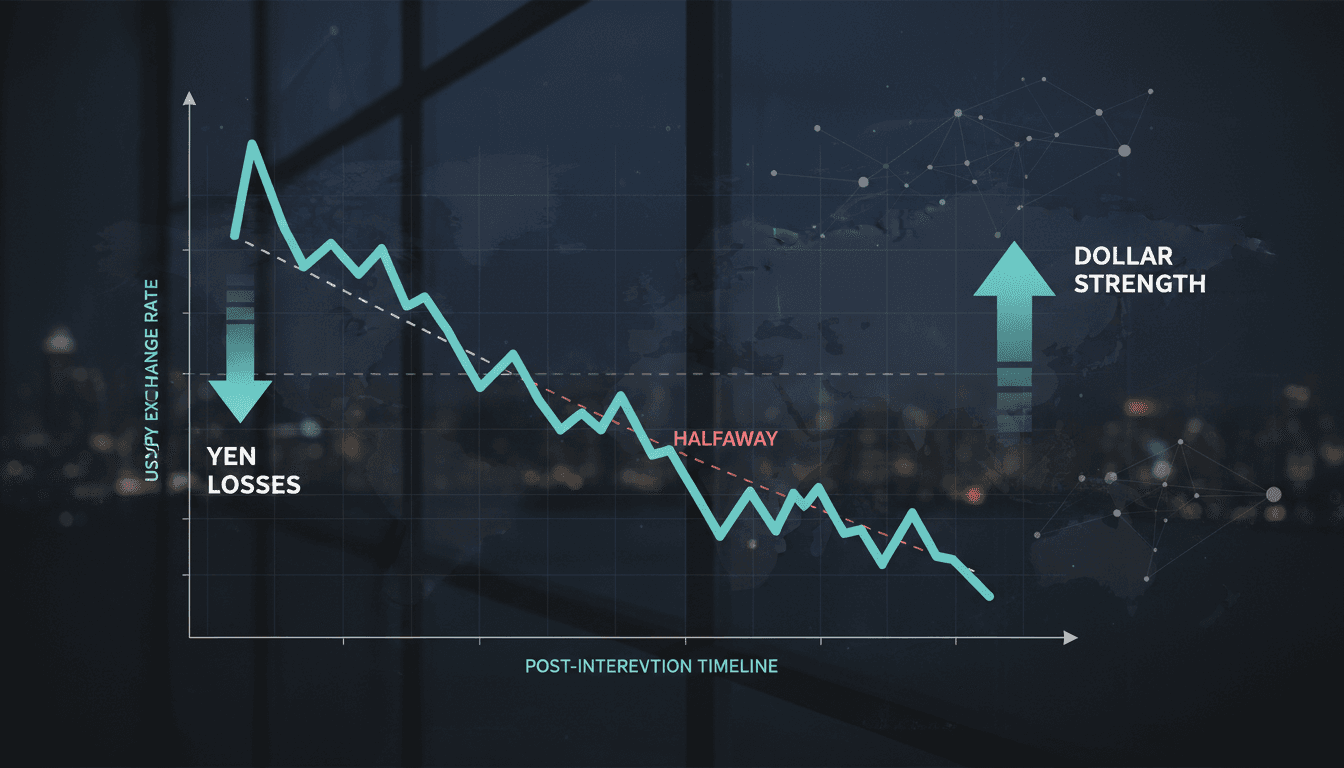
Japanese yen loses half of intervention gains amid dollar strength
Here's what it means for you.
The recent decline of the Japanese yen highlights the challenges faced by central banks in stabilizing currencies amid a strong U.S. dollar. As the yen has lost approximately half of its gains from a joint intervention, market participants are increasingly questioning the effectiveness of such coordinated actions. This situation may prompt a reevaluation of global currency strategies and the role of the dollar in international markets. The ongoing volatility in currency markets could lead to heightened scrutiny of central bank policies, impacting both investors and policymakers. Stakeholders should remain vigilant as shifts in currency dynamics may influence economic stability and trade relationships.
What happened
The Japanese yen has erased about half of its gains following a joint intervention by the U.S. and Japan aimed at supporting the currency. This decline occurred as traders began to test the resolve of both U.S. and Japanese authorities. Despite the intervention, the U.S. dollar has continued to strengthen against the yen, indicating persistent challenges for currency stabilization efforts.
Market analysts are expressing skepticism regarding the effectiveness of the coordinated actions taken by the two nations. The yen's swift loss of ground underscores the complexities involved in managing currency fluctuations in a volatile economic environment.
The Context
The intervention on August 9, 2026, was a significant move by U.S. and Japanese authorities to bolster the yen amid rising dollar strength. However, the subsequent decline in the yen's value raises questions about the long-term viability of such interventions. As the dollar's dominance is increasingly scrutinized, other countries may begin exploring alternatives to mitigate their reliance on the U.S. currency.
The current situation reflects broader trends in global currency dynamics, where the interplay between central banks and market forces is becoming more pronounced. The rise in treasury yields and oil prices alongside the strengthening dollar further complicates the landscape for the yen and other currencies.
Takeaway
As the yen continues to struggle against the dollar, the effectiveness of coordinated interventions will be closely monitored by market participants. The potential for a shift in global currency preferences may prompt further actions from central banks in the coming weeks. Stakeholders should keep an eye on developments from U.S. and Japanese authorities regarding future currency interventions.
Additionally, reactions from other countries exploring alternatives to the dollar could reshape the global currency landscape. The ongoing volatility suggests that central banks may need to adapt their strategies to maintain stability in the face of changing market conditions.
Markets desk coverage, trading insights, and investor updates.
"WSJ’s markets reporting provides in-depth analysis and context for investors."
— A47 Editor
Treasury Yields, Dollar Rise Further Alongside Oil Prices
The U.S. dollar has continued to strengthen against the Japanese yen, despite efforts by officials to stabilize the yen's value. This trend is accompanied by rising Treasury yields and fluctuating oil prices, indicating a complex interplay of market ...
Editor-curated FT homepage stories spanning markets, business, world, and opinion.
"The Financial Times is a globally respected business publication with a centrist/center-left tone and strong markets focus."
— A47 Editor
Yen sinks as effect of US-Japan intervention fades
The Japanese yen has significantly declined, giving up roughly half of its gains following a joint intervention by the United States and Japan aimed at stabilizing the currency, which had previously fallen to a 40-year low against the US dollar. Inve...
Global markets, investing, and macroeconomics from a premier financial newsroom.
"Bloomberg is respected for in-depth financial reporting and data-driven analysis."
— A47 Editor
Yen Erases Half of Intervention Gains as Traders Test Bessent
The Japanese yen has reversed nearly half of its gains achieved through recent interventions by the US and Japan, which aimed to stabilize the currency that had fallen to a 40-year low against the US dollar. This decline in the yen's value comes as t...
Corporate leadership, finance, technology, and market trends.
"Fortune covers financial trends, leadership, and innovation with a pragmatic editorial approach."
— A47 Editor
By propping up the yen, the U.S. and Japan are actually admitting dollar dominance isn’t what it used to be, top economist warns
The U.S. and Japan have engaged in a rare joint intervention to stabilize the Japanese yen, which recently fell to a 40-year low against the U.S. dollar. This action reflects a significant shift in currency dynamics, as both nations aim to support th...