
US and Japan Coordinate Surprise Currency Intervention to Stabilize Yen
Here's what it means for you.
The recent coordinated currency intervention by the US and Japan signifies a pivotal moment in global monetary policy. By selling euros to purchase yen, the US has taken an unexpected step that could reshape international currency dynamics. This action raises questions about the future relationship between the US and Europe, particularly regarding communication and collaboration in financial matters. Market participants will need to closely monitor the yen's performance in the coming weeks, as the effectiveness of this intervention remains uncertain. The implications for other central banks and their responses could also be significant, potentially leading to shifts in monetary strategies worldwide.
What happened
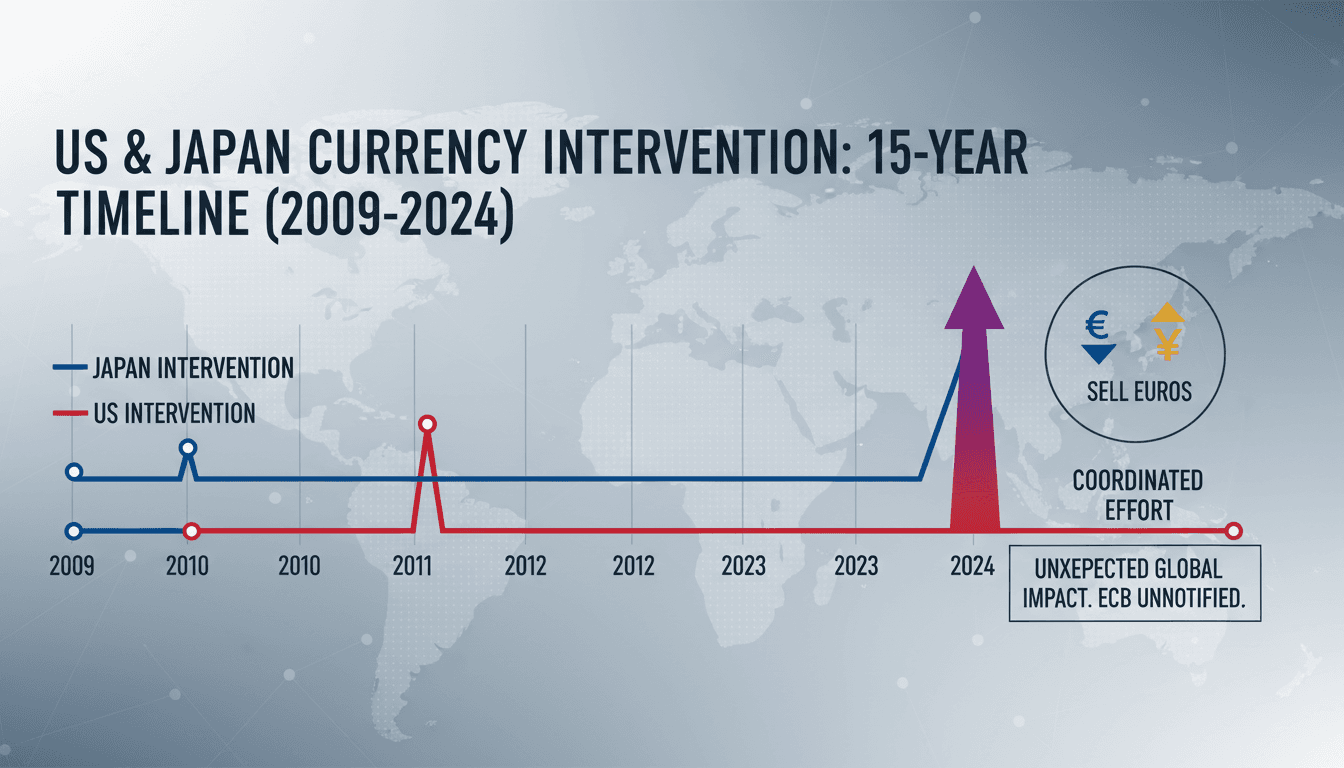
The US recently intervened in the currency markets by selling euros to purchase yen, a move that took the European Central Bank (ECB) by surprise. This intervention marks the first coordinated effort between the US and Japan to stabilize the yen in 15 years. The US informed the ECB only after the intervention had occurred, raising concerns about the potential easing of monetary conditions.
Treasury Secretary Scott Bessent led this historic intervention, opting to use euros instead of dollars for the transaction. The operation utilized a little-known Federal Reserve repo facility, further emphasizing the unexpected nature of the move.
The Context
This intervention is significant as it represents the first joint action by the US and Japan on the yen in 15 years, highlighting a renewed commitment to currency stability. The timing of the intervention, executed without prior notification to the ECB, has raised eyebrows and sparked discussions about the implications for global monetary policy.
Concerns have emerged regarding how this action may affect international currency dynamics and the responses from other central banks. The lack of communication with the ECB suggests potential friction in transatlantic relations, which could have broader implications for economic cooperation.
Takeaway
As the market digests the implications of this intervention, stakeholders will be closely watching the yen's trajectory. The effectiveness of this coordinated effort in stabilizing the yen remains to be seen, and market reactions will play a crucial role in shaping future monetary policy.
Additionally, potential responses from the ECB and other central banks will be critical to monitor, as they may influence global economic conditions. The coming weeks will be pivotal in determining the long-term impact of this unprecedented intervention.
Global markets, investing, and macroeconomics from a premier financial newsroom.
"Bloomberg is respected for in-depth financial reporting and data-driven analysis."
— A47 Editor
US Sale of Euros for Yen Intervention Blindsided Europe, FT Says
The United States executed a historic currency intervention last week by selling euros to purchase yen, a move that reportedly caught the European Central Bank off guard, as they were only informed after the transaction occurred. This intervention ai...
Editor-curated FT homepage stories spanning markets, business, world, and opinion.
"The Financial Times is a globally respected business publication with a centrist/center-left tone and strong markets focus."
— A47 Editor
US euro sale to prop up yen blindsided ECB
The United States has intervened in the currency market by selling euros to support the Japanese yen, which has recently plummeted to a 40-year low against the US dollar. This historic action was taken without prior communication with the European Ce...
Global markets, investing, and macroeconomics from a premier financial newsroom.
"Bloomberg is respected for in-depth financial reporting and data-driven analysis."
— A47 Editor
Odd Lots: Brad Setser on the US’s Yen Intervention (Podcast)
The United States and Japan have collaborated for the first time in 15 years to intervene in the yen market, aiming to halt the currency's significant decline. U.S. Treasury Secretary Scott Bessent led the effort by selling euros to purchase yen, uti...
Markets desk coverage, trading insights, and investor updates.
"WSJ’s markets reporting provides in-depth analysis and context for investors."
— A47 Editor
Scott Bessent’s Yen Trade Has Unintended Consequences for the Markets
Scott Bessent's recent yen trade has raised concerns about the Federal Reserve's potential involvement in easing monetary conditions, as the Japanese currency has fallen to a four-decade low against the US dollar. This decline is attributed to a hawk...