
Yen Weakens Despite U.S.-Japan Intervention
What happened
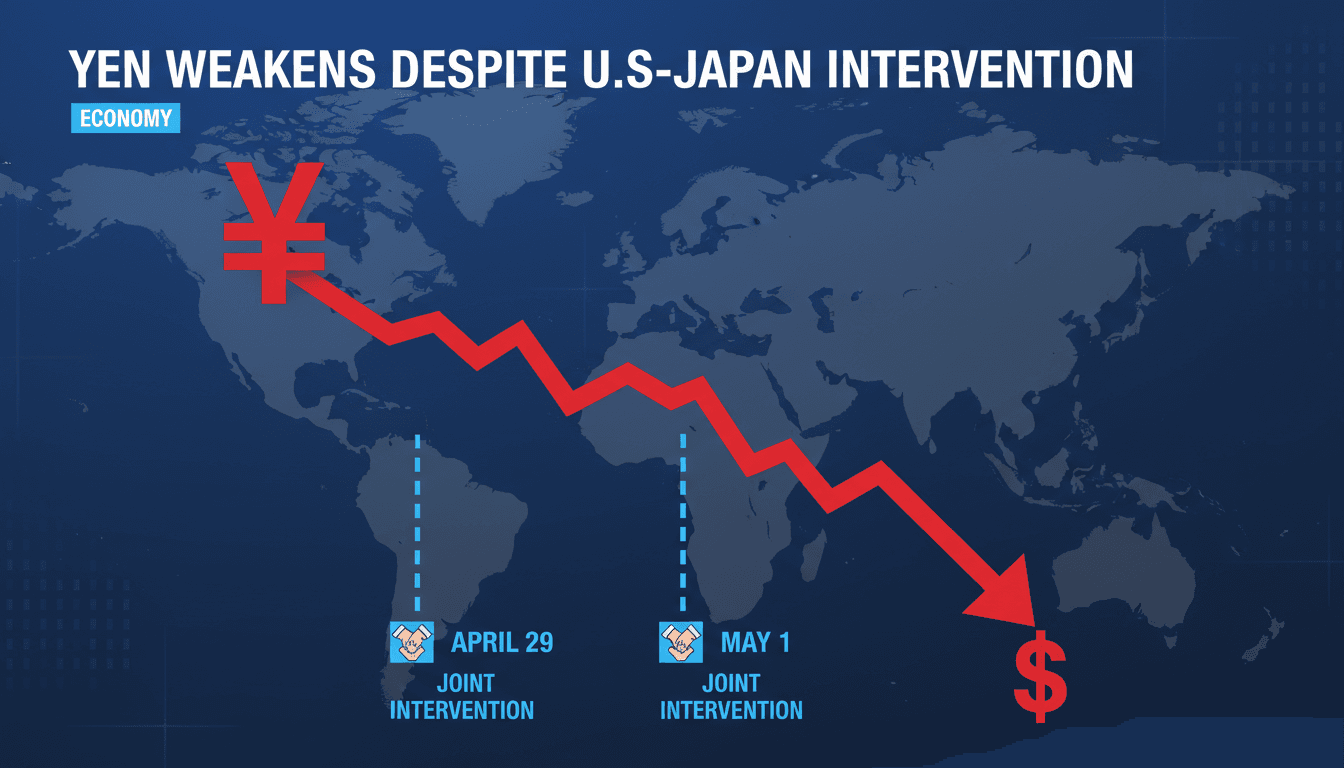
The yen has significantly weakened against the dollar following a joint intervention by the U.S. and Japan. This intervention was prompted as the yen approached a critical level of 160 per dollar, raising alarm among market participants. Despite the initial impact, the effects of the intervention have diminished, with the yen losing about half of its gains since the action was taken.
Economists have pointed out that the intervention does not address the fundamental issues causing the yen's weakness. As a result, concerns about the currency's stability continue to grow, leading to speculation about the necessity of further interventions.
The Context
The recent intervention highlights the complexities of currency management and the challenges faced by central banks in stabilizing the yen. Stakeholders, including investors and policymakers, are closely monitoring the situation as the yen's decline coincides with rising oil prices. The perceived lack of a "unified voice" among central banks regarding currency stabilization adds to the uncertainty in the market.
As the yen struggles, the implications extend beyond Japan, affecting global economic dynamics. The timing of this intervention comes at a critical juncture, as market participants are increasingly concerned about coordinated actions among central banks to address currency fluctuations.
Takeaway
Looking ahead, market participants should watch for any signs of further interventions by Japanese authorities. The ongoing volatility of the yen suggests that additional measures may be necessary if the currency continues to weaken. Signals from central banks regarding coordinated actions will also be crucial in determining the future trajectory of the yen.
As the situation develops, the focus will remain on how effectively these institutions can manage the underlying economic issues affecting the yen's stability. The potential for further interventions could shape market sentiment in the coming weeks.
Corporate leadership, finance, technology, and market trends.
"Fortune covers financial trends, leadership, and innovation with a pragmatic editorial approach."
— A47 Editor
Japan and the U.S. just spent billions to try to save the yen. Why is it already losing ground?
The Japanese yen has recently experienced significant volatility, prompting a historic joint intervention by the United States and Japan aimed at stabilizing the currency after it fell to a 40-year low against the dollar. Despite this intervention, e...
Markets desk coverage, trading insights, and investor updates.
"WSJ’s markets reporting provides in-depth analysis and context for investors."
— A47 Editor
Yen Intervention Wears Off
The Japanese yen has recently experienced a decline in its value as the effects of government intervention by the United States and Japan begin to wear off. This follows a period where the yen surged significantly against the U.S. dollar, marking its...
Global markets, investing, and macroeconomics from a premier financial newsroom.
"Bloomberg is respected for in-depth financial reporting and data-driven analysis."
— A47 Editor
Yen Inches Toward 160 Per Dollar, Raising Intervention Concerns
The Japanese yen has edged closer to the critical level of 160 per dollar, raising concerns about potential intervention by Japanese authorities to stabilize the currency. This movement follows a period of significant volatility, with the yen recentl...
Editor-curated FT homepage stories spanning markets, business, world, and opinion.
"The Financial Times is a globally respected business publication with a centrist/center-left tone and strong markets focus."
— A47 Editor
Yen sinks as effect of US-Japan intervention fades
The Japanese yen has significantly declined, giving up roughly half of its gains following a joint intervention by the United States and Japan aimed at stabilizing the currency, which had previously fallen to a 40-year low against the US dollar. Inve...