
Global food prices reach highest levels in over three years
Here's what it means for you.
The recent surge in global food prices signals potential challenges for consumers and businesses alike. As prices for essential commodities like cereals, sugar, and vegetable oils rise, the cost of living may increase, impacting household budgets. Policymakers and industry stakeholders must closely monitor these trends to mitigate risks to food security and economic stability.
What happened
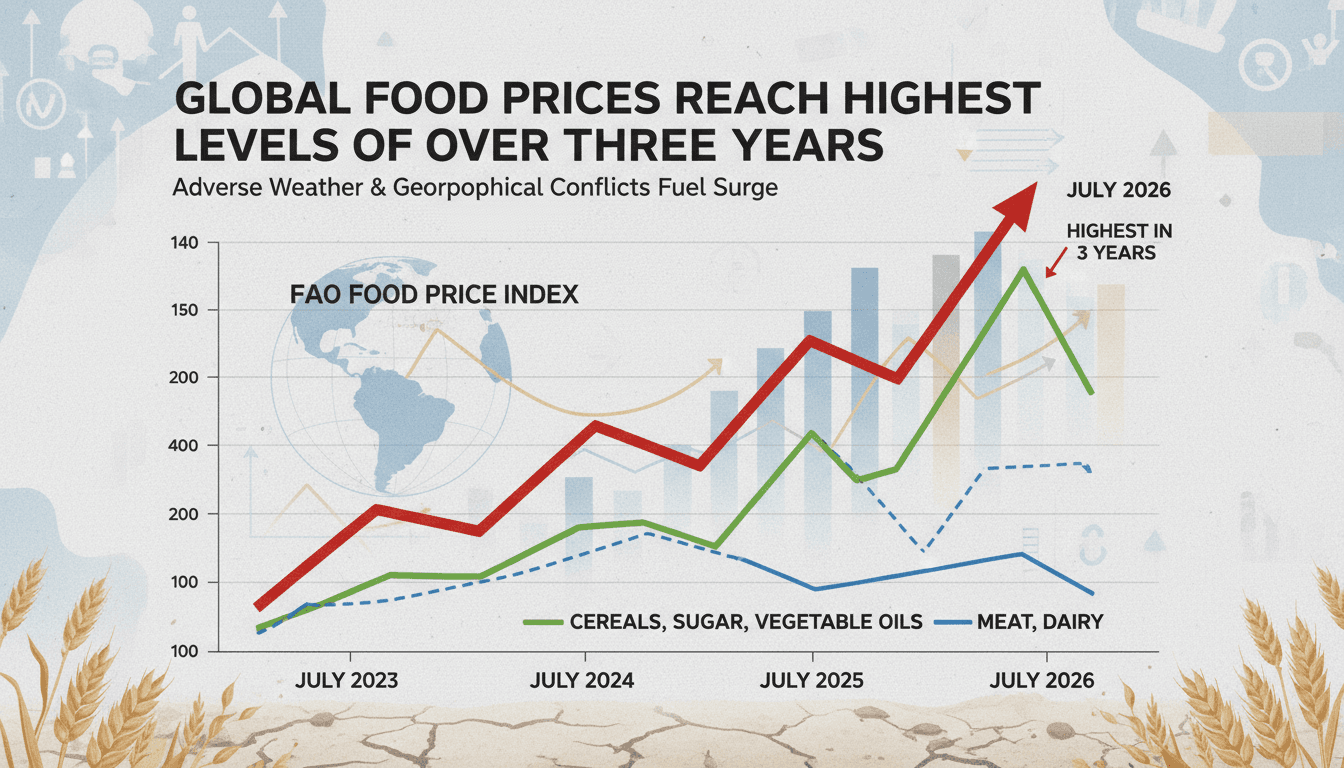
In July 2026, global food prices reached their highest level in over three years, driven by adverse weather conditions and ongoing geopolitical conflicts. The UN Food and Agriculture Organization (FAO) reported a 0.6% increase in its Food Price Index from June to July. Notably, cereal prices surged by 3.4%, with significant disruptions in wheat and maize exports contributing to this rise.
The vegetable oil price index also saw a notable increase, reaching its highest level since June 2022, primarily due to rising prices for palm and soybean oil. While prices for cereals, sugar, and vegetable oils climbed, meat and dairy prices experienced a decline, highlighting the uneven impact of these factors across different food categories.
The Context
The rise in food prices is attributed to a combination of extreme weather conditions affecting crop yields and geopolitical tensions disrupting exports. The FAO's report underscores the significant increases in prices for key commodities, which are critical for global food supply chains. Stakeholders, including farmers, exporters, and consumers, are all affected by these fluctuations, making it essential to understand the broader implications.
As weather patterns continue to evolve and geopolitical conflicts persist, the agricultural sector faces ongoing challenges. The situation is particularly acute in regions like Ukraine and the Middle East, where conflicts have historically impacted food exports. This volatility raises concerns about food security and economic stability on a global scale.
Takeaway
Looking ahead, it is crucial to monitor the impact of weather patterns on crop yields and observe geopolitical developments that may further affect food exports. The FAO's findings suggest that the challenges in agricultural production are likely to persist, keeping food prices elevated in the near future. Stakeholders should prepare for continued volatility in food prices, which could have far-reaching implications for global markets and food security.
As these dynamics unfold, the agricultural sector and policymakers must remain vigilant to adapt to changing conditions. The interplay between climate and conflict will be pivotal in shaping the future landscape of food prices.
International news coverage curated for readers in the UAE and Gulf region.
"Emirates 24|7 world coverage presents global developments through a UAE-facing and Gulf-relevant editorial lens."
— A47 Editor
Global food prices rise to highest level in more than three years
Global food prices surged in July to their highest level in over three years, driven by rising costs in cereals, sugar, and vegetable oils, amid concerns regarding global grain supplies and adverse weather conditions affecting agricultural production...
UK and international business news, economics, and corporate coverage.
"The Guardian’s business section covers finance and markets with a progressive editorial tone."
— A47 Editor
Global food prices at three-year high as heatwaves and wars push up crop costs
Global food prices have reached their highest level in three and a half years, driven by extreme summer heatwaves and ongoing conflicts in Ukraine and the Middle East, which have adversely affected crop yields and exports. The UN Food and Agriculture...
Top international stories selected by The Guardian editors.
"The Guardian is known for its progressive editorial stance and in-depth analysis."
— A47 Editor
Global food prices at three-year high as heatwaves and wars push up crop costs
Global food prices have reached their highest level in three and a half years, driven by extreme summer heatwaves and ongoing conflicts in Ukraine and the Middle East, which have significantly impacted crop yields and exports. The UN Food and Agricul...
Regional and international reporting focused on Middle Eastern politics, diplomacy, and economics.
"Asharq Al-Awsat is a Saudi-owned international newspaper reflecting mainstream Gulf political perspectives."
— A47 Editor
FAO: World Food Prices Hit 3-year High in July as Weather and War Weigh
The Food and Agriculture Organization (FAO) reported that global food prices surged to a three-year high in July, driven by adverse weather conditions and ongoing geopolitical tensions, particularly in regions critical for agricultural production.