
Surge in U.S. Gas Prices Linked to Ongoing Iran Conflict
Here's what it means for you.
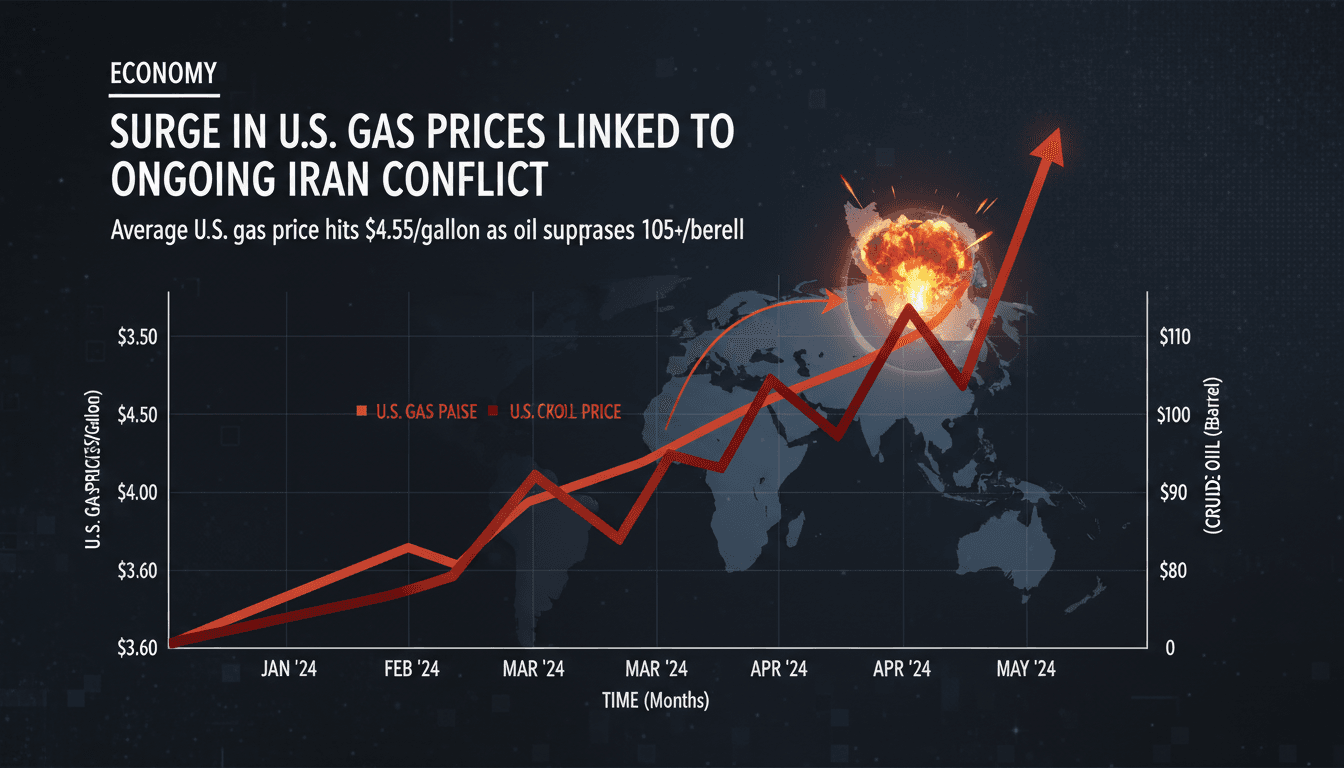
The ongoing conflict in Iran has led to a significant spike in U.S. gas prices, now averaging $4.55 per gallon. This increase is straining household budgets across the nation, as families grapple with rising fuel costs. Experts suggest that even if the conflict resolves, consumers may continue to face elevated prices at the pump, prolonging economic challenges. As fuel prices remain high, inflation concerns are also mounting, impacting overall consumer spending. The financial burden on American households is expected to persist, making it crucial for policymakers to monitor the situation closely.
What happened
U.S. gas prices have surged dramatically due to the ongoing war in Iran, reaching an average of $4.55 per gallon as of May 22, 2026. This represents a significant increase from $3.30 in April 2025, marking a rise of over 50% since the conflict began on February 28, 2026. Americans have collectively spent an additional $45 billion on fuel costs since the onset of the war, highlighting the financial strain on households.
The rise in oil prices, which have exceeded $105 a barrel, has further exacerbated inflation concerns. This situation has prompted discussions about potential government responses to mitigate the impact on consumers.
The Context
The conflict in Iran has far-reaching implications for global oil supply and pricing. As the war continues, stakeholders, including consumers and policymakers, are feeling the effects of rising fuel costs. The timing of this crisis coincides with broader economic challenges, making it a critical issue for American households.
Experts warn that even if the conflict were to end, gas prices may not return to prewar levels for some time. This prolonged period of elevated fuel prices could lead to difficult financial decisions for many families, as they navigate the ongoing economic landscape.
Takeaway
Looking ahead, it is essential to monitor future developments in the Iran conflict and their potential impact on global oil supply. Additionally, government responses to rising fuel prices and inflation will be crucial in shaping the economic landscape for consumers. The financial repercussions of the Iran war on fuel prices suggest that American households may continue to face economic challenges in the near future.
As the situation evolves, consumers should remain vigilant about how these developments may affect their budgets and spending habits.
UK and international business news, economics, and corporate coverage.
"The Guardian’s business section covers finance and markets with a progressive editorial tone."
— A47 Editor
Even if the Iran war ended today, US fuel prices aren’t likely to normalize this year
Despite the ongoing conflict with Iran, U.S. fuel prices are unlikely to return to prewar levels this year, with current averages around $4.55 per gallon, significantly higher than the $3 per gallon seen before the war began.
News from the United States including domestic politics, society, and culture.
"The Guardian is known for its progressive editorial stance and in-depth analysis, often advocating for social justice, environmental issues, and liberal values."
— A47 Editor
Even if the Iran war ended today, US fuel prices aren’t likely to normalize this year
Despite the ongoing conflict with Iran, U.S. fuel prices are unlikely to return to prewar levels this year, with current averages around $4.55 per gallon, significantly higher than the $3 per gallon seen before the war began.
International coverage from The Guardian's global desks.
"The Guardian is known for its progressive editorial stance and in-depth analysis."
— A47 Editor
Even if the Iran war ended today, US fuel prices aren’t likely to normalize this year
Despite the ongoing conflict with Iran, U.S. fuel prices are unlikely to return to prewar levels this year, with current averages around $4.55 per gallon, significantly higher than the $3 per gallon seen before the war began.
Stock market news, investing ideas, and trading analysis.
"TheStreet provides market news and retail-investor-focused analysis."
— A47 Editor
Gas prices surge to $4.24, forcing Americans to raid their savings
Gas prices in the United States have surged to $4.24 per gallon, a significant increase from $3.30 in April 2025, largely driven by the ongoing U.S.-Iran conflict and global oil supply disruptions. This spike is forcing many American households to ma...
Breaking news, politics, business, and entertainment from the U.S. and around the world.
"The New York Post is a tabloid-format newspaper known for its sensationalist headlines and conservative-leaning editorial tone."
— A47 Editor
Americans have shelled out $45B in extra fuel costs since Iran war — as $5 gas looms: researchers
Americans have incurred an additional $45 billion in fuel costs since the onset of the Iran war, with the national average gasoline price reaching $4.55 per gallon, a rise of over 50% since February 28. This surge in prices reflects ongoing geopoliti...
Corporate finance news, M&A, deals, and executive interviews.
"Finance Monthly serves a professional readership with corporate finance coverage."
— A47 Editor
Oil Prices Spike Above $105 as Iran War Threatens Fresh Cost-of-Living Squeeze
Oil prices surged above $105 a barrel as the ongoing conflict in Iran escalates, raising concerns about a potential cost-of-living crisis. The war has intensified fears of supply disruptions, particularly through the critical Strait of Hormuz, impact...