
Trump imposes 15% tariff on imported polysilicon to strengthen US manufacturing
Here's what it means for you.
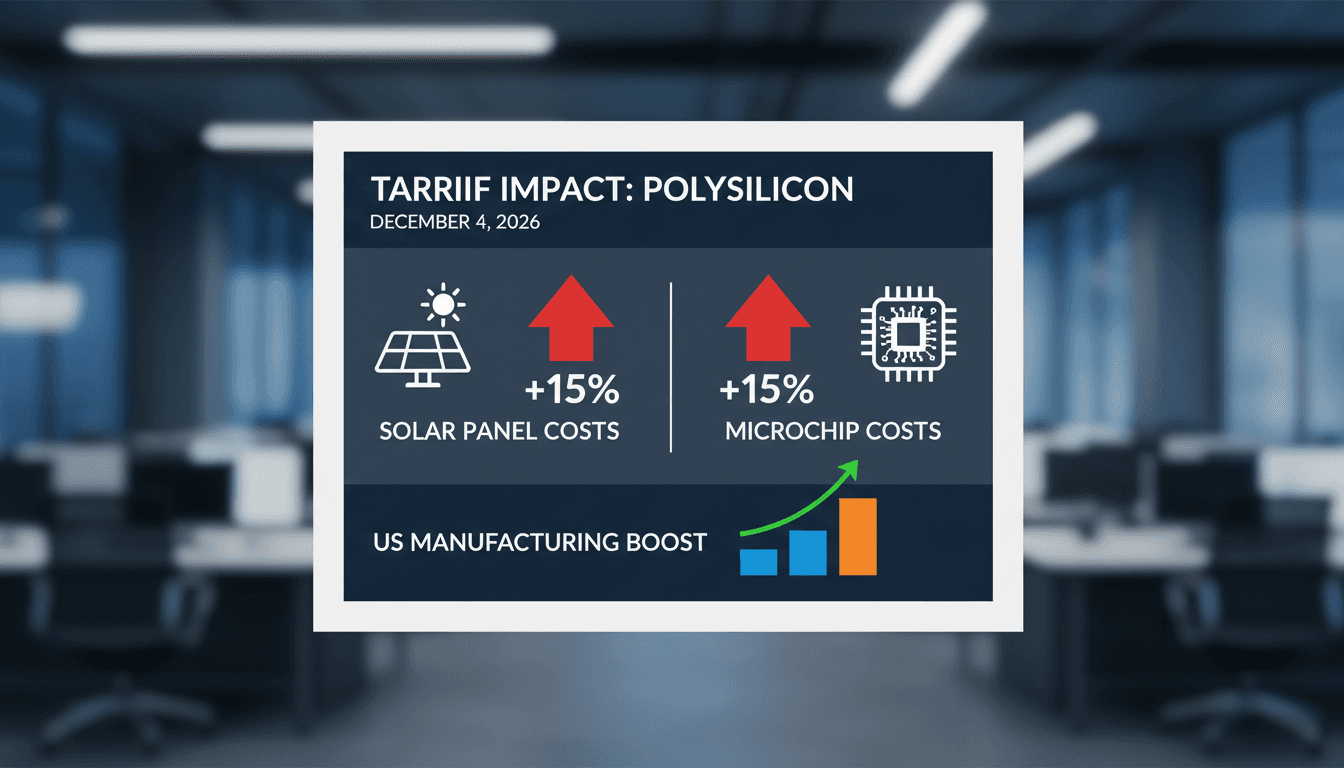
The recent announcement by President Trump to impose a 15% tariff on imported polysilicon is set to reshape the landscape of solar panel and microchip manufacturing in the United States. This move aims to bolster domestic supply chains and reduce reliance on foreign imports, particularly from China. As a result, solar developers and consumers may face increased costs, impacting the overall market dynamics. The tariff, effective December 4, 2026, is part of a broader strategy to enhance US competitiveness in technology and renewable energy sectors. Stakeholders in these industries will need to adapt to the new cost structures and potential shifts in supply chain logistics.
What happened
President Donald Trump has ordered a 15% tariff on imported polysilicon, a crucial material for solar panels and microchips. This decision is aimed at protecting US manufacturing and reducing dependence on foreign supply, particularly from China. The tariff will take effect on December 4, 2026, marking a significant shift in trade policy.
The White House is also implementing price floors alongside the tariff to further support domestic industries. This initiative reflects ongoing tensions in US-China trade relations and underscores the administration's commitment to strengthening American manufacturing capabilities.
The Context
Polysilicon is primarily produced by China, making the US heavily reliant on foreign sources for this essential material. The introduction of the tariff is part of a larger strategy to enhance the competitiveness of American industries in the face of rising global challenges. As the US seeks to bolster its technology and renewable energy sectors, this move is seen as a critical step toward achieving greater self-sufficiency.
The timing of this announcement comes amid escalating tech rivalry between the US and China, highlighting the need for the US to secure its supply chains. Stakeholders across the solar and microchip industries will need to navigate the implications of this tariff as they plan for the future.
Takeaway
The imposition of a 15% tariff on polysilicon could have significant long-term effects on the US solar and microchip manufacturing landscape. As the tariff takes effect, the response from China and its potential impact on solar energy adoption rates in the US will be closely monitored. Increased costs for solar developers and consumers may reshape market dynamics, prompting stakeholders to reassess their strategies.
In the coming months, the focus will be on how these tariffs influence domestic manufacturing and consumer prices. The broader implications for the renewable energy sector and technology markets will also be a key area of observation.
English-language digital publication covering business, politics, technology, and current affairs.
"The Arabian Post mixes original and syndicated-style coverage with a broad regional and global business-news orientation."
— A47 Editor
Trump solar tariffs test affordability gap
President Donald Trump has implemented new tariffs on imported polysilicon and related solar products, imposing a 15% tariff and minimum import prices to support domestic manufacturing. This move raises concerns about increased costs for solar develo...
Economic trends, financial markets, corporate news, and policy from a Russian perspective.
"RT is widely criticized for promoting pro-Kremlin narratives and is considered by many to be a state propaganda outlet."
— A47 Editor
Trump orders 15% tariff on key chip material to challenge China
U.S. President Donald Trump has ordered a 15% tariff on polysilicon imports, a key material used in chip manufacturing, as part of an effort to counter China's growing influence in the technology sector. This decision is seen as a continuation of the...
Curated tech headlines including AI stories.
"Influential aggregator surfacing the day’s top tech/AI links."
— A47 Editor
The White House imposes a series of price floors and a 15% tariff on products made from polysilicon, a chip raw material primarily produced by China (Reuters)
The White House has announced the imposition of price floors and a 15% tariff on polysilicon products, a key raw material for chip manufacturing, primarily sourced from China. This decision is part of a broader strategy to protect U.S. industries fro...
International coverage from The Guardian's global desks.
"The Guardian is known for its progressive editorial stance and in-depth analysis."
— A47 Editor
Trump orders new 15% tariff on key material for solar panels and microchips
Former President Donald Trump has announced a new 15% tariff on imported polysilicon, a crucial material for solar panels and microchips, effective December 4. This decision aims to bolster U.S. supply chains against competition from China, the leadi...
News from the United States including domestic politics, society, and culture.
"The Guardian is known for its progressive editorial stance and in-depth analysis, often advocating for social justice, environmental issues, and liberal values."
— A47 Editor
Trump orders new 15% tariff on key material for solar panels and microchips
Former President Donald Trump has announced a new 15% tariff on imported polysilicon, a crucial material for solar panels and microchips, effective December 4. This decision aims to bolster U.S. supply chains against competition from China, the leadi...
News and features on AI from The Guardian.
"Progressive-leaning international outlet with critical AI coverage."
— A47 Editor
Trump orders new 15% tariff on key material for solar panels and microchips
Former President Donald Trump has announced a new 15% tariff on imported polysilicon, a crucial material for solar panels and microchips, effective December 4. This decision aims to bolster U.S. supply chains against competition from China, the leadi...
Tech culture, product news, and critical takes on the tech industry's social impact.
"The Guardian's tech coverage blends mainstream news, critical analysis, and cultural commentary on emerging technologies and digital trends."
— A47 Editor
Trump orders new 15% tariff on key material for solar panels and microchips
Former President Donald Trump has announced a new 15% tariff on imported polysilicon, a crucial material for solar panels and microchips, effective December 4. This decision aims to bolster U.S. supply chains against competition from China, the leadi...