
Brent crude prices fall to lowest levels since March amid easing geopolitical tensions
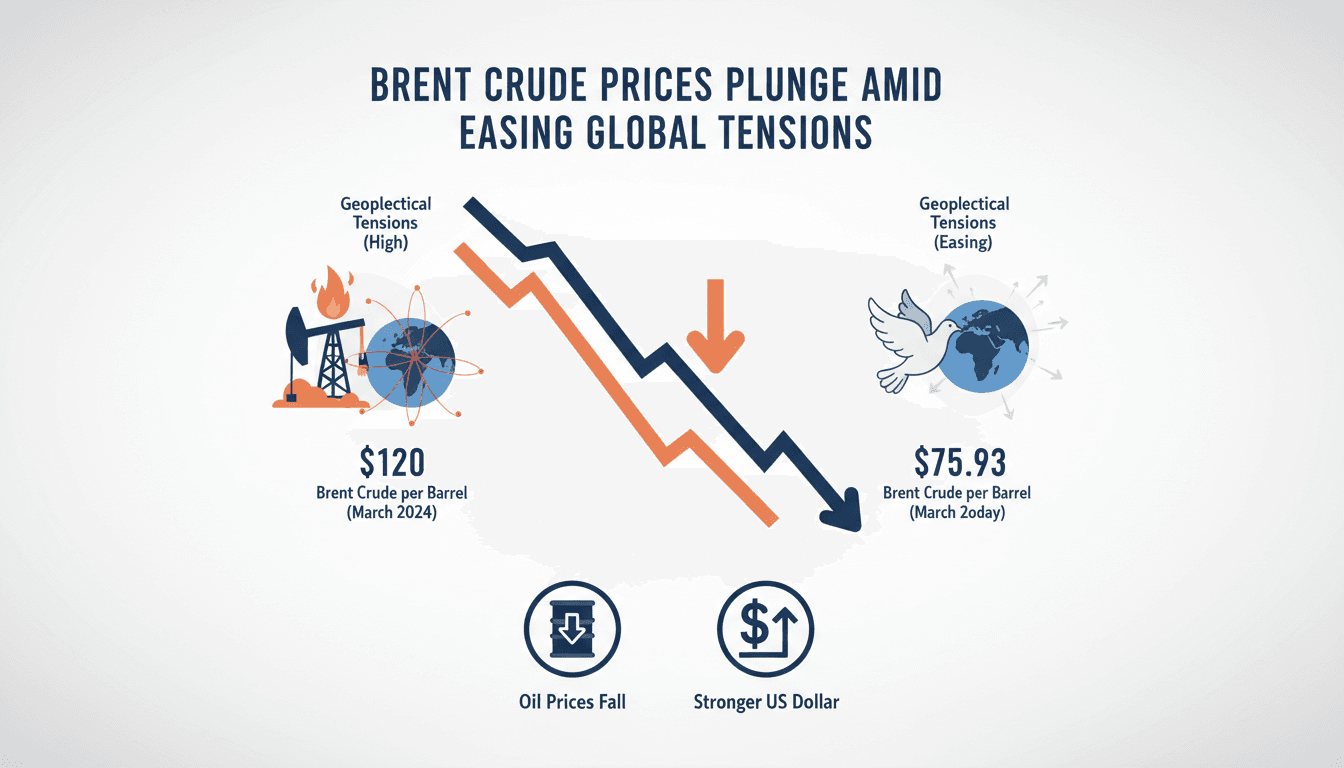
Here's what it means for you.
The recent decline in Brent crude prices signals a shift in the oil market, influenced by easing geopolitical tensions and a robust U.S. dollar. This development may lead to more stable pricing for consumers and businesses reliant on oil. Investors and policymakers should remain vigilant as these factors could reshape future market dynamics. As oil prices stabilize, the implications for energy policy and economic forecasts will be significant. Stakeholders must consider how these changes might affect supply chains and energy costs moving forward.
What happened
Brent crude futures have fallen to $75.93 per barrel, marking the lowest price since early March. This notable decline is attributed to a combination of easing geopolitical tensions in the Middle East and a strong U.S. dollar. On June 22, Brent crude was reported at $79.04 per barrel before experiencing further declines.
The drop of $1.09, or 1.4%, on June 23 reflects a reassessment of supply and demand dynamics in the energy market. Market participants are closely monitoring these developments as they unfold.
The Context
The easing of geopolitical tensions in the Middle East has improved oil flow through critical routes such as the Strait of Hormuz. This change has alleviated previous supply concerns that had been affecting oil prices. Additionally, the strength of the U.S. dollar has contributed to the decline in oil prices, impacting market dynamics significantly.
As the global economy continues to evolve, stakeholders in the energy sector are paying close attention to economic indicators that could influence supply and demand. The interplay between geopolitical developments and market stability remains crucial for future pricing.
Takeaway
Looking ahead, the oil market may continue to experience fluctuations as economic conditions evolve and geopolitical factors change. Investors should monitor announcements from the U.S. Federal Reserve regarding interest rates, as these could have significant implications for oil pricing. Additionally, any resurgence of geopolitical tensions could impact oil supply and market stability.
As the market adjusts to these new price levels, ongoing developments will play a critical role in shaping the future trajectory of oil prices. Stakeholders must remain alert to these factors to navigate the complexities of the energy market effectively.
Arabic-language economic and business reporting with strong UAE market relevance.
"Emarat Al Youm business coverage often centers UAE property, banking, consumer issues, and economic policy."
— A47 Editor
العقود الآجلة لخام برنت تنخفض إلى 75.93 دولارا للبرميل العقود الآجلة لخام برنت تنخفض إلى 75.93 دولارا للبرميل
Brent crude futures have dropped to $75.93 per barrel, marking the lowest level since early March, reflecting ongoing volatility in the oil market. This decline follows a series of fluctuations influenced by various economic factors and geopolitical ...
Arabic-language coverage of Saudi, regional, and international affairs.
"Al Bilad offers mainstream Saudi newspaper coverage across domestic and broader Arab topics."
— A47 Editor
تراجع النفط والذهب مع انحسار التوترات وترقب الفائدة الأمريكية
Oil and gold prices declined on Tuesday amid easing geopolitical tensions in the Middle East and improved oil flows through the Strait of Hormuz, alongside a strengthening U.S. dollar and rising expectations for tighter monetary policy in the United ...
Arabic-language coverage of Saudi, regional, and international affairs.
"Al Bilad offers mainstream Saudi newspaper coverage across domestic and broader Arab topics."
— A47 Editor
موجز
Oil prices declined yesterday as concerns over global supply eased, with Brent crude falling by 1.90% to $79.04 per barrel, while West Texas Intermediate crude was priced at $76.53 per barrel. Investors are closely monitoring global economic developm...