
Gold prices reach two-month high amid inflation data anticipation and geopolitical tensions
What happened
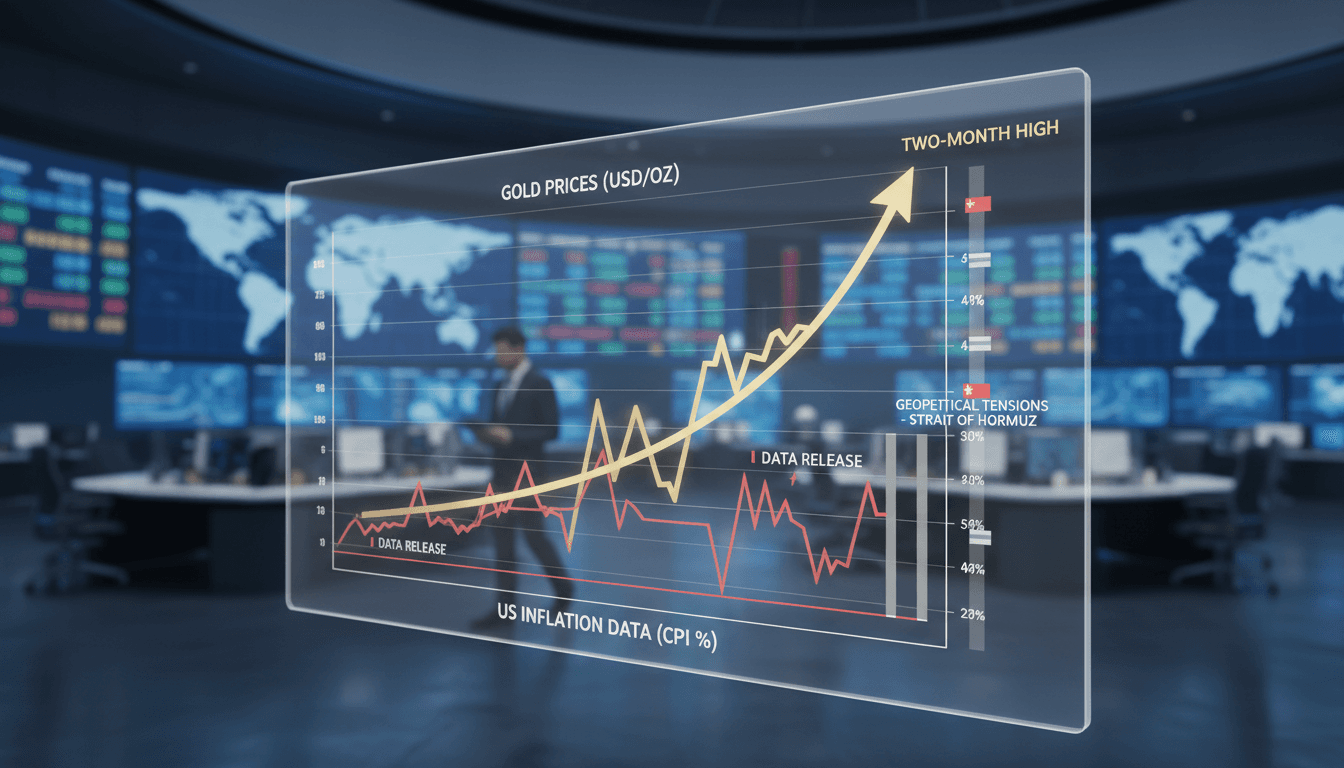
Gold prices have recently reached their highest levels in over two months, reflecting significant movement in the market. Traders are closely monitoring upcoming US inflation data, which is anticipated to influence the Federal Reserve's interest rate decisions. This situation is further complicated by ongoing geopolitical concerns, particularly regarding the Strait of Hormuz.
As traders assess these developments, gold prices have steadied, indicating a cautious approach in the market. The last peak in gold prices was recorded seven weeks ago, marking a notable trend in the commodity's performance.
The Context
The current rise in gold prices is set against a backdrop of fluctuating economic indicators and geopolitical tensions. Traders are particularly focused on the implications of US inflation data, which could signal changes in the Federal Reserve's interest rate path. The situation in the Strait of Hormuz adds another layer of complexity, as geopolitical stability is crucial for market confidence.
With gold prices extending a significant weekly advance, market participants are weighing the potential impacts of these factors on future price movements. The interplay between economic data and geopolitical developments is shaping market sentiment around gold, making it a focal point for investors.
Takeaway
Looking ahead, the upcoming US inflation data release will be pivotal in determining the trajectory of gold prices and interest rates. Traders should monitor this data closely, as it is expected to have significant implications for the broader economic landscape. Additionally, developments regarding the Strait of Hormuz will continue to influence market sentiment and gold prices.
As these factors unfold, market participants will need to stay informed and agile in their investment strategies. The combination of economic indicators and geopolitical concerns will likely keep gold prices in a state of flux.
Global markets, investing, and macroeconomics from a premier financial newsroom.
"Bloomberg is respected for in-depth financial reporting and data-driven analysis."
— A47 Editor
Gold Steadies as Traders Watch US Inflation for Rate-Hike Clues
Gold prices have steadied as traders assess the potential reopening of the Strait of Hormuz while awaiting crucial US inflation data that may influence the Federal Reserve's interest rate decisions.
Oil, metals, and agriculture: supply/demand headlines, OPEC chatter, inventories, and price action.
"Solid tape for energy and metals traders tracking macro and micro catalysts."
— A47 Editor
Gold prices extend big weekly advance, hit their highest levels in over two months
Gold prices have experienced a significant weekly advance, reaching their highest levels in over two months, driven by a shift in market sentiment following recent jobs data that reduced expectations for further interest rate hikes by the Federal Res...
Regional and international reporting focused on Middle Eastern politics, diplomacy, and economics.
"Asharq Al-Awsat is a Saudi-owned international newspaper reflecting mainstream Gulf political perspectives."
— A47 Editor
Gold Drifts Lower from Seven-Week Peak, US Inflation Data Looms
Gold prices have drifted lower from a seven-week peak, as investors took profits ahead of crucial US inflation data that could influence future Federal Reserve interest rate decisions. Spot gold fell 0.3% to $4,330.46 per ounce, indicating a cautious...