
US Strategic Petroleum Reserve falls below 300 million barrels for the first time since the 1980s
What happened
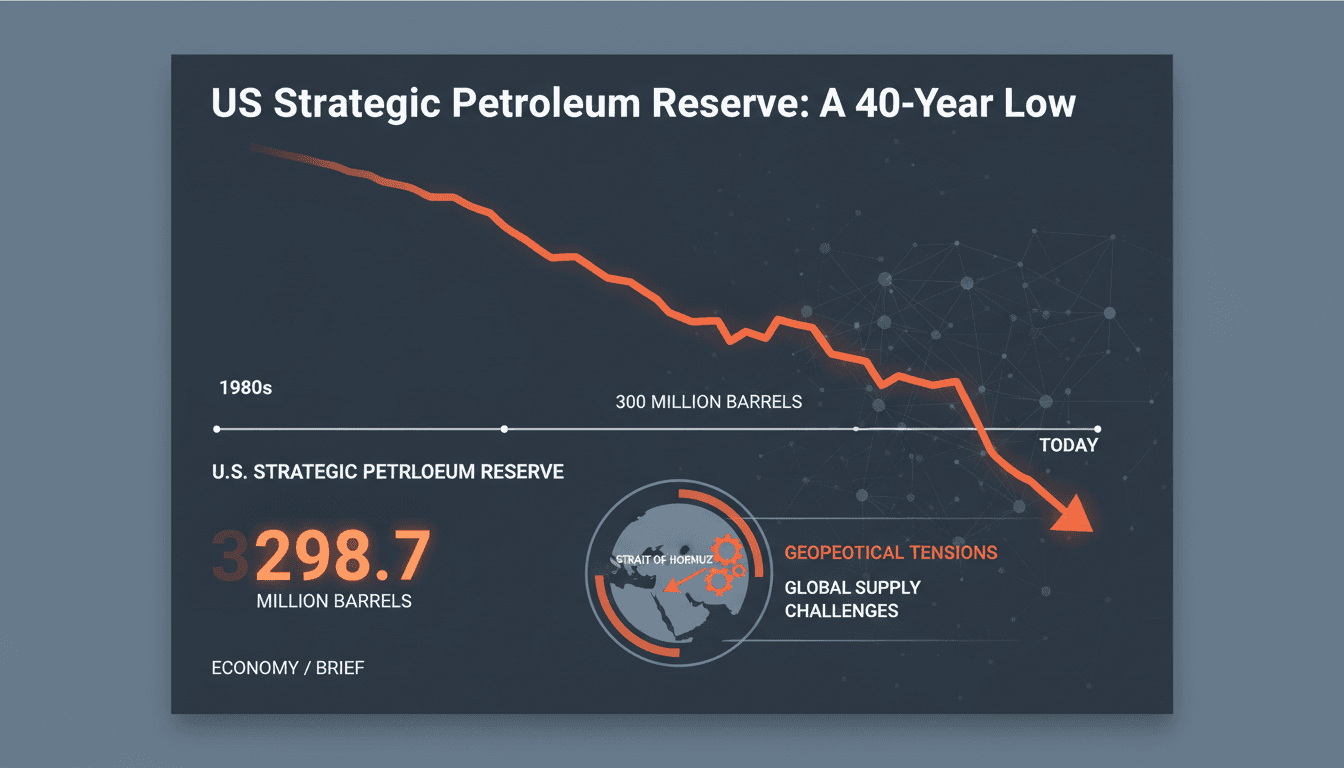
The U.S. Strategic Petroleum Reserve has fallen to 298.7 million barrels, marking its lowest level since the early 1980s. This decline is attributed to ongoing geopolitical tensions, particularly the closure of the Strait of Hormuz, a vital route for oil transport. The SPR serves as a crucial resource for the U.S. to manage disruptions in oil supply, making this drop particularly concerning.
As of August 10, 2026, the reserve's level indicates potential vulnerabilities in U.S. energy security. The last time the SPR was below 300 million barrels was during a period of significant oil crises, highlighting the gravity of the current situation.
The Context
The Strategic Petroleum Reserve is designed to protect the U.S. from oil supply disruptions, making its current low level alarming. The closure of the Strait of Hormuz, a critical chokepoint for global oil transport, has exacerbated the situation, contributing to the decline in the reserve. Additionally, commercial crude oil stocks have seen an unexpected increase, rising by 17.4 million barrels, which may provide some relief but does not mitigate the risks associated with the SPR's low levels.
This development comes at a time when global oil markets are already under strain, and the implications for U.S. energy policy could be profound. Stakeholders, including government officials and energy analysts, will be closely monitoring the situation as it unfolds.
Takeaway
The continued decline of the SPR may prompt a reassessment of U.S. energy strategies to ensure market stability amidst global supply challenges. Observers should monitor developments in the Strait of Hormuz, as any changes could significantly impact oil prices and availability. Additionally, potential government responses to stabilize the SPR will be crucial in determining the future of U.S. energy policy.
As the situation evolves, the focus will likely shift to how the U.S. can bolster its oil reserves and mitigate risks associated with geopolitical tensions. The implications of these developments will resonate across markets and could influence energy prices in the near term.
U.S. business news, corporate developments, and economy.
"The Wall Street Journal is respected for deep financial and economic reporting with a center-right editorial perspective."
— A47 Editor
U.S. Crude Oil Stockpiles Post Unexpected Build
U.S. commercial crude oil stocks, excluding the Strategic Petroleum Reserve, unexpectedly increased by 17.4 million barrels to reach 424.4 million barrels for the week ending August 7, according to the Energy Information Administration (EIA). This fi...
Global business headlines with AI angles.
"General business outlet that frequently covers AI."
— A47 Editor
U.S. Strategic Petroleum Reserve Falls To Its Lowest Level In More Than Four Decades As Hormuz Strait Remains Closed
The U.S. Strategic Petroleum Reserve has fallen to its lowest level in over 40 years, coinciding with the ongoing closure of the Strait of Hormuz, a critical maritime route for global oil shipments. This depletion raises concerns about the U.S.'s abi...
Capitol Hill news, legislation, and policy insight.
"The Hill specializes in U.S. politics and policy, with a focus on Capitol Hill developments and a reputation for insider reporting."
— A47 Editor
US emergency oil reserve falls below 300M barrels for first time since 1980s
The U.S. emergency oil reserve has fallen below 300 million barrels for the first time since the 1980s, with the latest Energy Department data reporting a level of 298.7 million barrels. This decline marks a significant milestone in the history of th...
Pan-Arab news coverage spanning politics, business, sports, and regional affairs.
"Asharq Al-Awsat reflects a broad Arab editorial perspective with strong attention to regional geopolitics."
— A47 Editor
تراجع احتياطي النفط الاستراتيجي الأميركي لأدنى مستوى منذ 1983
Recent data from the U.S. Department of Energy indicates that the strategic petroleum reserve has decreased by approximately 6.1 million barrels, bringing the total to 298.7 million barrels, marking the lowest level since 1983.