
Oil prices stabilize at $84 amid Strait of Hormuz uncertainty
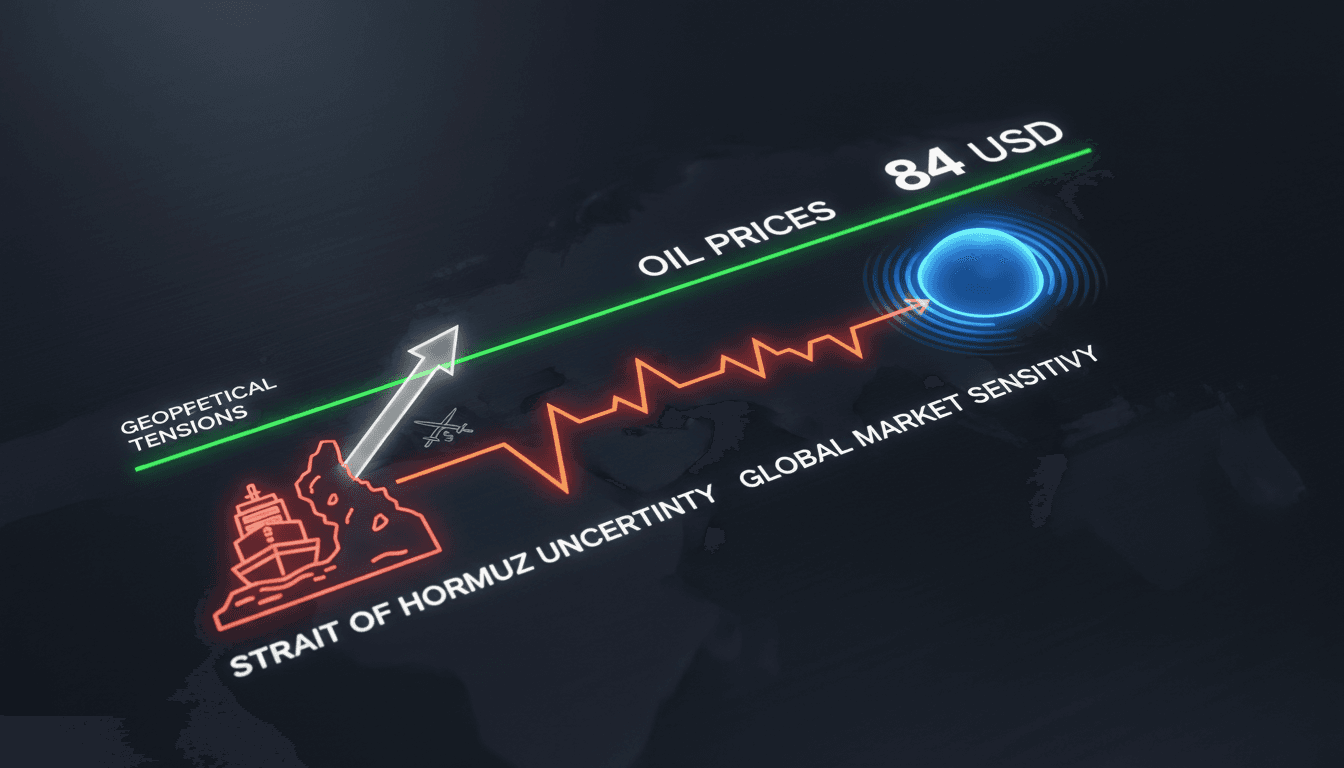
Here's what it means for you.
The stabilization of oil prices around $84 reflects a momentary balance in a market sensitive to geopolitical tensions. Investors and policymakers should remain vigilant as developments in the Strait of Hormuz could lead to significant price fluctuations. The potential agreement between Iran and Oman on new maritime routes adds another layer of complexity to an already volatile situation. As the Strait of Hormuz is a critical passage for global oil shipments, any changes in navigation agreements will have far-reaching implications for supply chains and pricing. Stakeholders in the energy sector must prepare for ongoing uncertainty that could impact their operations and strategies.
What happened
Oil prices experienced a rise on Monday, reaching around $84 per barrel due to uncertainty regarding the reopening of the Strait of Hormuz. This increase is attributed to market reactions to geopolitical developments in the region, particularly concerning maritime navigation. The lack of optimism surrounding the reopening has contributed to fluctuations in global oil prices.
As discussions unfold, the market is closely monitoring the implications of potential agreements between Iran and Oman. The Strait of Hormuz remains a focal point for global oil supply, making any changes in the region particularly impactful.
The Context
The Strait of Hormuz is a vital passage for oil shipments, with a significant portion of the world's oil supply passing through this narrow waterway. Iran's indication of a potential agreement with Oman on new maritime routes has raised concerns and expectations within the market. Geopolitical tensions in the region have historically influenced oil prices, and the current situation is no exception.
As negotiations progress, the dynamics of maritime navigation in the Strait will be crucial for global oil markets. Stakeholders, including governments and energy companies, are closely watching these developments to gauge their potential impact on supply and pricing.
Takeaway
Looking ahead, the oil market will likely remain sensitive to developments in the Strait of Hormuz. Investors should monitor any changes in the geopolitical landscape, particularly regarding Iran-Oman maritime agreements. The ongoing uncertainty may continue to affect global oil prices in the near future, prompting stakeholders to adjust their strategies accordingly.
As discussions evolve, the potential for further price adjustments remains a key consideration for those involved in the energy sector. Keeping an eye on these developments will be essential for understanding the broader implications for oil supply and pricing.
Egyptian politics, economy, and society coverage.
"Al Masry Al Youm is a major Egyptian newspaper with broad national coverage."
— A47 Editor
غموض مستقبل الملاحة فى مضيق هرمز يرفع أسعار النفط عالميًا
Oil prices rose globally on Monday amid uncertainty regarding the reopening of the Strait of Hormuz, following Iran's announcement of an agreement with Oman to establish new maritime routes. This development has heightened concerns over the stability...
Pan-Arab news coverage spanning politics, business, sports, and regional affairs.
"Asharq Al-Awsat reflects a broad Arab editorial perspective with strong attention to regional geopolitics."
— A47 Editor
النفط يستقر عند 84 دولاراً مع انحسار آمال إعادة فتح مضيق هرمز
Oil prices remained stable at $84 on Monday, having given up some earlier gains as optimism faded regarding negotiations to reopen the Strait of Hormuz.
Arabic-language coverage of international news and geopolitics.
"RT Arabic is a Russian state-funded outlet often criticized for promoting Kremlin-aligned narratives."
— A47 Editor
صعود أسعار النفط مع تلاشي آمال فتح مضيق هرمز
Oil prices rose on Monday amid ongoing uncertainty regarding the reopening of the vital Strait of Hormuz. This situation has contributed to a negative sentiment in the market as traders react to the potential implications of prolonged disruptions in ...