
Oil prices surge amid uncertainty over Strait of Hormuz reopening
What happened
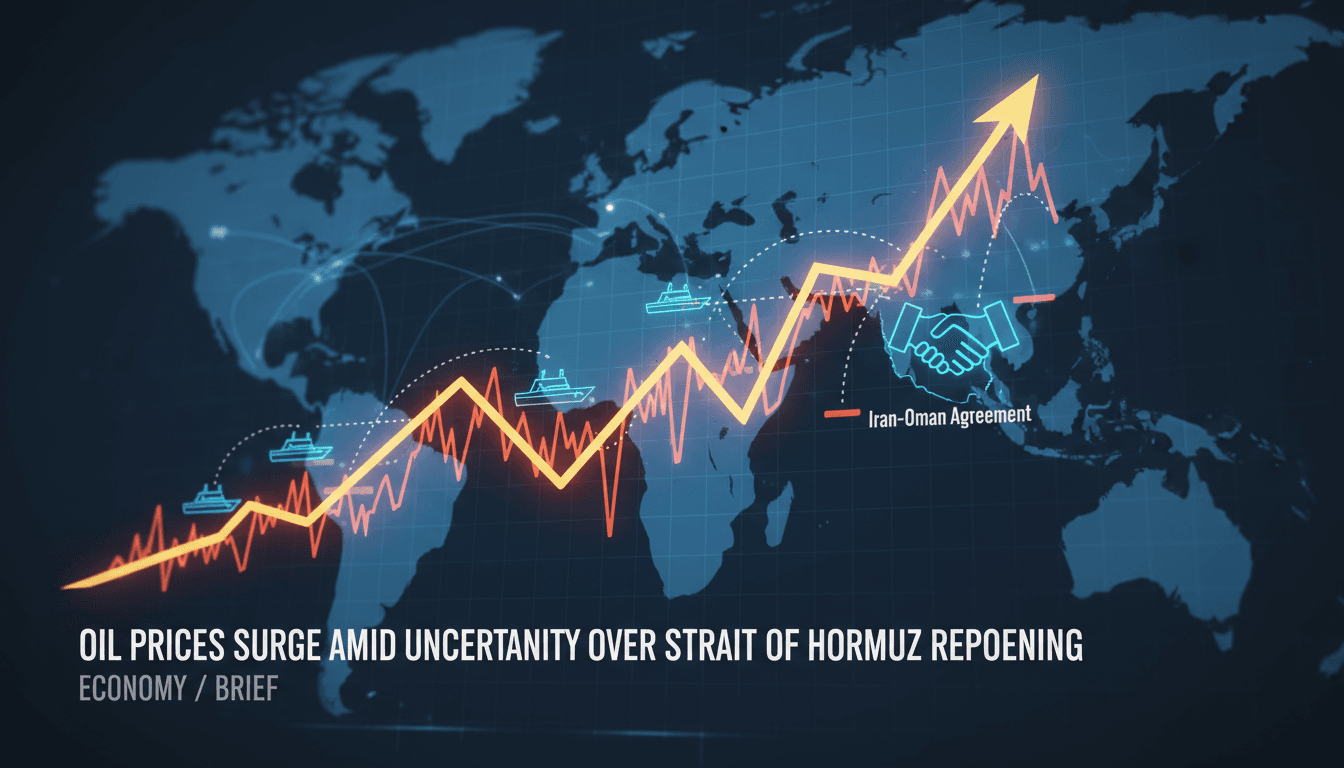
Oil prices have surged sharply due to ongoing uncertainty surrounding the reopening of the Strait of Hormuz. This increase reflects growing concerns over maritime navigation in the region, which is vital for global oil shipments. On August 10, 2026, oil prices rose significantly, prompting varied responses from Asian stock markets as the situation developed.
The uncertainty was exacerbated by Iran's recent agreement with Oman to establish new maritime routes. This agreement has raised alarms about the security of navigation in the area, further complicating the already tense geopolitical landscape.
The Context
The Strait of Hormuz is a critical passage for global oil shipments, with approximately 20% of the world's oil trade passing through it. Recent statements from Iranian officials have heightened concerns about maritime security, making the situation increasingly precarious. As Iran and Oman negotiate new routes, the international community is closely watching the implications for shipping and oil supply chains.
The timing of these developments is crucial, as they coincide with ongoing geopolitical tensions in the region. Stakeholders, including governments and shipping companies, are now faced with the challenge of navigating this uncertain environment while ensuring the security of their operations.
Takeaway
The ongoing uncertainty regarding the Strait of Hormuz is likely to continue impacting global oil prices and maritime security in the region. Market analysts and investors should monitor developments related to the Iran-Oman agreement closely, as any changes could have significant ramifications for international trade. Additionally, announcements from shipping companies regarding navigation routes will be critical to understanding the broader implications of this situation.
As negotiations progress and geopolitical tensions persist, the Strait of Hormuz will remain a focal point for market observers. The potential for continued volatility in oil prices underscores the importance of staying informed about these developments.
Pan-Arab news coverage spanning politics, business, sports, and regional affairs.
"Asharq Al-Awsat reflects a broad Arab editorial perspective with strong attention to regional geopolitics."
— A47 Editor
الأسهم الآسيوية تتباين وسط ضبابية بشأن إعادة فتح مضيق هرمز
Asian stocks showed mixed performance on Tuesday as oil prices continued to rise following a sharp increase the previous day, amid uncertainty regarding the reopening of the Strait of Hormuz.
Egyptian politics, economy, and society coverage.
"Al Masry Al Youm is a major Egyptian newspaper with broad national coverage."
— A47 Editor
غموض مستقبل الملاحة فى مضيق هرمز يرفع أسعار النفط عالميًا
Oil prices rose globally on Monday amid uncertainty regarding the reopening of the Strait of Hormuz, following Iran's announcement of an agreement with Oman to establish new maritime routes. This development has heightened concerns over the stability...
Arabic-language coverage of international news and geopolitics.
"RT Arabic is a Russian state-funded outlet often criticized for promoting Kremlin-aligned narratives."
— A47 Editor
صعود أسعار النفط مع تلاشي آمال فتح مضيق هرمز
Oil prices rose on Monday amid ongoing uncertainty regarding the reopening of the vital Strait of Hormuz. This situation has contributed to a negative sentiment in the market as traders react to the potential implications of prolonged disruptions in ...