
IEA Reports Major Oil Supply Shortfall Amid Middle East Tensions
What happened
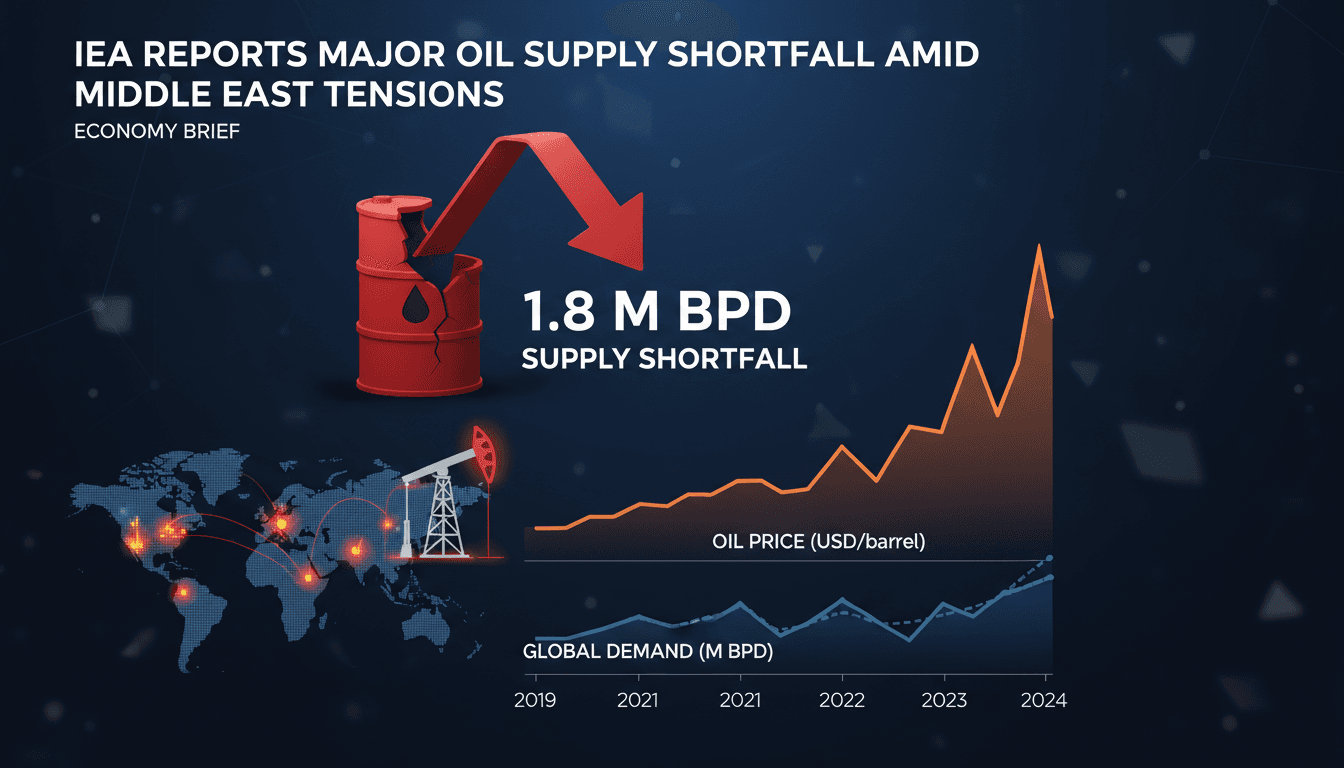
The IEA has announced a substantial shortfall in global oil supplies, expected to reach 1.8 million barrels per day. This figure represents the largest quarterly deficit in five years, driven primarily by renewed hostilities and disruptions in the Middle East. The agency has revised its oil supply forecast downward due to these escalating tensions, which have led to significant military escalations and maritime disruptions in the region.
As a result of high oil prices, global demand is projected to decline by 1.6 million barrels per day. This downward revision reflects a broader trend of reduced consumption as consumers and businesses adjust to rising costs. The IEA's findings underscore the critical state of the oil market amid ongoing geopolitical challenges.
The Context
The current oil shortfall is a direct consequence of military escalations in the Middle East, which have disrupted supply chains and created uncertainty in the market. Global oil inventories are expected to decline at a rate that exceeds previous estimates, further complicating the situation. The IEA's report indicates a 50% reduction in global demand estimates for the current year, highlighting the severity of the crisis.
As tensions persist, the potential for further disruptions remains high, raising concerns about inflation and economic stability. The interplay between geopolitical events and market dynamics will be crucial for stakeholders, as they navigate the implications of these developments on both local and global scales.
Takeaway
Looking ahead, it is essential to monitor developments in Middle Eastern geopolitical tensions, as they are likely to continue impacting global oil supply and prices. The IEA's report suggests that the oil market may face further volatility, which could have significant implications for inflation rates and economic conditions worldwide.
Stakeholders should remain vigilant for changes in global oil demand as prices fluctuate, as these shifts could influence broader economic strategies. The ongoing situation underscores the interconnectedness of energy markets and geopolitical stability, making it a critical area for observation.
Sports reporting with a focus on Saudi and regional competitions.
"Okaz sports coverage is broad and audience-friendly, with strong attention to Saudi teams and leagues."
— A47 Editor
1.8 مليون برميل نفط عجز يومي في الأسواق.. الأكبر في 5 سنوات
The International Energy Agency has reported an unexpected supply pressure in global oil markets, resulting in a significant daily shortfall of 1.8 million barrels, the largest in five years. This shortfall is attributed to renewed military escalatio...
Global markets, investing, and macroeconomics from a premier financial newsroom.
"Bloomberg is respected for in-depth financial reporting and data-driven analysis."
— A47 Editor
IEA Says Oil Markets Are Facing a Wider Shortfall
The International Energy Agency (IEA) has reported that global oil inventories are expected to decline this quarter at a rate more than double previous estimates, with a projected shortfall of 1.8 million barrels per day due to renewed hostilities an...
Oil, metals, and agriculture: supply/demand headlines, OPEC chatter, inventories, and price action.
"Solid tape for energy and metals traders tracking macro and micro catalysts."
— A47 Editor
IEA lowers 2026 oil supply forecast on renewed Middle East hostilities
The International Energy Agency (IEA) has revised its oil supply forecast for 2026 downward, citing renewed hostilities in the Middle East as a significant factor. This adjustment reflects ongoing geopolitical tensions that have raised concerns about...