
Oil prices surge above $85 amid U.S.-Iran tensions over Strait of Hormuz
What happened
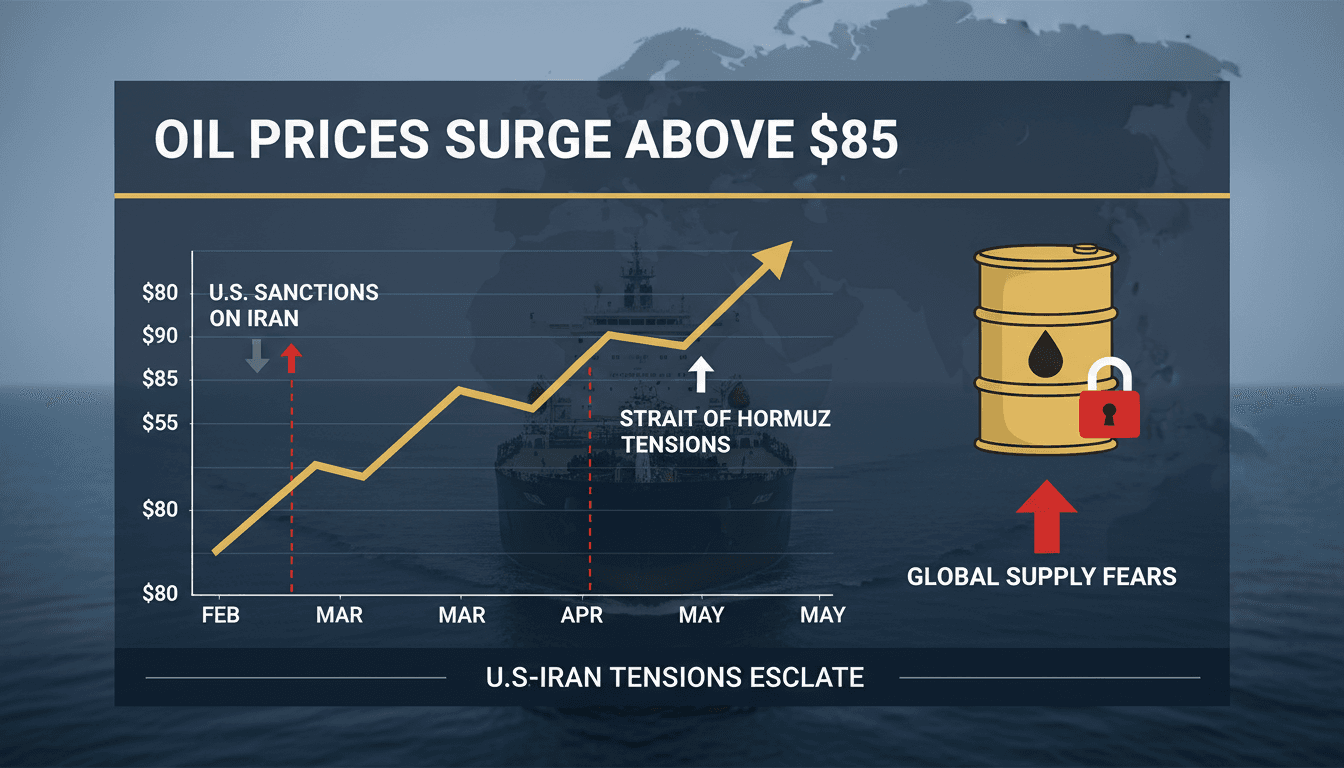
Oil prices have risen significantly amid uncertainty regarding the reopening of the Strait of Hormuz. As of August 10, 2026, prices surged above $85 per barrel, reflecting market concerns over potential supply disruptions. This increase has raised alarms about the broader implications for global petrol prices, particularly as the situation remains unresolved.
The ongoing conflict between the U.S. and Iran has led to fears of prolonged disruptions in oil supply. Analysts are warning that if the Strait of Hormuz remains closed, further increases in petrol prices could be expected. The volatility in the oil market is a direct response to these geopolitical tensions.
The Context
The Strait of Hormuz is a vital passage for global oil shipments, making it a focal point in international energy security discussions. Recent tensions between the U.S. and Iran have escalated, with both nations vying for control and influence over this critical chokepoint. The situation is further complicated by Iran's tempered expectations for a swift reopening of the strait, which adds to market uncertainty.
As the U.S. and Iran continue to negotiate, the potential for disruptions looms large. The oil market's reaction to these developments underscores the interconnectedness of geopolitical events and economic stability. Stakeholders must navigate this complex landscape as they assess the risks and opportunities presented by the current climate.
Takeaway
The ongoing geopolitical tensions suggest that oil prices may remain elevated in the near future. As the situation develops, it will be crucial to monitor U.S.-Iran negotiations regarding the Strait of Hormuz. Any significant changes in these discussions could have immediate repercussions on global oil supply and pricing dynamics.
Additionally, stakeholders should keep an eye on broader market trends that could influence supply and demand. The potential for further price increases remains a pressing concern, particularly if the strait remains closed for an extended period.
Oil, metals, and agriculture: supply/demand headlines, OPEC chatter, inventories, and price action.
"Solid tape for energy and metals traders tracking macro and micro catalysts."
— A47 Editor
Oil prices lower in seesaw trade as U.S. and Iran wrangle over Hormuz control
Oil prices have experienced fluctuations as tensions between the U.S. and Iran over control of the Strait of Hormuz continue to escalate. Recent developments indicate a stalemate in negotiations, contributing to market volatility and uncertainty rega...
Global news coverage with extensive reporting on Middle Eastern conflicts and geopolitics.
"Al Jazeera is a Qatar-based broadcaster known for wide regional coverage and alternative perspectives."
— A47 Editor
Oil prices, stocks surge as Hormuz closure drags on
Oil prices and stock markets have surged as the closure of the Strait of Hormuz continues, with U.S. petrol prices dropping nine cents last week. Analysts warn that if the closure persists, petrol prices could rise significantly again.
UAE-based English-language newspaper covering regional politics, economics, and global affairs.
"The National reflects Emirati policy perspectives while maintaining international editorial standards."
— A47 Editor
Oil surges above $85 per barrel as Hormuz deal remains elusive
Oil prices have surged above $85 per barrel as negotiations for a deal concerning the Strait of Hormuz remain stalled, reflecting ongoing geopolitical tensions in the region. The rise in prices is attributed to military actions and heightened fears o...
Regional and international reporting focused on Middle Eastern politics, diplomacy, and economics.
"Asharq Al-Awsat is a Saudi-owned international newspaper reflecting mainstream Gulf political perspectives."
— A47 Editor
Oil Rises as Iran Tempers Hopes for Swift Hormuz Reopening
Oil prices have risen as Iran has tempered expectations for a swift reopening of the Strait of Hormuz, a vital maritime route for global oil shipments. Iran's insistence on meeting specific demands from the United States before resuming normal operat...