
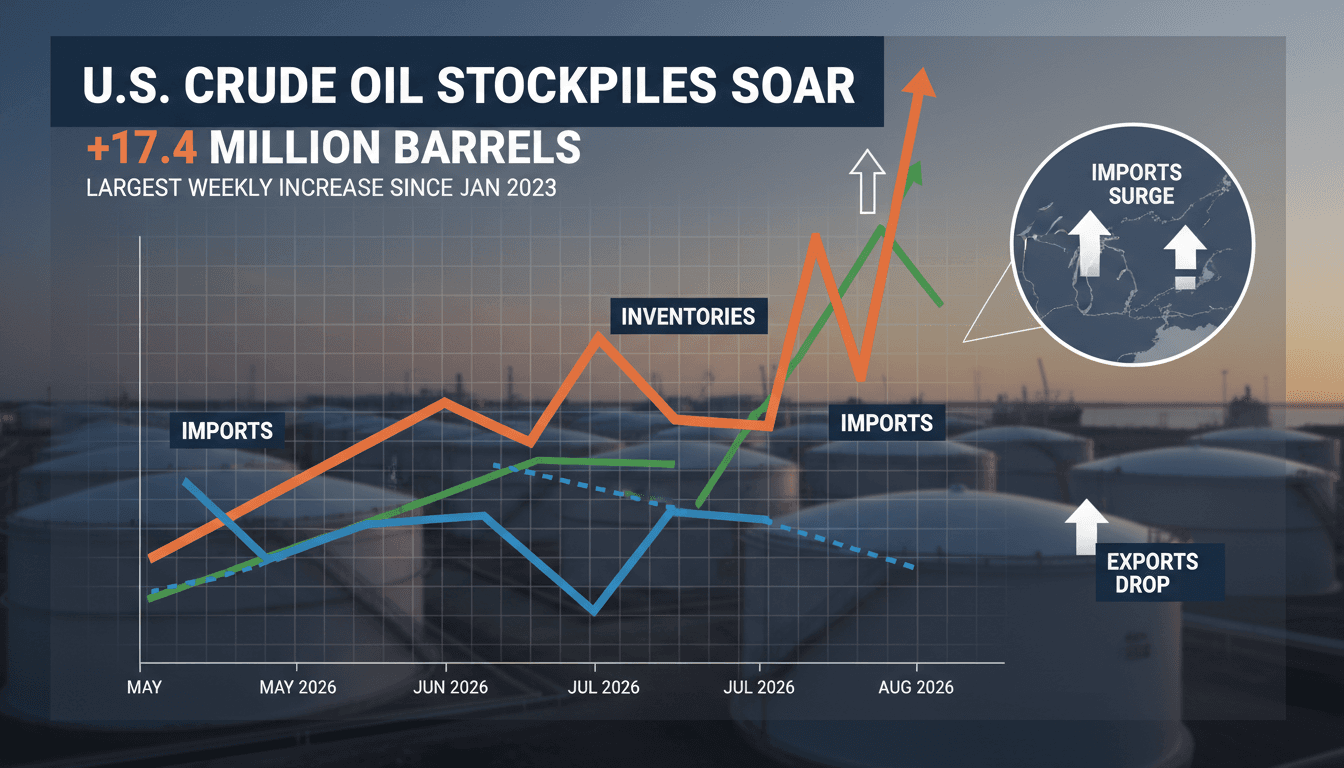
U.S. crude oil stockpiles rise by 17.4 million barrels marking largest weekly increase since January 2023
Here's what it means for you.
The recent surge in U.S. crude oil inventories signals a potential shift in market dynamics, particularly as it reflects a significant drop in exports coupled with increased imports. This unexpected rise could influence oil prices and market strategies in the near future. Stakeholders, including traders and policymakers, will need to closely monitor these trends to gauge their impact on the broader energy landscape. As the Gulf Coast region experiences notable changes in supply, the implications for energy policy and economic stability could be profound. Analysts will be watching closely to see how these inventory adjustments affect market sentiment and pricing strategies.
What happened
Crude oil inventories in the U.S. rose by 17.4 million barrels, reaching a total of 424.4 million barrels for the week ending August 7, 2026. This increase marks the largest weekly rise since January 2023, driven primarily by a significant drop in exports and a notable rise in imports. The decline in exports has been particularly pronounced, with figures falling to 3.06 million barrels per day, the lowest level since November 2025.
The increase in stockpiles is approximately 2% below the five-year average for this time of year. This unexpected inventory build has raised questions about the current supply-demand balance in the oil market, especially as geopolitical tensions continue to influence global energy dynamics.
The Context
The rise in U.S. crude oil inventories comes at a time when the market is already grappling with fluctuating supply and demand dynamics. The Gulf Coast region has been particularly affected, with significant changes in both imports and exports contributing to the overall inventory increase. This situation is compounded by ongoing geopolitical tensions that can impact oil supply chains and pricing.
As the U.S. Energy Information Administration releases this data, stakeholders across the energy sector are prompted to reassess their strategies. The implications of this inventory increase could resonate through various sectors, influencing everything from energy policy to consumer prices.
Takeaway
Looking ahead, analysts will be closely monitoring trends in U.S. crude oil exports and imports to assess their potential impact on oil prices. The unexpected rise in inventories may lead to shifts in market strategies as traders react to changing supply dynamics.
As the market adjusts to this new information, the focus will be on how these inventory changes influence pricing in the coming weeks. Stakeholders should remain vigilant as they navigate this evolving landscape.
Pan-Arab news coverage spanning politics, business, sports, and regional affairs.
"Asharq Al-Awsat reflects a broad Arab editorial perspective with strong attention to regional geopolitics."
— A47 Editor
زيادة مفاجئة وكبيرة في مخزونات النفط الأميركية
The U.S. Energy Information Administration reported a surprising and significant increase in crude oil inventories in the United States, marking the largest rise since January 2023. This unexpected surge in stock levels indicates a shift in market dy...
U.S. business news, corporate developments, and economy.
"The Wall Street Journal is respected for deep financial and economic reporting with a center-right editorial perspective."
— A47 Editor
U.S. Crude Oil Stockpiles Post Unexpected Build
U.S. commercial crude oil stocks, excluding the Strategic Petroleum Reserve, unexpectedly increased by 17.4 million barrels to reach 424.4 million barrels for the week ending August 7, according to the Energy Information Administration (EIA). This fi...