
Gold prices stabilize amid economic data and Middle East tensions
What happened
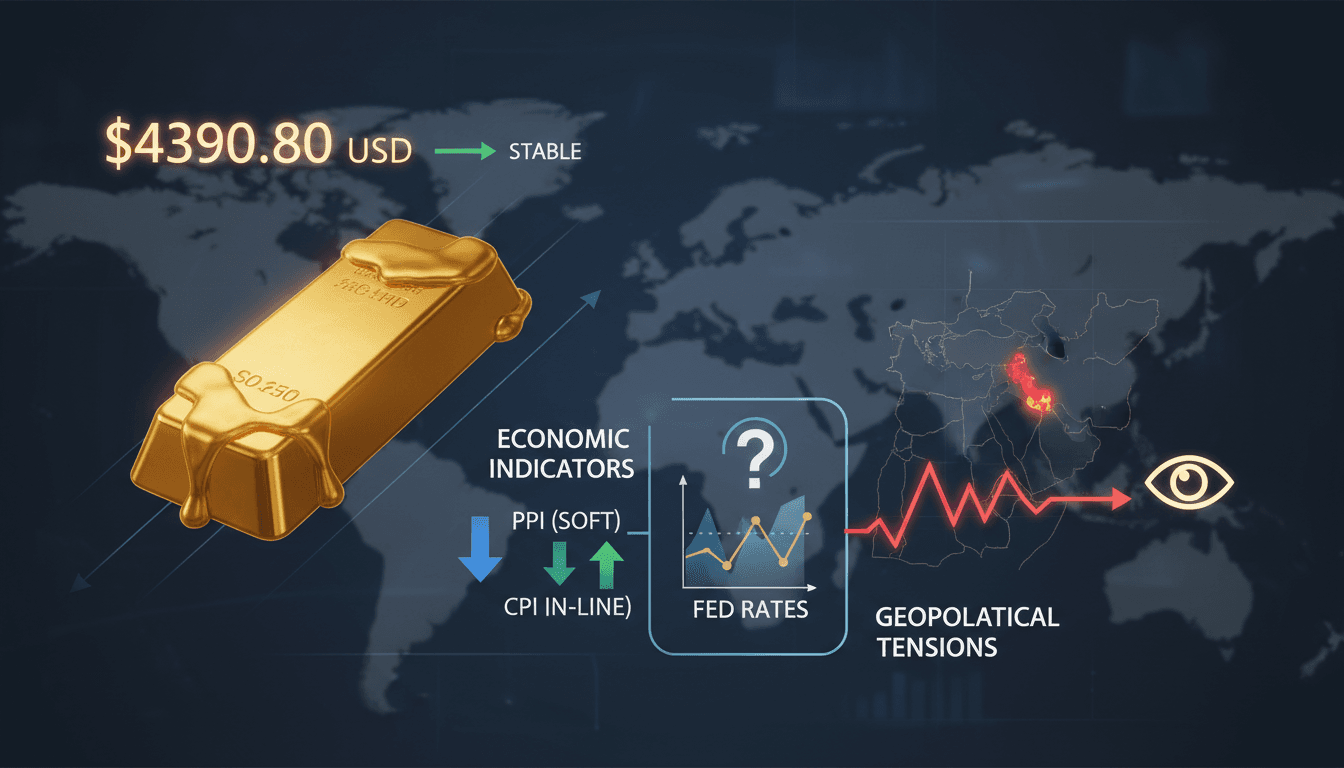
Gold prices have stabilized after experiencing fluctuations, currently resting below $4,400 an ounce. This stabilization follows a recent increase influenced by the release of economic indicators, including a soft Producer Price Index (PPI) and an in-line Consumer Price Index (CPI). Traders are weighing these data points against expectations for Federal Reserve interest rate decisions, which have a significant impact on gold prices.
The market reacted positively to the July CPI data, with gold prices rising around 1% before settling. However, ongoing geopolitical tensions, particularly in the Middle East, are contributing to market uncertainty. As a result, traders are adopting a cautious approach while evaluating the broader economic landscape.
The Context
The current situation in the gold market is shaped by a combination of economic indicators and geopolitical factors. The recent soft PPI and stable CPI have led traders to reassess their expectations regarding potential Federal Reserve rate hikes. This reassessment is critical as interest rates directly influence gold's appeal as a non-yielding asset.
Geopolitical tensions, especially concerning the Strait of Hormuz, are also affecting market sentiment. These tensions can lead to fluctuations in oil prices, which often correlate with gold prices. As traders navigate these complexities, the interplay between economic data and geopolitical developments will be crucial in determining future market movements.
Takeaway
Looking ahead, traders will need to keep a close eye on upcoming economic reports that could influence Federal Reserve rate decisions. Developments in the Middle East will also be pivotal, as they could impact both oil and gold markets. The cautious sentiment among traders suggests that gold prices may remain volatile as they respond to these unfolding events.
In this environment, maintaining awareness of economic indicators and geopolitical developments will be essential for investors. The outlook for gold prices will largely depend on how these factors evolve in the coming weeks.
Global markets, investing, and macroeconomics from a premier financial newsroom.
"Bloomberg is respected for in-depth financial reporting and data-driven analysis."
— A47 Editor
Gold Nears $4,400 as Traders Weigh Fed Interest-Rate Path
Gold prices are approaching $4,400 an ounce as traders assess the Federal Reserve's interest-rate trajectory amid signs of economic cooling. This development follows a week of fluctuating market sentiment influenced by various economic indicators and...
Oil, metals, and agriculture: supply/demand headlines, OPEC chatter, inventories, and price action.
"Solid tape for energy and metals traders tracking macro and micro catalysts."
— A47 Editor
Gold takes a breather after soft PPI earlier propels bullion to new 2-month high
Gold prices have taken a pause after reaching a new two-month high, driven by softer Producer Price Index (PPI) data that has influenced market sentiment positively. This recent uptick reflects a growing demand for gold as a safe-haven asset amid flu...
Oil, metals, and agriculture: supply/demand headlines, OPEC chatter, inventories, and price action.
"Solid tape for energy and metals traders tracking macro and micro catalysts."
— A47 Editor
Gold prices up around 1% as traders pare Fed rate hike bets after in-line July CPI
Gold prices have increased by approximately 1% as traders adjust their expectations regarding potential interest rate hikes by the Federal Reserve, following the release of July's Consumer Price Index (CPI) data, which aligned with forecasts. This sh...