
Saudi Arabia's inflation rate holds steady at 1.8% in July 2026
What happened
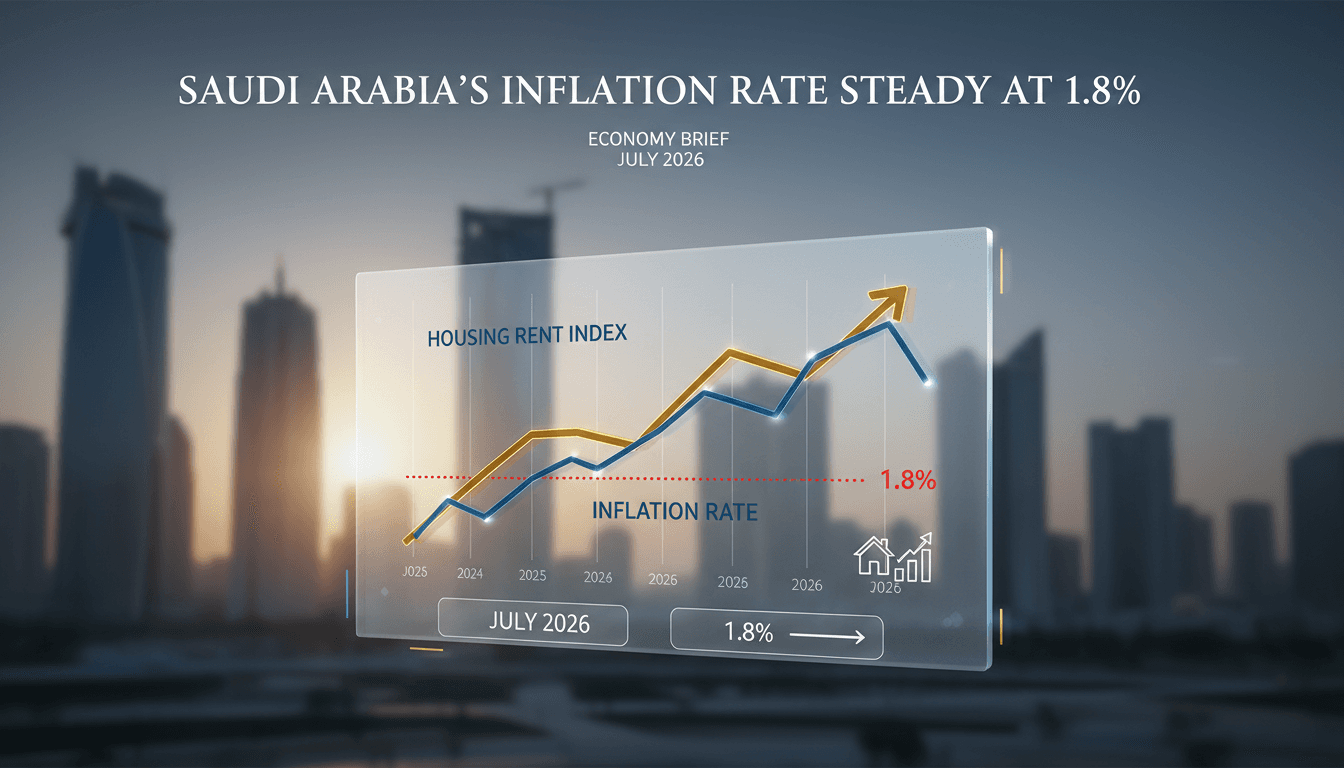
Inflation in Saudi Arabia remained unchanged at 1.8% year-on-year in July 2026, consistent with the previous month. This stability is largely attributed to rising housing rents, which increased by 4.3% year-on-year, alongside notable hikes in food, beverage, and transportation costs. The consumer price index also saw a slight monthly increase of 0.2% compared to June, reflecting ongoing economic dynamics.
The unchanged inflation rate suggests a balance in the economy, despite fluctuations in global commodity markets. As the Kingdom navigates these challenges, the focus remains on maintaining economic stability while addressing the underlying factors contributing to inflation.
The Context
The current inflation rate is a significant indicator of economic health in Saudi Arabia, particularly as the government works to enhance housing supply under its Vision 2030 initiative. Rising housing costs have been a major contributor to the inflation rate, accounting for 0.8 percentage points of the annual figure. The increases in food and beverage prices, along with transportation costs, further complicate the economic landscape.
As the Kingdom strives to meet the growing demand for housing, the implications of these inflationary pressures could influence future economic policies. Stakeholders, including consumers and businesses, will be closely watching how the government responds to these challenges in the coming months.
Takeaway
Looking ahead, it will be essential to monitor housing supply initiatives as part of Vision 2030, as these efforts may help alleviate some inflationary pressures. Additionally, changes in consumer spending patterns could emerge as households adjust to the current economic climate. The stability of the inflation rate suggests that while the situation is manageable for now, ongoing global economic conditions could introduce new challenges that warrant attention.
As the government continues to address these issues, the interplay between housing supply and inflation will be a critical area to watch in the near future.
Regional and international reporting focused on Middle Eastern politics, diplomacy, and economics.
"Asharq Al-Awsat is a Saudi-owned international newspaper reflecting mainstream Gulf political perspectives."
— A47 Editor
Saudi Inflation Holds Steady at 1.8% Despite Global Commodity Market Turmoil
Saudi Arabia's inflation rate has remained steady at 1.8% as of July 2026, despite ongoing global commodity market fluctuations. This stability is attributed primarily to a 4.2% increase in housing costs, as reported by the General Authority for Stat...
Sports reporting with a focus on Saudi and regional competitions.
"Okaz sports coverage is broad and audience-friendly, with strong attention to Saudi teams and leagues."
— A47 Editor
التضخم السعودي يستقر عند 1.8% في يوليو
The annual inflation rate in Saudi Arabia remained stable at 1.8% in July, consistent with June's figures, as housing rents continued to drive price increases alongside notable rises in food, beverages, and transportation costs. According to the Gene...
Arabic-language coverage of international news and geopolitics.
"RT Arabic is a Russian state-funded outlet often criticized for promoting Kremlin-aligned narratives."
— A47 Editor
استقرار التضخم في السعودية
The inflation rate in Saudi Arabia remained stable at 1.8% year-on-year in July, maintaining the same level for the third consecutive month. This consistency indicates a steady economic environment amid various global economic pressures.