
Oil prices rise slightly amid concerns over weak demand and rising U.S. inventories
What happened
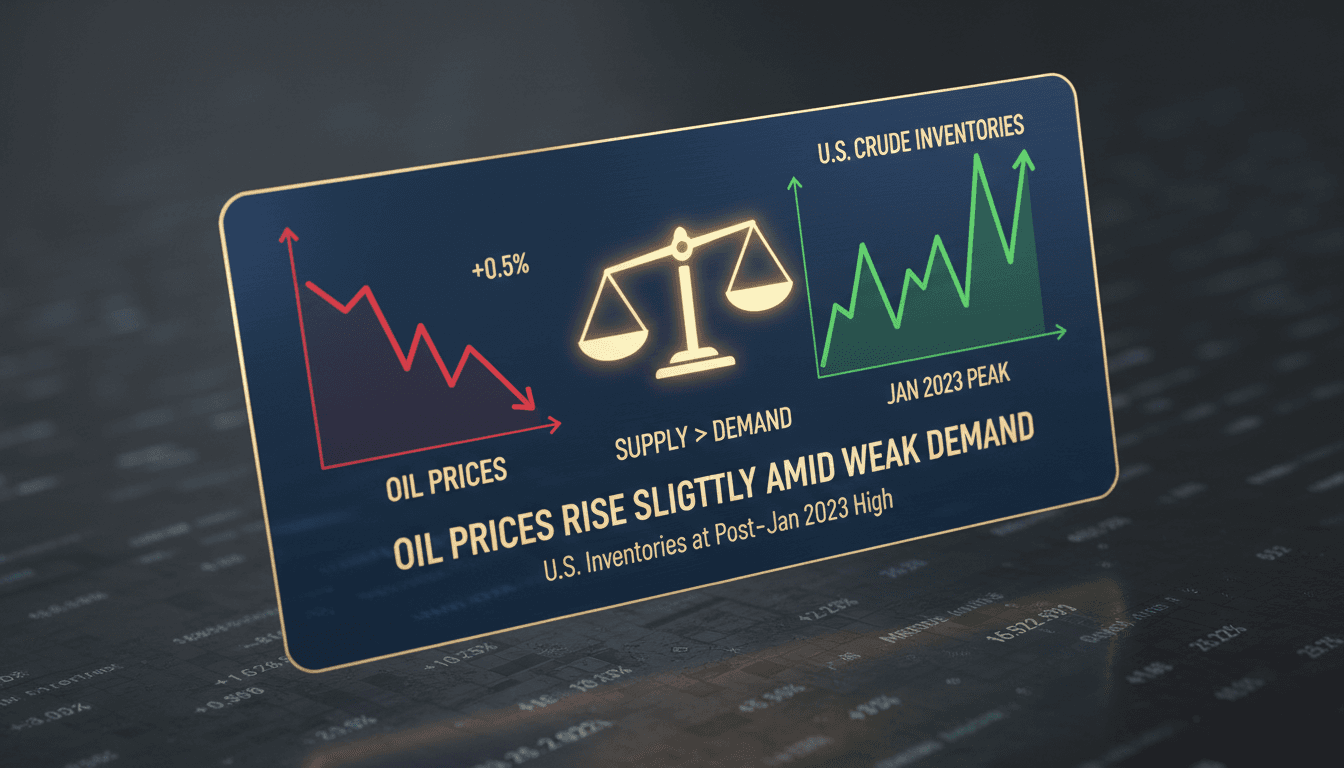
Oil prices experienced a slight increase today following a notable decline in the previous session. Brent crude rose by 9 cents to $87.16 per barrel, while West Texas Intermediate saw a minor uptick of 4 cents, reaching $81.29 per barrel. This fluctuation is largely attributed to concerns over weak global demand and rising U.S. crude inventories.
The latest data indicates that U.S. crude inventories have surged to 424.4 million barrels, marking the largest weekly increase since January 2023. This unexpected rise in inventories suggests that supply is currently outpacing demand, contributing to the cautious sentiment in the market.
The Context
The oil market is currently navigating through a period of volatility, influenced by mixed signals regarding supply and demand. Recent reports show that Brent crude fell by more than 2% in the previous session, highlighting the ongoing uncertainty. Stakeholders, including traders and policymakers, are closely monitoring these developments as they assess the potential impact on global oil prices.
Geopolitical tensions, particularly between the U.S. and Iran, add another layer of complexity to the situation. As OPEC has recently reduced its global demand growth forecast for 2026, the market remains on edge, weighing the implications of these forecasts against rising inventory levels.
Takeaway
Looking ahead, market focus will likely remain on demand indicators and geopolitical developments that could further affect oil supply dynamics. Traders will be particularly attentive to any changes in U.S.-Iran negotiations regarding oil supply, as these could significantly influence market conditions. Additionally, updates from OPEC and the International Energy Agency on global demand forecasts will be crucial for understanding future price movements.
As the market continues to grapple with these challenges, the interplay between inventory levels and geopolitical factors will be essential in shaping the outlook for oil prices. Stakeholders should prepare for potential fluctuations as new information emerges.
Algerian news with politics, society, and sports coverage.
"Ennahar Online is a high-volume Algerian outlet."
— A47 Editor
ارتفاع أسعار النفط
Oil prices experienced a slight increase on Friday, with Brent crude futures rising by 9 cents, or 0.1%, to reach $87.16 per barrel. Meanwhile, West Texas Intermediate crude futures increased by 4 cents to $81.29 per barrel, following a decline of ov...
Arabic-language economic and business reporting with strong UAE market relevance.
"Emarat Al Youm business coverage often centers UAE property, banking, consumer issues, and economic policy."
— A47 Editor
ارتفاع طفيف في أسعار النفط و"برنت" عند 87.16 دولار للبرميل ارتفاع طفيف في أسعار النفط و"برنت" عند 87.16 دولار للبرميل
Oil prices experienced a slight increase today, with Brent crude rising to $87.16 per barrel, following a significant drop of over 2% in the previous session. This fluctuation reflects the ongoing volatility in the oil market, which has seen prices f...
Sports reporting with a focus on Saudi and regional competitions.
"Okaz sports coverage is broad and audience-friendly, with strong attention to Saudi teams and leagues."
— A47 Editor
88 دولارًا للبرميل.. النفط يتراجع تحت ضغط توقعات الطلب الضعيف
Oil prices fell on Thursday, with Brent crude dropping to $88.56 per barrel and West Texas Intermediate down to $82.72, amid concerns over weak global demand and negative indicators from U.S. inventory reports and consumption forecasts by OPEC and th...