
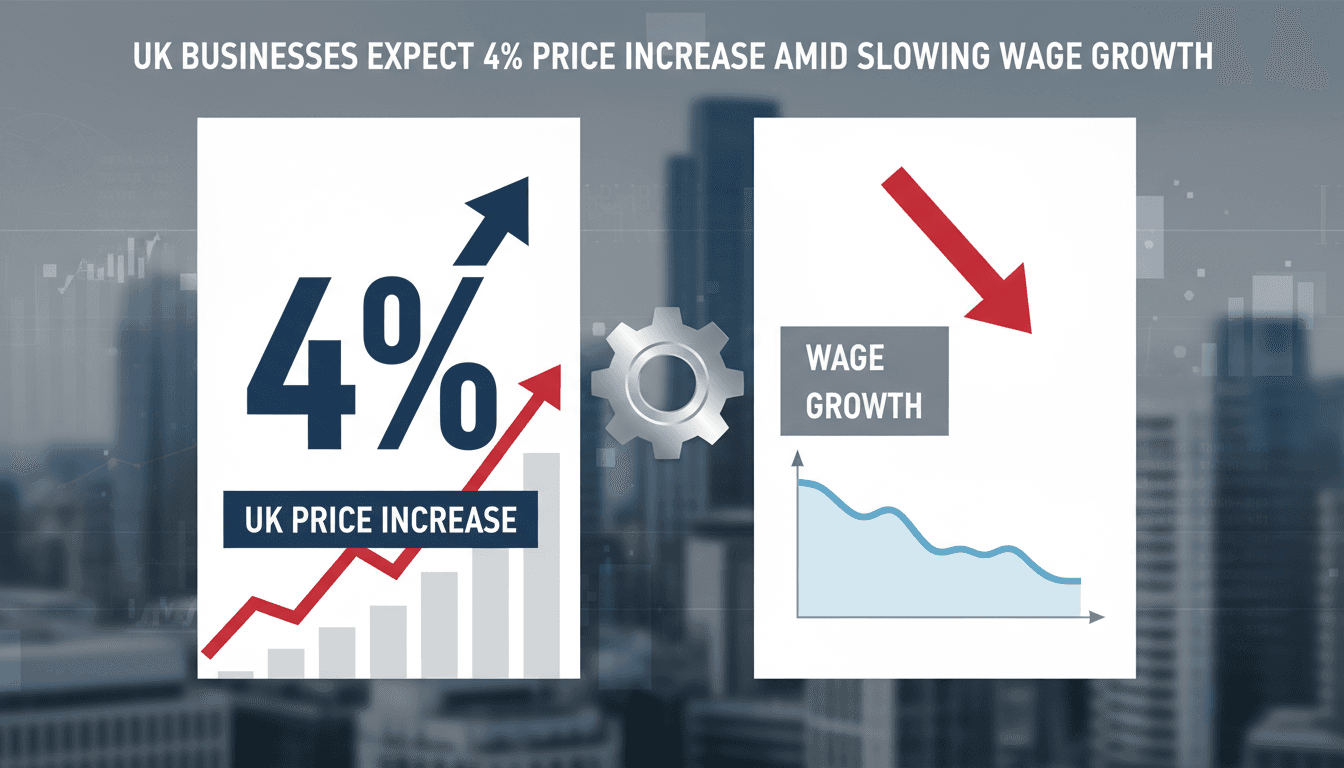
UK businesses expect 4% price increase amid slowing wage growth
Here's what it means for you.
The anticipated 4% rise in prices signals ongoing inflationary pressures that could influence monetary policy decisions by the Bank of England. As wage growth slows, consumers may face tighter budgets, impacting spending patterns. Businesses will need to navigate this complex economic landscape carefully to maintain profitability while managing costs.
What happened
A recent survey conducted by the Bank of England indicates that U.K. businesses expect to raise prices by approximately 4% over the next year. This expectation marks a notable increase compared to previous months, reflecting heightened inflationary pressures. Additionally, the survey reveals a slowdown in wage growth among these firms, suggesting a challenging economic environment.
The survey was conducted in May 2026, with results released on June 5, 2026. The findings highlight a significant shift in price expectations, which could have broader implications for the economy.
The Context
The Bank of England's survey results come at a time when businesses are grappling with rising costs and inflationary trends. Stakeholders, including policymakers and consumers, will be closely monitoring these developments as they assess the potential impact on economic growth. The slowdown in wage growth further complicates the situation, as it may limit consumer spending power.
Understanding these dynamics is crucial for businesses and policymakers alike, as they navigate the complexities of the current economic landscape. The interplay between price increases and wage growth will be a key factor in shaping future economic policies.
Takeaway
The anticipated rise in prices suggests that the Bank of England may need to consider these inflationary expectations in its future policy decisions. Monitoring upcoming reports from the Bank will be essential to gauge any shifts in inflation expectations and their potential impact on interest rates. Additionally, the effects on consumer spending and overall economic growth will be critical to watch in the coming months.
As businesses prepare for higher prices, the economic landscape will continue to evolve, necessitating careful attention from all stakeholders involved.
Key macro releases (CPI, jobs, PMIs), surprise indexes, and market implications.
"Great for data-print awareness and instant read-through to rates and risk assets."
— A47 Editor
UK firms expect prices to rise 4% over next year, BoE survey shows
A recent survey conducted by the Bank of England (BoE) reveals that UK firms anticipate a 4% increase in prices over the next year, indicating a cautious outlook on inflation. This expectation reflects a slight moderation compared to previous forecas...
Social/economic commentary and analysis relevant to business and markets.
"WSJ blends data-driven economic insight with commentary on policy and society."
— A47 Editor
BOE Survey Finds Businesses Expect to Raise Prices at Faster Rate
A recent survey conducted by the Bank of England revealed that U.K. businesses expect to raise their prices at a faster rate, with projections indicating a rise of 3.5% over the next year, up from 3.4% in February. This shift comes amid a backdrop of...
Global political, business, and cultural coverage from WSJ international desks.
"The Wall Street Journal offers extensive international reporting with a reputation for financial insight and a center-right editorial stance."
— A47 Editor
BOE Survey Finds Businesses Expect to Raise Prices at Faster Rate
A recent survey conducted by the Bank of England revealed that U.K. businesses expect to raise their prices at a faster rate, with projections indicating a rise of 3.5% over the next year, up from 3.4% in February. This shift comes amid a backdrop of...
Key macro releases (CPI, jobs, PMIs), surprise indexes, and market implications.
"Great for data-print awareness and instant read-through to rates and risk assets."
— A47 Editor
UK firms predict slower rise in prices than in April, BoE survey shows
A recent survey by the Bank of England (BoE) indicates that UK firms expect a slower rise in prices compared to predictions made in April, reflecting a more cautious outlook on inflation.