
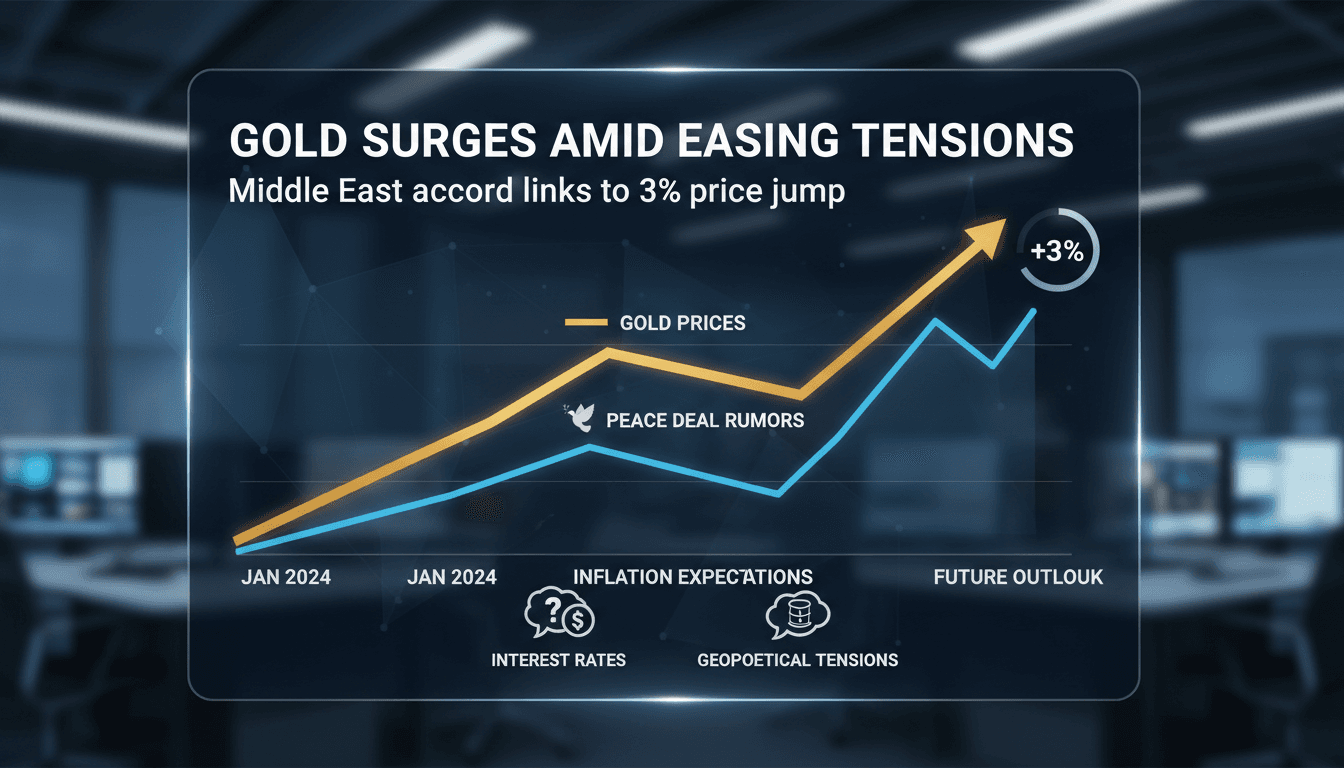
Gold prices rise 3% amid easing inflation fears linked to Middle East conflict
Here's what it means for you.
The recent rise in gold prices signals a temporary relief for investors amid ongoing geopolitical tensions. As inflation fears ease slightly with the prospect of a peace deal in the Middle East, market participants may find renewed confidence in gold as a safe haven. However, the underlying concerns regarding inflation and potential interest rate hikes remain critical factors that could influence future price movements. Investors should remain vigilant as developments unfold, particularly regarding the Federal Reserve's decisions and the Iran peace negotiations. These elements will play a significant role in shaping market sentiment and gold's trajectory in the coming weeks.
What happened
Gold prices increased by 3% at settlement on Friday, reflecting a response to easing inflation fears linked to the ongoing Middle East conflict. Despite this uptick, gold recorded a weekly loss for the second consecutive week, indicating volatility in the market. The fluctuations are attributed to expectations surrounding a potential peace agreement with Iran, announced by President Trump, which has temporarily boosted investor sentiment.
However, persistent concerns about inflation and interest rate hikes continue to exert pressure on gold prices. The market is currently navigating these complexities as it assesses the implications of geopolitical developments and economic indicators.
The Context
The rise in gold prices is closely tied to reports of a potential peace agreement with Iran, which has been a focal point of geopolitical tension since the conflict began in February 2026. The ongoing situation has significantly impacted market sentiment, with inflation fears driving fluctuations in gold prices. As of now, there is a 57% chance that the Federal Reserve will raise interest rates by December, according to CME FedWatch, further complicating the outlook for gold.
The interplay between geopolitical events and economic indicators is crucial for investors. As the situation evolves, stakeholders must consider how these factors will influence market dynamics and gold's role as a safe haven asset.
Takeaway
Looking ahead, the market will closely monitor developments regarding the Iran peace deal and inflation trends, as these will significantly impact gold prices. The potential announcement of the peace agreement could provide further volatility, while the Federal Reserve's decisions on interest rates in upcoming meetings will also be critical.
Investors should stay informed about these developments, as they will shape the landscape for gold and other commodities in the near future. The ongoing geopolitical tensions and economic indicators will likely keep gold prices sensitive to news and market sentiment.
Sports reporting with a focus on Saudi and regional competitions.
"Okaz sports coverage is broad and audience-friendly, with strong attention to Saudi teams and leagues."
— A47 Editor
الذهب يرتفع 3% عند التسوية لكنه يسجل خسارة أسبوعية
Gold prices rose by 3% at the close of trading on Friday, supported by easing inflation concerns related to the implications of the Middle East conflict. However, the yellow metal recorded a loss for the second consecutive week, following U.S. Presid...
Oil, metals, and agriculture: supply/demand headlines, OPEC chatter, inventories, and price action.
"Solid tape for energy and metals traders tracking macro and micro catalysts."
— A47 Editor
Gold gains on hopes for Iran peace deal, but falls for the week on rate jitters
Gold prices have seen fluctuations recently, gaining on optimism surrounding a potential peace deal between the U.S. and Iran, particularly after former President Donald Trump canceled planned military strikes against Iran. However, despite these gai...
Regional and international reporting focused on Middle Eastern politics, diplomacy, and economics.
"Asharq Al-Awsat is a Saudi-owned international newspaper reflecting mainstream Gulf political perspectives."
— A47 Editor