
US Dollar Index Hits Multi-Month Low Amid Cooling Economic Indicators
Here's what it means for you.
If you're involved in international trade or investments, the weakening dollar could impact your costs and returns.
Why it matters
The decline in the US Dollar Index signals shifting economic conditions that could influence global trade dynamics and investment strategies.
What happened (in 30 seconds)
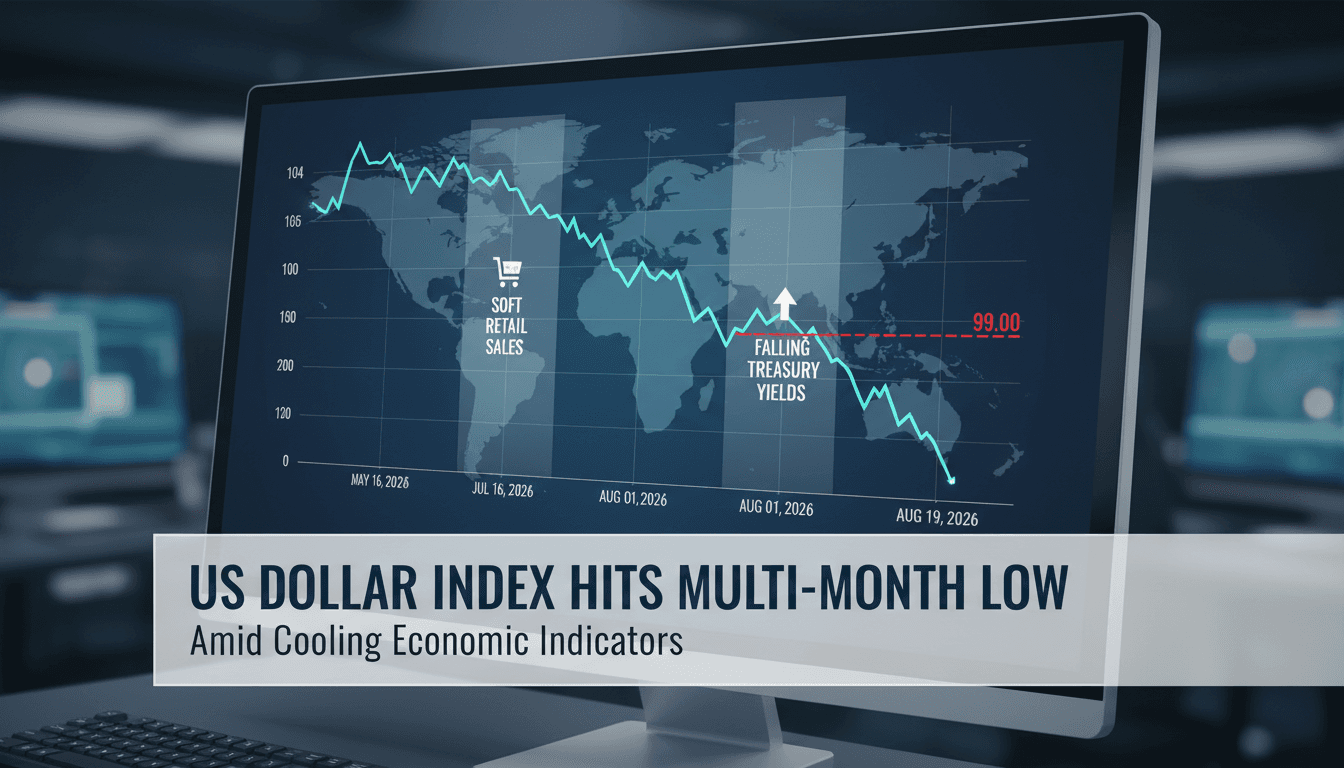
- DXY fell below 99: On August 19, 2026, the US Dollar Index dropped to its lowest level since late May.
- Cooling economic data: Softer retail sales and inflation metrics prompted reduced expectations for Federal Reserve rate hikes.
- Yield compression: Declining US Treasury yields diminished the dollar's attractiveness to foreign investors.
The context you actually need
- Previous strength: The dollar had been strong throughout 2025-2026, buoyed by higher interest rates and robust growth data.
- Market reactions: The decline reflects a broader trend of dollar softening anticipated in 2026 due to converging global interest rates.
- Fixed currency impact: In Dubai, the UAE dirham's peg to the dollar means local prices remain stable, but import costs may fluctuate.
What's really happening
On August 19, 2026, the US Dollar Index (DXY) fell below the critical 99 threshold during trading sessions in Asia and Europe, marking a significant decline that hadn't been seen since late May. This drop was largely driven by a combination of disappointing US retail sales data and ongoing moderation in both producer and consumer price indices. As these economic indicators pointed to a cooling economy, market participants began to reassess their expectations regarding the Federal Reserve's monetary policy.
The Federal Reserve's stance has been a focal point for investors, and the anticipation surrounding the release of the Federal Open Market Committee (FOMC) minutes added to the market's volatility. With the Fed's recent communications suggesting a more dovish approach, the urgency for near-term rate hikes diminished. This shift in sentiment was further compounded by announcements from the US Treasury regarding expanded long-term debt buybacks, which contributed to yield compression. As Treasury yields retreated from their recent highs, the dollar's appeal for carry-trade positioning weakened, leading to a sell-off in dollar-denominated assets.
The DXY's intraday low of 98.83 on August 19 reflects a broader trend of dollar depreciation that many analysts had forecasted for 2026. The yen and other major currencies gained ground against the dollar, although they remained far from multi-decade highs. This dynamic illustrates the complex interplay between domestic economic indicators and global currency markets, where shifts in one can have cascading effects on the other.
For investors and traders, the implications of a weaker dollar are multifaceted. While it may reduce the cost of non-USD imports, it can also impact expatriate remittance values and alter the competitive landscape for US exports. As the dollar weakens, foreign investors may seek alternative assets, further influencing market dynamics.
Who feels it first (and how)
- International traders: May see fluctuating costs for imports and exports.
- Expatriates in Dubai: Could experience changes in remittance values.
- Investors in dollar-denominated assets: Might reassess their portfolios in light of reduced dollar attractiveness.
What to watch next
- Federal Reserve communications: Upcoming FOMC minutes will provide insights into future monetary policy and interest rate expectations.
- US economic indicators: Continued monitoring of retail sales and inflation data will be crucial for understanding the dollar's trajectory.
- Global interest rate trends: Shifts in monetary policy from other major central banks could further influence the dollar's strength or weakness.
The DXY has fallen below 99, reflecting cooling economic data.
Continued dollar softening as global interest rates converge.
The long-term impact on US exports and foreign investment flows.
Frequently Asked Questions
- Why it matters?
- The decline in the US Dollar Index signals shifting economic conditions that could influence global trade dynamics and investment strategies.
- What happened (in 30 seconds)?
- DXY fell below 99: On August 19, 2026, the US Dollar Index dropped to its lowest level since late May. Cooling economic data: Softer retail sales and inflation metrics prompted reduced expectations for Federal Reserve rate hikes. Yield compression: Declining US Treasury yields diminished the dollar's attractiveness to foreign investors.
- What's really happening?
- On August 19, 2026, the US Dollar Index (DXY) fell below the critical 99 threshold during trading sessions in Asia and Europe, marking a significant decline that hadn't been seen since late May. This drop was largely driven by a combination of disappointing US retail sales data and ongoing moderation in both producer and consumer price indices. As these economic indicators pointed to a cooling economy, market participants began to reassess their expectations regarding the Federal Reserve's monet
- Who feels it first (and how)?
- International traders: May see fluctuating costs for imports and exports. Expatriates in Dubai: Could experience changes in remittance values. Investors in dollar-denominated assets: Might reassess their portfolios in light of reduced dollar attractiveness.
- What to watch next?
- Federal Reserve communications: Upcoming FOMC minutes will provide insights into future monetary policy and interest rate expectations. US economic indicators: Continued monitoring of retail sales and inflation data will be crucial for understanding the dollar's trajectory. Global interest rate trends: Shifts in monetary policy from other major central banks could further influence the dollar's strength or weakness.
Arabic-language coverage of international news and geopolitics.
"RT Arabic is a Russian state-funded outlet often criticized for promoting Kremlin-aligned narratives."
— A47 Editor
الدولار عند أدنى مستوى في عدة أشهر
The dollar has fallen to its lowest level in several months, coinciding with a decline in U.S. Treasury yields from their recent highs. This drop indicates a shift in market sentiment and economic conditions affecting the dollar's value.
Pan-Arab news coverage spanning politics, business, sports, and regional affairs.
"Asharq Al-Awsat reflects a broad Arab editorial perspective with strong attention to regional geopolitics."
— A47 Editor
الدولار قُرب أدنى مستوياته في أشهر مع تراجع عوائد الخزانة وترقُّب محضر «الفيدرالي»
The US dollar approached its lowest levels in several months against major currencies on Wednesday, driven by a decline in US Treasury yields. This movement reflects ongoing market adjustments as investors react to economic indicators and monetary po...
Arabic-language economic and business reporting with strong UAE market relevance.
"Emarat Al Youm business coverage often centers UAE property, banking, consumer issues, and economic policy."
— A47 Editor
الدولار يهبط إلى أدنى مستوى في أكثر من شهرين الدولار يهبط إلى أدنى مستوى في أكثر من شهرين
The dollar has fallen to its lowest level in over two months as of Monday, with traders reducing their expectations for an increase in U.S. interest rates. This decline reflects a shift in market sentiment regarding monetary policy and economic condi...