
US Dollar Stabilizes Near Three-Month Low After Treasury Bond Buyback Intervention
Here's what it means for you.
If you're involved in global trade or finance, the dollar's fluctuations can directly impact your costs and investment strategies.
Why it matters
The stabilization of the US dollar affects global currency markets, influencing trade balances and investment flows.
What happened (in 30 seconds)
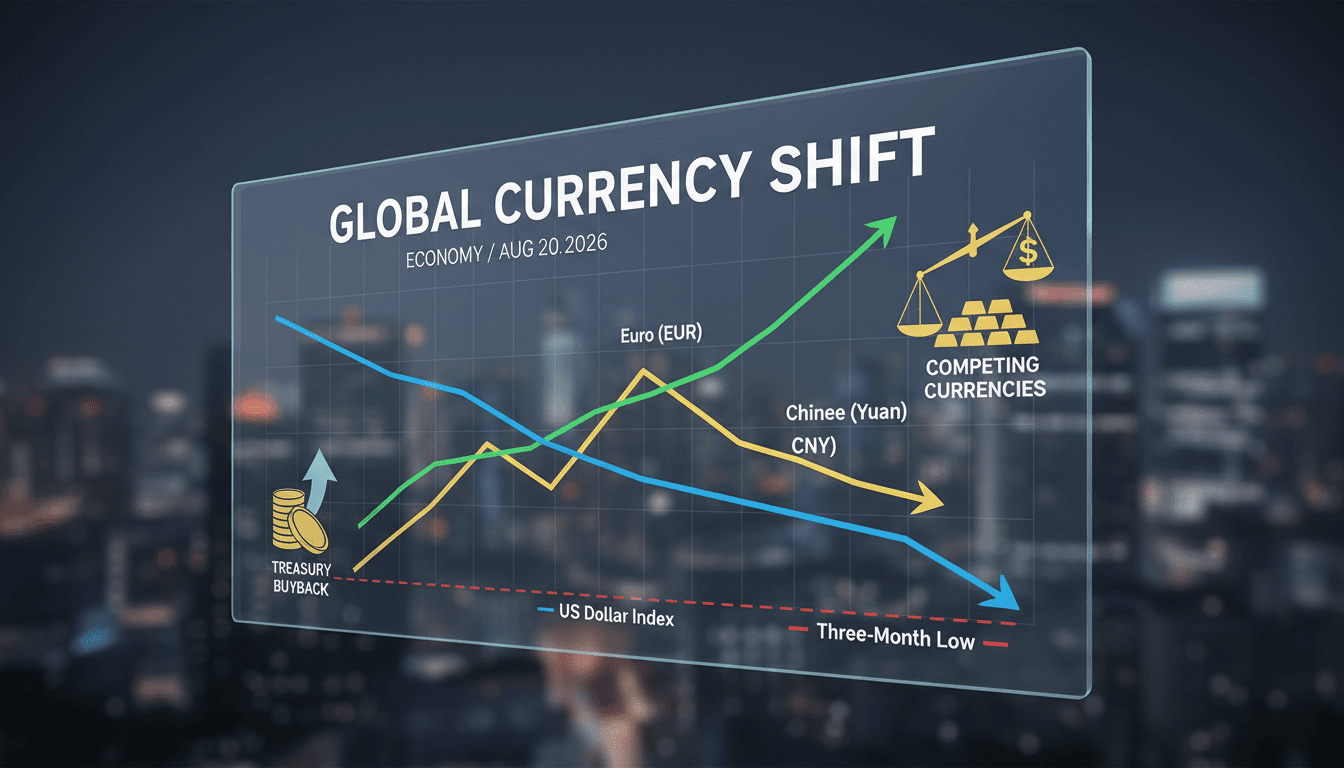
- The US dollar index fell to 98.723, its lowest level since May 14, 2026, following a Treasury bond buyback intervention.
- The US Treasury Department expanded its bond buyback operations to calm a selloff in long-term Treasuries, reducing 30-year yields by approximately 9 basis points.
- Competing currencies like the euro and British pound strengthened, reaching 1.1692 USD and 1.3631 USD, respectively.
The context you actually need
- Rising yields: A sharp selloff in global bond markets had pushed US long-term Treasury yields to their highest levels since 2007, raising concerns over government debt.
- Geopolitical tensions: Ongoing conflicts, particularly the US-Iran situation, have added pressure to the financial markets, prompting a reevaluation of US fiscal policy.
- Market intervention: The Treasury's decision to double liquidity-supporting buyback operations was aimed at stabilizing the bond market and restoring investor confidence.
What's really happening
On August 20, 2026, the US Treasury Department announced a significant intervention in the bond market by expanding its buyback operations for securities maturing in 10 to 30 years. This move was a direct response to a sharp selloff in long-term Treasuries, which had seen yields soar to a 19-year high of 5.337%. The intervention aimed to calm market jitters and restore stability, as rising yields were causing widespread concern about the sustainability of US government debt amid increasing geopolitical tensions.
The dollar index, which measures the value of the US dollar against a basket of foreign currencies, settled at 98.723, marking its lowest point since mid-May. This depreciation of the dollar reflects a broader trend where competing currencies, such as the euro and British pound, gained strength. The euro reached 1.1692 USD, while the pound hit 1.3631 USD, indicating a shift in investor sentiment favoring these currencies over the dollar.
The Treasury's buyback operations effectively reduced the 30-year yield by approximately 9 basis points to 5.198%, easing immediate selling pressure in the bond market. This intervention not only stabilized the dollar but also helped to mitigate the risks of a disorderly selloff in long-term bonds, which could have had far-reaching implications for the global financial system.
As the dollar weakens, it impacts purchasing power and trade dynamics. For countries and businesses that rely heavily on imports priced in dollars, a weaker dollar can lead to higher costs. Conversely, it may benefit exporters by making their goods cheaper for foreign buyers. The interplay between the dollar's value and global economic conditions is complex, and this latest intervention highlights the delicate balance that the US Treasury must maintain to support both the dollar and the broader economy.
Who feels it first (and how)
- Global currency traders: They will adjust their strategies based on the dollar's fluctuations and the strength of competing currencies.
- Importers and exporters: Businesses that rely on international trade will experience changes in costs and pricing strategies.
- Investors in US Treasuries: They will be directly affected by the bond buyback operations and the resulting yield changes.
- Expatriates in Dubai: With the UAE dirham pegged to the dollar, fluctuations in the dollar's value can influence remittance values and tourism inflows.
What to watch next
- Federal Reserve meeting minutes: Insights from upcoming meetings will provide clues on monetary policy direction and its impact on the dollar.
- Geopolitical developments: Ongoing tensions in the Middle East could further influence market sentiment and the dollar's stability.
- Bond market reactions: Continued monitoring of Treasury yields will be crucial to understanding the effectiveness of the buyback operations.
The dollar index is currently at 98.723, its lowest since May 14, 2026.
Competing currencies will continue to strengthen if the dollar remains weak.
The long-term effects of the Treasury's intervention on the overall economy and fiscal policy remain to be seen.
Frequently Asked Questions
- Why it matters?
- The stabilization of the US dollar affects global currency markets, influencing trade balances and investment flows.
- What happened (in 30 seconds)?
- The US dollar index fell to 98.723, its lowest level since May 14, 2026, following a Treasury bond buyback intervention. The US Treasury Department expanded its bond buyback operations to calm a selloff in long-term Treasuries, reducing 30-year yields by approximately 9 basis points. Competing currencies like the euro and British pound strengthened, reaching 1.1692 USD and 1.3631 USD, respectively.
- What's really happening?
- On August 20, 2026, the US Treasury Department announced a significant intervention in the bond market by expanding its buyback operations for securities maturing in 10 to 30 years. This move was a direct response to a sharp selloff in long-term Treasuries, which had seen yields soar to a 19-year high of 5.337%. The intervention aimed to calm market jitters and restore stability, as rising yields were causing widespread concern about the sustainability of US government debt amid increasing geopo
- Who feels it first (and how)?
- Global currency traders: They will adjust their strategies based on the dollar's fluctuations and the strength of competing currencies. Importers and exporters: Businesses that rely on international trade will experience changes in costs and pricing strategies. Investors in US Treasuries: They will be directly affected by the bond buyback operations and the resulting yield changes. Expatriates in Dubai: With the UAE dirham pegged to the dollar, fluctuations in the dollar's value can influence re
- What to watch next?
- Federal Reserve meeting minutes: Insights from upcoming meetings will provide clues on monetary policy direction and its impact on the dollar. Geopolitical developments: Ongoing tensions in the Middle East could further influence market sentiment and the dollar's stability. Bond market reactions: Continued monitoring of Treasury yields will be crucial to understanding the effectiveness of the buyback operations.
Jordanian news and regional updates.
"Roya News is a Jordanian outlet focused on breaking news and local affairs."
— A47 Editor
الدولار قرب أدنى مستوياته في 3 أشهر
The dollar index, which measures the value of the dollar against a basket of currencies, has approached its lowest levels in three months, according to CNBC. This decline reflects ongoing fluctuations in the currency market and may indicate shifts in...
Arabic-language coverage of international news and geopolitics.
"RT Arabic is a Russian state-funded outlet often criticized for promoting Kremlin-aligned narratives."
— A47 Editor
الدولار عند أدنى مستوى في عدة أشهر
The dollar has fallen to its lowest level in several months, coinciding with a decline in U.S. Treasury yields from their recent highs. This drop indicates a shift in market sentiment and economic conditions affecting the dollar's value.
Pan-Arab news coverage spanning politics, business, sports, and regional affairs.
"Asharq Al-Awsat reflects a broad Arab editorial perspective with strong attention to regional geopolitics."
— A47 Editor
الدولار قُرب أدنى مستوياته في أشهر مع تراجع عوائد الخزانة وترقُّب محضر «الفيدرالي»
The US dollar approached its lowest levels in several months against major currencies on Wednesday, driven by a decline in US Treasury yields. This movement reflects ongoing market adjustments as investors react to economic indicators and monetary po...