Trending

    Oil Prices Rise to Four-Week High Amid Middle East Tensions Over Strait of Hormuz

    Section editor: ·Moderate4 articles covering this·3 news sources·Updated 28 minutes ago·MENA
    Share:
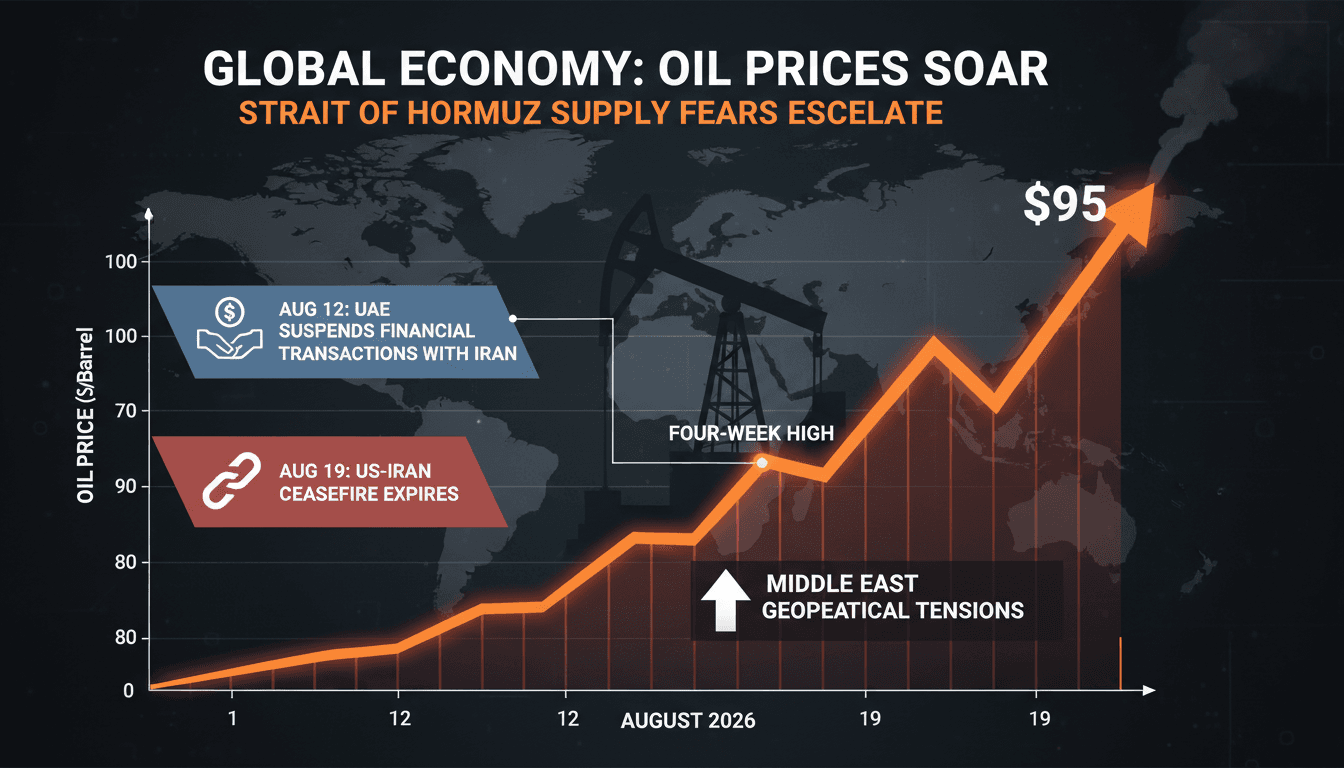
    A graph showing rising oil prices alongside geopolitical events in the Middle East.

    Here's what it means for you.

    If you rely on oil for your business or daily commute, expect higher costs as geopolitical tensions escalate.

    Why it matters

    Rising oil prices can significantly impact global inflation and economic stability, affecting everything from transportation costs to consumer goods.

    What happened (in 30 seconds)

    • Oil prices surged to a near four-week high, with Brent crude at $91.62 per barrel and WTI at $85.83 per barrel.
    • Geopolitical tensions escalated as Iran adopted an offensive military stance, contradicting U.S. claims about the Strait of Hormuz's accessibility.
    • Alternative export routes were activated by Iraq and Chinese shipping firms, indicating a shift in global oil logistics.

    The context you actually need

    • The Strait of Hormuz is a critical chokepoint for over 20% of global oil trade, making its stability vital for energy markets.
    • The 2026 Iran conflict has heightened tensions, with U.S.-Israel actions against Iran leading to retaliatory threats and military posturing.
    • Recent price volatility has seen oil prices fluctuate significantly, with peaks above $118 per barrel earlier in the year, followed by declines and renewed upward pressure.

    What's really happening

    The recent spike in oil prices is primarily driven by escalating geopolitical tensions in the Middle East, particularly surrounding the Strait of Hormuz. This strait is crucial for global oil transport, and any threat to its accessibility can create significant supply uncertainty. On August 18, 2026, Iran's military officials declared a shift to a "fully offensive" posture, asserting that the strait remained closed to shipping. This statement directly contradicted U.S. President Donald Trump's claims that the strait was open and that no negotiations were ongoing.

    The expiration of a temporary ceasefire between the U.S. and Iran on August 18 has further complicated the situation, leading to heightened fears of conflict and supply disruptions. The United Arab Emirates (UAE) responded by suspending all financial and economic transactions with Iran, following missile incidents that raised alarms about regional security.

    In response to these tensions, Iraq's cabinet approved alternative export contracts that will allow oil to be shipped through different routes starting September 1, 2026. This move is a strategic attempt to mitigate the risks associated with relying on the Strait of Hormuz. Additionally, two major Chinese shipping companies have halted tanker transits through both Hormuz and Bab al-Mandeb, opting to collect cargoes externally. This indicates a cautious approach to shipping logistics amid rising geopolitical risks.

    The market's reaction has been to reflect a sustained geopolitical premium on oil prices, with Brent crude futures climbing for four consecutive sessions. However, the absence of immediate supply cuts has limited gains, and U.S. inventory data has shown mixed movements in crude and product stocks. The broader equity markets have displayed mixed responses, with energy sector stocks benefiting from the price increases, while inflation concerns continue to loom over the economy.

    Who feels it first (and how)

    • Consumers: Higher fuel prices will directly impact transportation and commuting costs.
    • Businesses: Companies reliant on oil for logistics will face increased operational costs, potentially leading to higher prices for goods.
    • Investors: Energy sector stocks may see volatility, affecting portfolios tied to oil markets.
    • Governments: Countries dependent on oil imports will experience inflationary pressures, impacting economic stability.

    What to watch next

    • U.S. inventory reports: These will provide insights into domestic supply levels and potential impacts on prices.
    • Diplomatic developments: Any new negotiations or escalations between the U.S. and Iran could significantly alter market dynamics.
    • Shipping routes: Monitoring changes in shipping patterns, especially from China, will indicate how global logistics are adapting to the current crisis.
    Known:

    Oil prices are elevated due to geopolitical tensions.

    Likely:

    Continued volatility in oil prices as the situation evolves.

    Unclear:

    The long-term impact on global supply chains and economic stability.

    Frequently Asked Questions

    Why it matters?
    Rising oil prices can significantly impact global inflation and economic stability, affecting everything from transportation costs to consumer goods.
    What happened (in 30 seconds)?
    Oil prices surged to a near four-week high, with Brent crude at $91.62 per barrel and WTI at $85.83 per barrel. Geopolitical tensions escalated as Iran adopted an offensive military stance, contradicting U.S. claims about the Strait of Hormuz's accessibility. Alternative export routes were activated by Iraq and Chinese shipping firms, indicating a shift in global oil logistics.
    What's really happening?
    The recent spike in oil prices is primarily driven by escalating geopolitical tensions in the Middle East, particularly surrounding the Strait of Hormuz. This strait is crucial for global oil transport, and any threat to its accessibility can create significant supply uncertainty. On August 18, 2026, Iran's military officials declared a shift to a "fully offensive" posture, asserting that the strait remained closed to shipping. This statement directly contradicted U.S. President Donald Trump's c
    Who feels it first (and how)?
    Consumers: Higher fuel prices will directly impact transportation and commuting costs. Businesses: Companies reliant on oil for logistics will face increased operational costs, potentially leading to higher prices for goods. Investors: Energy sector stocks may see volatility, affecting portfolios tied to oil markets. Governments: Countries dependent on oil imports will experience inflationary pressures, impacting economic stability.
    What to watch next?
    U.S. inventory reports: These will provide insights into domestic supply levels and potential impacts on prices. Diplomatic developments: Any new negotiations or escalations between the U.S. and Iran could significantly alter market dynamics. Shipping routes: Monitoring changes in shipping patterns, especially from China, will indicate how global logistics are adapting to the current crisis.
    4 Articles
    Investing.com

    Oil prices settle near 4-week high as Middle East crisis escalates

    Oil prices have settled near a four-week high as tensions in the Middle East escalate, particularly concerning the Strait of Hormuz, a vital shipping route for global oil supplies. The current geopolitical climate has led to increased market volatili...

    Asharq Al-Awsat

    Hormuz Traffic Slows as Uncertainty Over Waterway Persists

    Traffic through the Strait of Hormuz has slowed significantly amid ongoing geopolitical uncertainties, with recent reports indicating a drop in vessel numbers and discussions between Iran and Oman regarding strait management.

    20 hours ago
    Read Full Article
    The Wall Street Journal

    Oil Posts Modest Gains With Strait of Hormuz Situation Unclear

    Oil futures have seen modest gains amid cautious trading as conflicting reports emerge regarding the flow of oil through the Strait of Hormuz, a critical passage for global oil transport. The uncertainty surrounding this vital route has led to fluctu...

    The Wall Street Journal

    Oil Posts Modest Gains With Strait of Hormuz Situation Unclear

    Oil futures have experienced modest gains amid cautious trading as conflicting reports emerge regarding the flow of oil through the Strait of Hormuz, a critical passage for global oil transport. The uncertainty surrounding shipping routes has led to ...