
Global government bond yields reach multiyear highs amid Middle East tensions and inflation concerns
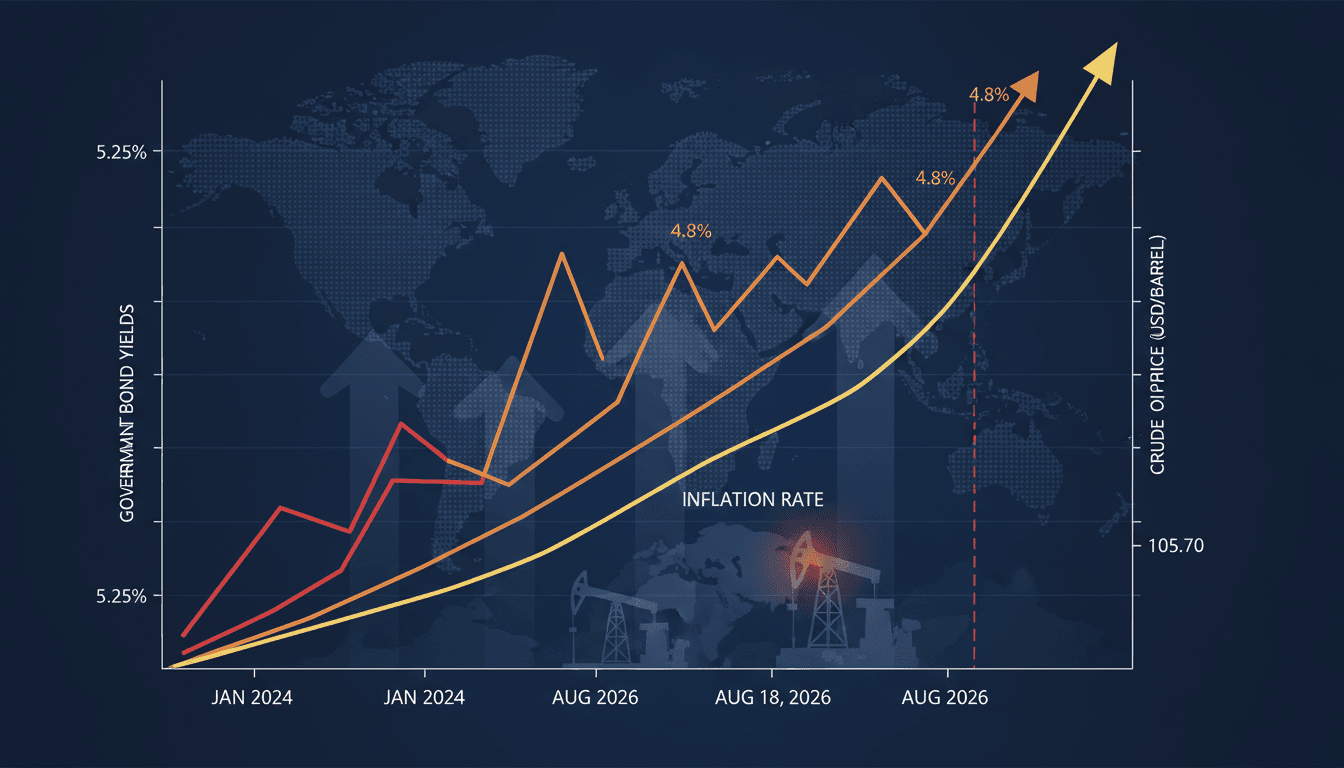
Here's what it means for you.
If you’re borrowing money or investing, rising bond yields could significantly impact your costs and returns.
Why it matters
The surge in global government bond yields signals heightened inflation risks and geopolitical tensions, affecting borrowing costs and investment strategies worldwide.
What happened (in 30 seconds)
- Global bond yields surged to multiyear highs on August 18, 2026, driven by escalating Middle East tensions and inflation fears.
- The 30-year U.S. Treasury yield peaked at 5.333%, the highest level since 2007, reflecting widespread investor selloff.
- Oil prices rose above $90 per barrel, exacerbating concerns over prolonged inflation and fiscal deficits across major economies.
The context you actually need
- Geopolitical tensions in the Middle East, particularly around the Strait of Hormuz, have raised fears of supply disruptions, pushing oil prices higher.
- Persistent inflation above central bank targets has pressured bond markets, leading to increased yields as investors seek safer assets.
- High government debt levels and fiscal deficits are compounding the situation, prompting concerns about long-term borrowing costs for both governments and corporations.
What's really happening
On August 18, 2026, global financial markets experienced a significant selloff in government bonds, reflecting a complex interplay of geopolitical and economic factors. The 30-year U.S. Treasury yield reached a peak of 5.333%, marking the highest level since 2007, while the 10-year Treasury yield hit 4.748%. In Europe, the 10-year German Bund yield climbed to 3.263%, and Japanese 10-year government bond yields soared to a 30-year high of 2.955%. This widespread increase in yields can be attributed to escalating tensions in the Middle East, particularly following the expiration of a U.S.-Iran Memorandum of Understanding, which left unresolved shipping issues in the Strait of Hormuz. The potential for conflict in this critical region has raised oil prices above $90 per barrel, intensifying inflation concerns.
As inflation remains stubbornly above the 2% target set by central banks, investors are increasingly wary of the implications for fiscal policy and economic stability. High government debt levels and persistent fiscal deficits have further pressured bond markets, leading to a selloff as investors reassess their risk exposure. The selloff reflects broader worries about the sustainability of government borrowing in an environment of rising interest rates and inflation.
In response to these pressures, U.S. Treasury actions have included increased debt buybacks aimed at easing long-term yield pressure. Central banks are closely monitoring inflation data as they prepare for upcoming policy decisions, with many analysts predicting that sustained higher borrowing costs could become the norm. The partial stabilization of yields in late trading suggests that while the immediate panic may have eased, the underlying concerns about inflation and geopolitical risks remain.
Who feels it first (and how)
- Homebuyers: Higher mortgage rates due to increased borrowing costs will make home purchases more expensive.
- Businesses: Companies relying on loans for expansion will face steeper interest rates, impacting growth plans.
- Investors: Those holding bonds may see declines in their portfolio values as yields rise.
- Governments: Increased borrowing costs could strain budgets, leading to cuts in public spending or higher taxes.
What to watch next
- Inflation data releases: Monitoring upcoming inflation reports will be crucial to gauge whether the current trends are temporary or indicative of a longer-term issue.
- Central bank policy decisions: Watch for announcements from central banks regarding interest rates and monetary policy adjustments in response to rising yields.
- Geopolitical developments: Any escalation in Middle East tensions could further impact oil prices and, consequently, bond yields.
Global bond yields have surged to multiyear highs due to inflation fears and geopolitical tensions.
Higher borrowing costs will persist, affecting both consumers and businesses.
The long-term trajectory of inflation and its impact on central bank policies remains uncertain.
Frequently Asked Questions
- Why it matters?
- The surge in global government bond yields signals heightened inflation risks and geopolitical tensions, affecting borrowing costs and investment strategies worldwide.
- What happened (in 30 seconds)?
- Global bond yields surged to multiyear highs on August 18, 2026, driven by escalating Middle East tensions and inflation fears. The 30-year U.S. Treasury yield peaked at 5.333%, the highest level since 2007, reflecting widespread investor selloff. Oil prices rose above $90 per barrel, exacerbating concerns over prolonged inflation and fiscal deficits across major economies.
- What's really happening?
- On August 18, 2026, global financial markets experienced a significant selloff in government bonds, reflecting a complex interplay of geopolitical and economic factors. The 30-year U.S. Treasury yield reached a peak of 5.333%, marking the highest level since 2007, while the 10-year Treasury yield hit 4.748%. In Europe, the 10-year German Bund yield climbed to 3.263%, and Japanese 10-year government bond yields soared to a 30-year high of 2.955%. This widespread increase in yields can be attribut
- Who feels it first (and how)?
- Homebuyers: Higher mortgage rates due to increased borrowing costs will make home purchases more expensive. Businesses: Companies relying on loans for expansion will face steeper interest rates, impacting growth plans. Investors: Those holding bonds may see declines in their portfolio values as yields rise. Governments: Increased borrowing costs could strain budgets, leading to cuts in public spending or higher taxes.
- What to watch next?
- Inflation data releases: Monitoring upcoming inflation reports will be crucial to gauge whether the current trends are temporary or indicative of a longer-term issue. Central bank policy decisions: Watch for announcements from central banks regarding interest rates and monetary policy adjustments in response to rising yields. Geopolitical developments: Any escalation in Middle East tensions could further impact oil prices and, consequently, bond yields.
Markets desk coverage, trading insights, and investor updates.
"WSJ’s markets reporting provides in-depth analysis and context for investors."
— A47 Editor
Global Government Bond Yields Hit Multiyear Highs
Global government bond yields have surged to multiyear highs, reflecting rising economic uncertainty, before experiencing a slight decline in late Tuesday U.S. trading. This volatility indicates a complex interplay between investor sentiment and econ...
Global coverage of politics, crises, and international affairs.
"HuffPost provides progressive-oriented reporting on international developments, often focusing on humanitarian and social justice issues."
— A47 Editor
Global Bond Markets Put Governments On Notice Over Fiscal, Inflation Risks
Long-term borrowing costs for governments in major economies, including the U.S., Germany, and Japan, have reached their highest levels in decades, signaling increasing concerns over fiscal stability and inflation risks. This surge in borrowing costs...
Corporate news, economic trends, and markets with UK and global scope.
"BBC News is widely regarded as reputable and impartial, with a public service mandate."
— A47 Editor
Global borrowing costs hit fresh highs on oil, AI and inflation
Global borrowing costs have surged to unprecedented levels, with interest rates on long-term government debt in the US, UK, Germany, and Japan reaching their highest since the 2008 financial crisis. This spike is attributed to rising oil prices, infl...
Sports reporting with a focus on Saudi and regional competitions.
"Okaz sports coverage is broad and audience-friendly, with strong attention to Saudi teams and leagues."
— A47 Editor
مع صعود عوائد السندات.. ارتفاع كلفة الاقتراض العالمي لأعلى مستوى
Global borrowing costs have surged to their highest levels in decades, driven by rising sovereign bond yields in the United States, Europe, and Japan, amid investor concerns over inflation, fiscal deficits, and declining demand for long-term debt. Ac...
UK and international business news, economics, and corporate coverage.
"The Guardian’s business section covers finance and markets with a progressive editorial tone."
— A47 Editor
Governments’ borrowing costs hit further multi-decade highs as US-Iran peace hopes fade
Government borrowing costs in advanced economies, including the US, UK, Germany, France, and Japan, have surged to multi-decade highs as hopes for a resolution in the US-Iran conflict diminish following the end of a ceasefire. President Trump's recen...
International coverage from The Guardian's global desks.
"The Guardian is known for its progressive editorial stance and in-depth analysis."
— A47 Editor
Governments’ borrowing costs hit further multi-decade highs as US-Iran peace hopes fade
Government borrowing costs have surged to multi-decade highs as hopes for peace between the US and Iran diminish following the end of a ceasefire. This escalation in bond yields across major economies, including the US, UK, Germany, France, and Japan...
Pan-Arab news coverage spanning politics, business, sports, and regional affairs.
"Asharq Al-Awsat reflects a broad Arab editorial perspective with strong attention to regional geopolitics."
— A47 Editor
من أميركا إلى اليابان... موجة بيع تهز السندات وترفع تكلفة الاقتراض لأعلى مستوياتها
Long-term bonds are experiencing a significant sell-off, leading to unprecedented increases in sovereign borrowing costs across global markets. This wave of concern is affecting both the United States and Japan, highlighting a broader trend in financ...