
Global Bond Markets Experience Significant Selloff as U.S. Treasury Yields Reach 19-Year Highs
Here's what it means for you.
If you’re borrowing money or investing, expect higher costs and tighter financial conditions.
Why it matters
The ongoing bond selloff signals rising borrowing costs that could impact economic growth and personal finances globally.
What happened (in 30 seconds)
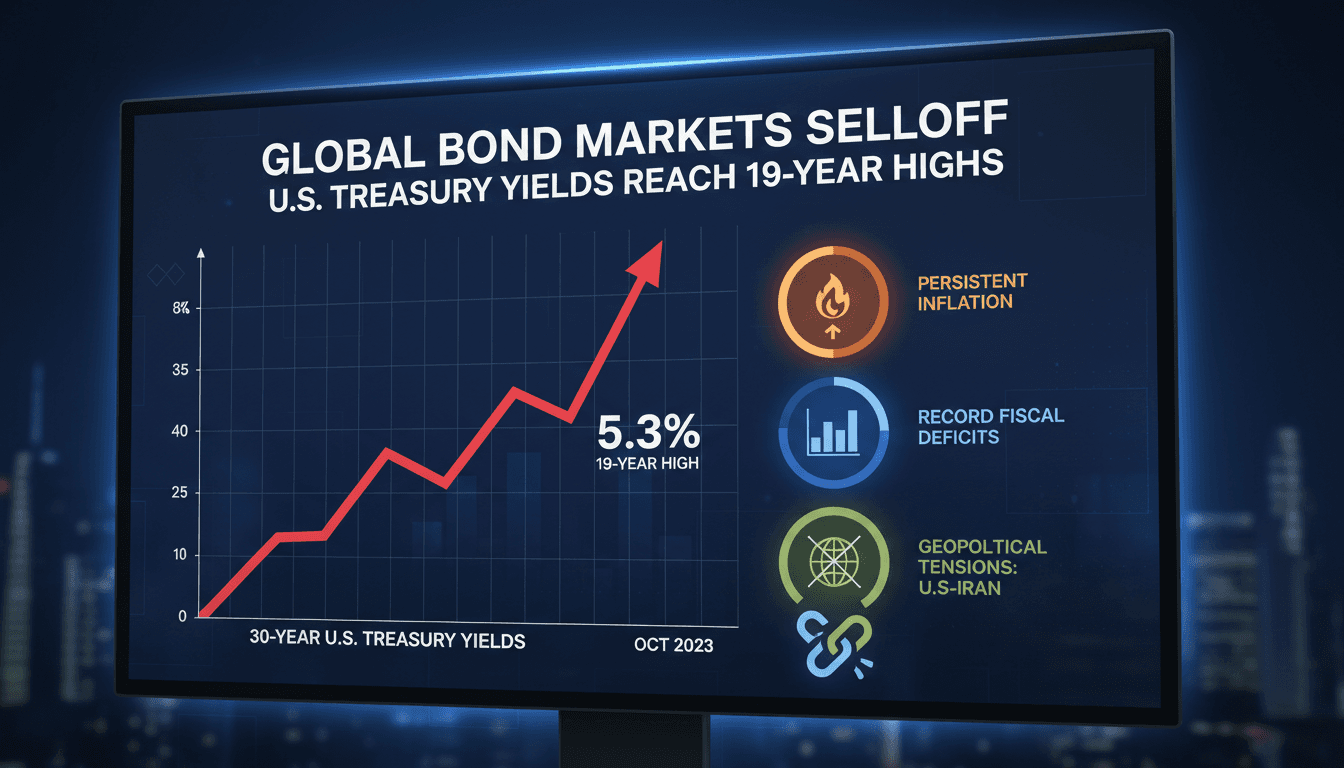
- Global bond markets entered a sustained rout on August 18, 2026, with 30-year U.S. Treasury yields surpassing 5.3 percent.
- Persistent inflation concerns and fiscal pressures are driving the selloff, with analysts predicting continuation due to geopolitical tensions and corporate debt issuance.
- Higher yields are increasing borrowing costs for governments, corporations, and households, affecting financial markets and economic stability.
The context you actually need
- The bond rout builds on earlier yield increases tied to the U.S.-Iran conflict, which has intensified inflation expectations through rising oil prices.
- Record fiscal deficits and heavy corporate bond issuance from the technology sector are compounding the pressure on bond markets.
- Wall Street analysts believe this environment resembles the pre-2008 period of structurally higher yields rather than a temporary spike.
What's really happening
The recent spike in 30-year U.S. Treasury yields to 5.31 percent on August 17, 2026, marks the highest level since 2007, reflecting a significant shift in the global bond market. This selloff is primarily driven by persistent inflation risks, exacerbated by geopolitical tensions, particularly the ongoing U.S.-Iran conflict. As oil prices rise due to these tensions, inflation expectations have surged, prompting investors to demand higher yields as compensation for the increased risk.
Moreover, the U.S. government is facing record fiscal deficits, necessitating substantial debt issuance to fund operations. This influx of Treasury bonds into the market is further pressuring yields upward. Simultaneously, the technology sector is issuing a record amount of corporate bonds to finance AI infrastructure investments, creating competition for capital that diverts funds away from government bonds. This dual pressure from both government and corporate issuers is contributing to the rout in bond prices across developed markets.
Analysts are drawing parallels to the pre-2008 financial crisis, suggesting that the current environment may not be a temporary spike but rather a new normal characterized by structurally higher yields. This shift has immediate implications for borrowing costs across the board. Governments and corporations will face higher refinancing expenses, while households may see increased costs for mortgages and loans. The lack of immediate policy responses from governments indicates that this trend may persist, leading to a tightening of financial conditions globally.
As the bond market continues to react to these pressures, equity markets are also feeling the impact, particularly in rate-sensitive sectors. Investors are adjusting their positions in anticipation of sustained term premiums, which could further complicate the economic landscape.
Who feels it first (and how)
- Governments: Higher refinancing costs for existing debt.
- Corporations: Increased borrowing expenses, particularly in the tech sector.
- Households: Rising mortgage and loan rates affecting personal finances.
- Investors: Adjustments in portfolio strategies due to increased volatility in bond and equity markets.
- UAE Issuers: Elevated yields impacting sovereign and corporate borrowing costs.
What to watch next
- Federal Reserve announcements: Any changes in monetary policy could influence bond yields and market stability.
- Inflation data releases: Continued high inflation could sustain pressure on yields and borrowing costs.
- Geopolitical developments: Escalation or resolution of the U.S.-Iran conflict may impact oil prices and inflation expectations.
30-year U.S. Treasury yields have reached 5.31%, the highest since 2007.
Continued upward pressure on yields due to persistent inflation and fiscal deficits.
The potential for government policy responses to mitigate rising borrowing costs.
Frequently Asked Questions
- Why it matters?
- The ongoing bond selloff signals rising borrowing costs that could impact economic growth and personal finances globally.
- What happened (in 30 seconds)?
- Global bond markets entered a sustained rout on August 18, 2026, with 30-year U.S. Treasury yields surpassing 5.3 percent. Persistent inflation concerns and fiscal pressures are driving the selloff, with analysts predicting continuation due to geopolitical tensions and corporate debt issuance. Higher yields are increasing borrowing costs for governments, corporations, and households, affecting financial markets and economic stability.
- What's really happening?
- The recent spike in 30-year U.S. Treasury yields to 5.31 percent on August 17, 2026, marks the highest level since 2007, reflecting a significant shift in the global bond market. This selloff is primarily driven by persistent inflation risks, exacerbated by geopolitical tensions, particularly the ongoing U.S.-Iran conflict. As oil prices rise due to these tensions, inflation expectations have surged, prompting investors to demand higher yields as compensation for the increased risk. Moreover, t
- Who feels it first (and how)?
- Governments: Higher refinancing costs for existing debt. Corporations: Increased borrowing expenses, particularly in the tech sector. Households: Rising mortgage and loan rates affecting personal finances. Investors: Adjustments in portfolio strategies due to increased volatility in bond and equity markets. UAE Issuers: Elevated yields impacting sovereign and corporate borrowing costs.
- What to watch next?
- Federal Reserve announcements: Any changes in monetary policy could influence bond yields and market stability. Inflation data releases: Continued high inflation could sustain pressure on yields and borrowing costs. Geopolitical developments: Escalation or resolution of the U.S.-Iran conflict may impact oil prices and inflation expectations.
Markets desk coverage, trading insights, and investor updates.
"WSJ’s markets reporting provides in-depth analysis and context for investors."
— A47 Editor
Bonds Are Getting Hammered, and Wall Street Says the Rout Won’t End Anytime Soon
The bond market is experiencing significant turmoil, with yields on 30-year U.S. Treasurys reaching 19-year highs, prompting investors to brace for a prolonged downturn reminiscent of 2007. Wall Street analysts predict that this trend will continue, ...
Global business headlines with AI angles.
"General business outlet that frequently covers AI."
— A47 Editor
30-Year Treasury Yield Hits 19-Year High. Wall Street Warns It Could Surge Further.
The 30-year Treasury yield has reached a 19-year high, prompting concerns from Wall Street that it may continue to rise. This increase is notable as it occurs despite indications that segments of the U.S. economy are beginning to cool down.
Global markets, investing, and macroeconomics from a premier financial newsroom.
"Bloomberg is respected for in-depth financial reporting and data-driven analysis."
— A47 Editor
US Bond Selloff Drives 30-Year Yields to Highest Since 2007
The yield on 30-year US Treasuries has surged to its highest level since 2007, reflecting growing investor concerns over escalating government spending, a surge in long-dated bond sales, and persistent inflation that has exceeded the Federal Reserve'...