
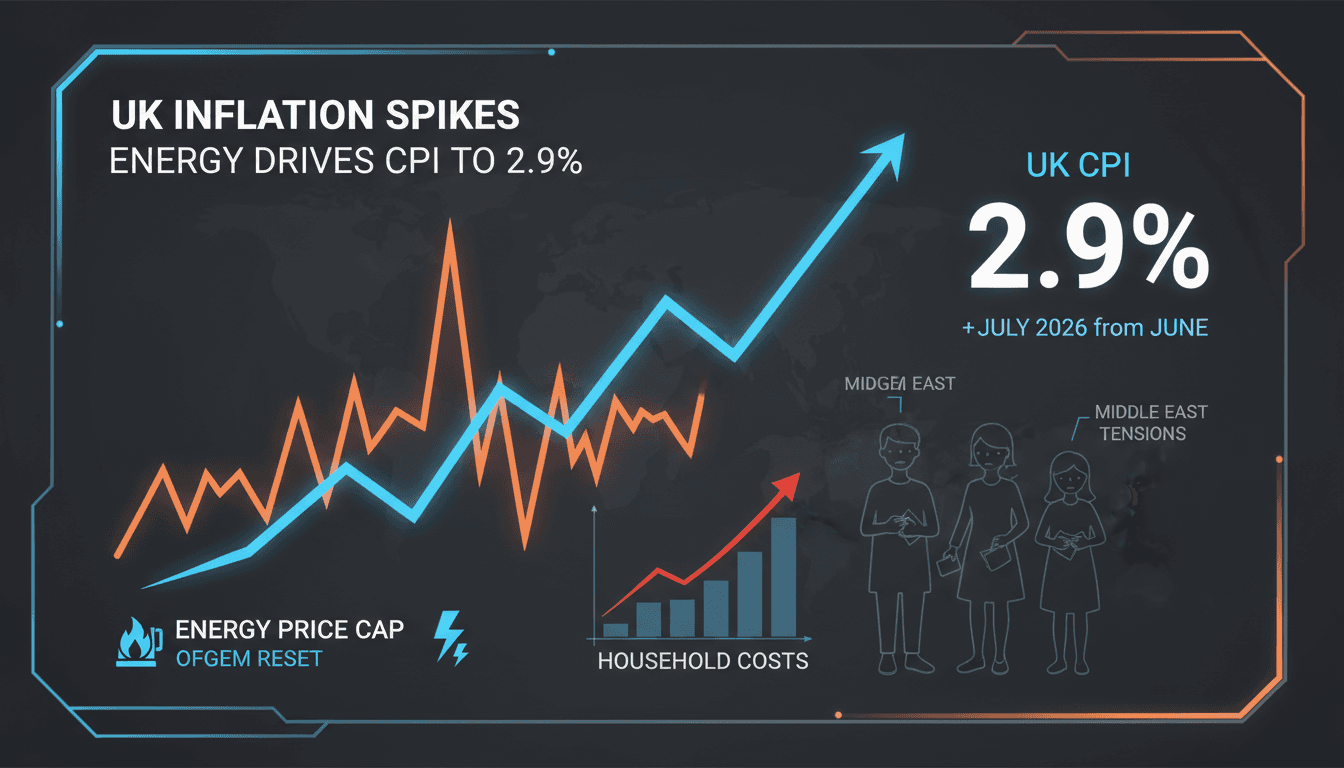
UK CPI Reaches Four-Month High of 2.9% Due to Energy Price Cap Reset
Here's what it means for you.
If you’re in the UK or have ties to its economy, rising energy costs could impact your budget and spending habits.
Why it matters
The increase in consumer price inflation signals potential shifts in monetary policy and consumer behavior, affecting both local and global markets.
What happened (in 30 seconds)
- CPI rose to 2.9% in July 2026, up from 2.6% in June, marking a four-month high.
- Energy costs surged, with gas prices increasing by 14.7% month-over-month and electricity by 3.6%.
- Core inflation remained stable at 2.6%, indicating limited broader price pressures beyond energy.
The context you actually need
- Ofgem's price cap reset in July 2026 reflected higher wholesale energy costs due to geopolitical tensions in the Middle East.
- Prior months showed easing inflation, with June's CPI at a 15-month low, suggesting a temporary spike rather than a sustained trend.
- Analysts expect energy-driven inflation to persist, but without immediate policy tightening from the Bank of England.
What's really happening
The July 2026 Consumer Price Index (CPI) report from the Office for National Statistics (ONS) revealed a notable uptick in inflation, primarily driven by a sharp rise in household energy costs. The CPI rose to 2.9% year-over-year, up from 2.6% in June, marking the highest inflation rate in four months. This increase can be traced back to the Ofgem energy price cap reset, which took effect in July and incorporated higher wholesale energy prices assessed from February to May 2026. The geopolitical tensions in the Middle East have contributed to these elevated wholesale prices, impacting the cost of gas and electricity for consumers.
Gas prices surged by 14.7% month-over-month, the largest increase since October 2022, while electricity costs rose by 3.6%. As a result, the average dual-fuel bill increased by £221, reaching £1,862. Despite this energy-driven inflation, core inflation remained stable at 2.6%, indicating that broader price pressures across other sectors, such as services and food, were limited. Services inflation eased to 3.4%, and food inflation fell to 1.3%, suggesting that the inflationary pressures are concentrated primarily in the energy sector.
Economists from various financial institutions, including Jefferies, Capital Economics, and Deutsche Bank, interpreted the data as supportive of the Bank of England's decision to maintain its interest rate at 3.75%. They anticipate further energy-driven inflationary pressures later in 2026 but do not expect immediate policy tightening. The markets have begun to price in potential interest rate hikes later in the year, particularly with the next Ofgem price cap reset scheduled for August 26, 2026, which is expected to sustain elevated inflation readings through the fourth quarter.
This situation underscores the delicate balance between energy prices and overall inflation, as rising energy costs can have a cascading effect on consumer spending and economic growth. The current inflationary environment highlights the importance of monitoring energy market developments and their potential impact on broader economic indicators.
Who feels it first (and how)
- UK Households: Directly impacted by rising energy bills, affecting disposable income.
- Businesses: Particularly those reliant on energy-intensive operations, facing increased operational costs.
- Expatriates in the UK: Those with ties to the UK economy may experience indirect effects through currency fluctuations and cost of living adjustments.
What to watch next
- Next Ofgem price cap reset: Scheduled for August 26, 2026, this will provide insight into future energy costs and inflation trends.
- Bank of England policy meetings: Watch for any shifts in interest rates that could respond to ongoing inflationary pressures.
- Global energy market developments: Geopolitical tensions, especially in the Middle East, could further influence wholesale energy prices and, consequently, inflation.
CPI rose to 2.9% due to energy price increases.
Continued energy-driven inflation through Q4 2026.
The long-term impact on consumer spending and economic growth.
Frequently Asked Questions
- Why it matters?
- The increase in consumer price inflation signals potential shifts in monetary policy and consumer behavior, affecting both local and global markets.
- What happened (in 30 seconds)?
- CPI rose to 2.9% in July 2026, up from 2.6% in June, marking a four-month high. Energy costs surged, with gas prices increasing by 14.7% month-over-month and electricity by 3.6%. Core inflation remained stable at 2.6%, indicating limited broader price pressures beyond energy.
- What's really happening?
- The July 2026 Consumer Price Index (CPI) report from the Office for National Statistics (ONS) revealed a notable uptick in inflation, primarily driven by a sharp rise in household energy costs. The CPI rose to 2.9% year-over-year, up from 2.6% in June, marking the highest inflation rate in four months. This increase can be traced back to the Ofgem energy price cap reset, which took effect in July and incorporated higher wholesale energy prices assessed from February to May 2026. The geopolitical
- Who feels it first (and how)?
- UK Households: Directly impacted by rising energy bills, affecting disposable income. Businesses: Particularly those reliant on energy-intensive operations, facing increased operational costs. Expatriates in the UK: Those with ties to the UK economy may experience indirect effects through currency fluctuations and cost of living adjustments.
- What to watch next?
- Next Ofgem price cap reset: Scheduled for August 26, 2026, this will provide insight into future energy costs and inflation trends. Bank of England policy meetings: Watch for any shifts in interest rates that could respond to ongoing inflationary pressures. Global energy market developments: Geopolitical tensions, especially in the Middle East, could further influence wholesale energy prices and, consequently, inflation.
Key macro releases (CPI, jobs, PMIs), surprise indexes, and market implications.
"Great for data-print awareness and instant read-through to rates and risk assets."
— A47 Editor
UK July inflation hits four-month high as energy costs surge
UK inflation has surged to a four-month high of 2.9% in July 2026, primarily driven by rising energy costs, marking a significant shift in the economic landscape for British households. This increase follows a brief period of declining inflation rate...
Arabic-language coverage of international news and geopolitics.
"RT Arabic is a Russian state-funded outlet often criticized for promoting Kremlin-aligned narratives."
— A47 Editor
بريطانيا.. ارتفاع التضخم متأثرا بأسعار الطاقة ومخاوف حرب إيران
The annual inflation rate in the United Kingdom rose to 2.9% in July, up from 2.6% in June, driven by an increase in energy prices and concerns regarding the potential impacts of a war in Iran on prices.
Pan-Arab news coverage spanning politics, business, sports, and regional affairs.
"Asharq Al-Awsat reflects a broad Arab editorial perspective with strong attention to regional geopolitics."
— A47 Editor
زيادة فواتير الطاقة ترفع التضخم البريطاني إلى 2.9 % في يوليو
Inflation in Britain rose to 2.9% in July, the highest level since March, driven primarily by an increase in household energy bills. This surge in inflation reflects the ongoing challenges faced by consumers as energy costs continue to climb, impacti...
International coverage from The Guardian's global desks.
"The Guardian is known for its progressive editorial stance and in-depth analysis."
— A47 Editor
UK inflation rises to 2.9% as Iran war drives up energy bills
UK inflation has risen to 2.9% in July, driven by escalating energy prices due to the ongoing conflict in Iran, marking the first increase since March. This rise follows a 15-month low of 2.6% in June, as reported by the Office for National Statistic...
Social/economic commentary and analysis relevant to business and markets.
"WSJ blends data-driven economic insight with commentary on policy and society."
— A47 Editor
U.K. Inflation Picked Up in July
U.K. inflation rose in July, driven primarily by a significant increase in household energy costs, reaching its highest annual rate since March, coinciding with price spikes following the outbreak of the war in Iran.
Practical investing ideas, macro commentary, and market strategy.
"MoneyWeek is a UK-based investment magazine focused on actionable insights."
— A47 Editor
UK inflation rises to 2.9%
The Office for National Statistics (ONS) has reported that UK inflation rose to 2.9% in July 2026, an increase from the previous month's rate of 2.6%. This uptick marks a significant shift after a period of declining inflation rates, indicating chang...