
U.S. Treasury Doubles Long-Dated Debt Buyback Operations to $4 Billion Starting September 2026
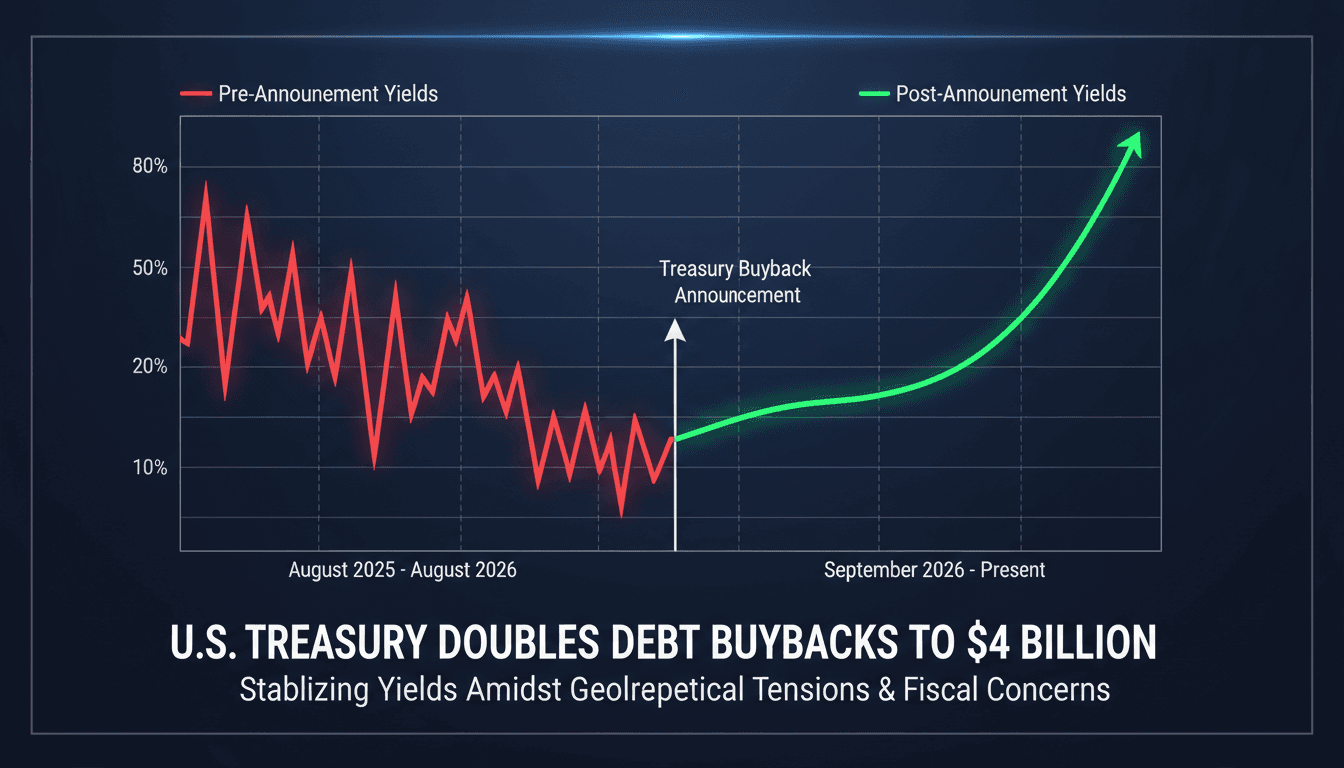
Why it matters
This move aims to stabilize long-term Treasury yields amid rising public debt and geopolitical tensions, impacting global financial markets.
What happened (in 30 seconds)
- On August 19, 2026, the U.S. Treasury announced it would double liquidity support buyback operations for long-dated Treasury securities to at least $4 billion per operation.
- Effective September 9 through November 4, 2026, the buybacks target the 10- to 30-year sectors to enhance market liquidity.
- Following the announcement, yields on 30-year Treasuries fell significantly, indicating a positive market reaction to the intervention.
The context you actually need
- Public debt is nearing $40 trillion, with total U.S. public debt reaching $39.99 trillion on August 18, 2026, raising concerns about fiscal sustainability.
- Geopolitical tensions involving the U.S., Israel, and Iran have contributed to a selloff in bonds, pushing yields to a 19-year high of 5.34%.
- Previous buyback operations had been insufficient to stabilize yields, prompting this more aggressive intervention by Treasury Secretary Scott Bessent.
What's really happening
The U.S. Treasury's decision to double the size of its debt buyback operations is a strategic response to a confluence of rising Treasury yields and escalating geopolitical tensions. As of August 18, 2026, the 30-year Treasury yield had surged to a 19-year high of 5.34%, reflecting investor anxiety over the U.S. fiscal situation and international conflicts. The Treasury's buyback operations, which had previously been set at $2 billion, are now being increased to at least $4 billion per operation, specifically targeting the 10- to 30-year maturity sectors.
This policy shift is designed to enhance market liquidity and stabilize yields, which have been under pressure due to a sharp selloff in bonds. The announcement came shortly after a $2 billion buyback that failed to stem rising yields, indicating a need for a more robust intervention. The Treasury's actions are not merely reactive; they are also proactive measures to reassure investors and maintain confidence in U.S. debt instruments.
Secretary Scott Bessent's intervention follows a series of fiscal challenges, including a public debt nearing $40 trillion and concerns about the sustainability of U.S. fiscal policy. The Treasury's buyback operations are part of a broader strategy to manage liquidity in the bond market, especially as the government prepares for a quarterly refunding plan that could involve up to $69 billion in repurchases through early November.
The immediate market reaction to the announcement was positive, with 30-year Treasury yields dropping by up to 14 basis points intraday, marking the largest daily decline since late June. This suggests that the market views the Treasury's intervention as a necessary step to restore stability. However, analysts caution that while this move may provide temporary relief, it does not address the underlying fiscal challenges that the U.S. faces.
In summary, the Treasury's decision to double its buyback operations reflects a tactical response to immediate market pressures while also signaling a commitment to maintaining liquidity in the face of rising yields and geopolitical uncertainties.
Who feels it first (and how)
- Bond investors: Those holding long-dated Treasuries may see immediate impacts on yield and price stability.
- Financial institutions: Banks and investment firms that trade in Treasuries will adjust their strategies based on new liquidity conditions.
- Global markets: Investors worldwide may react to shifts in U.S. Treasury yields, affecting currency and commodity markets, particularly oil.
What to watch next
- Upcoming Treasury auctions: Monitor how the market responds to new debt issuances and whether yields stabilize or fluctuate.
- Geopolitical developments: Keep an eye on tensions involving the U.S., Israel, and Iran, as these could influence investor sentiment and Treasury yields.
- Public debt announcements: Watch for updates on U.S. fiscal policy and debt levels, which will impact long-term investor confidence.
The U.S. Treasury has announced a doubling of its buyback operations to at least $4 billion.
Treasury yields may stabilize in the short term due to increased liquidity support.
The long-term effects of this intervention on U.S. fiscal policy and public debt sustainability remain uncertain.
Frequently Asked Questions
- Why it matters?
- This move aims to stabilize long-term Treasury yields amid rising public debt and geopolitical tensions, impacting global financial markets.
- What happened (in 30 seconds)?
- On August 19, 2026, the U.S. Treasury announced it would double liquidity support buyback operations for long-dated Treasury securities to at least $4 billion per operation. Effective September 9 through November 4, 2026, the buybacks target the 10- to 30-year sectors to enhance market liquidity. Following the announcement, yields on 30-year Treasuries fell significantly, indicating a positive market reaction to the intervention.
- What's really happening?
- The U.S. Treasury's decision to double the size of its debt buyback operations is a strategic response to a confluence of rising Treasury yields and escalating geopolitical tensions. As of August 18, 2026, the 30-year Treasury yield had surged to a 19-year high of 5.34%, reflecting investor anxiety over the U.S. fiscal situation and international conflicts. The Treasury's buyback operations, which had previously been set at $2 billion, are now being increased to at least $4 billion per operation
- Who feels it first (and how)?
- Bond investors: Those holding long-dated Treasuries may see immediate impacts on yield and price stability. Financial institutions: Banks and investment firms that trade in Treasuries will adjust their strategies based on new liquidity conditions. Global markets: Investors worldwide may react to shifts in U.S. Treasury yields, affecting currency and commodity markets, particularly oil.
- What to watch next?
- Upcoming Treasury auctions: Monitor how the market responds to new debt issuances and whether yields stabilize or fluctuate. Geopolitical developments: Keep an eye on tensions involving the U.S., Israel, and Iran, as these could influence investor sentiment and Treasury yields. Public debt announcements: Watch for updates on U.S. fiscal policy and debt levels, which will impact long-term investor confidence.
Market-moving headlines impacting equities, bonds, and related risk assets.
"Real-time catalysts and volatility drivers across indices and sectors."
— A47 Editor
Treasury Secretary Bessent doubles US long-bond buybacks in the face of surging yields
Treasury Secretary Bessent has announced a doubling of US long-bond buybacks to a minimum of $4 billion, a strategic response to surging yields that have raised concerns about government borrowing costs. This decision reflects the Treasury's proactiv...
Pan-Arab news coverage spanning politics, business, sports, and regional affairs.
"Asharq Al-Awsat reflects a broad Arab editorial perspective with strong attention to regional geopolitics."
— A47 Editor
هل تختبر الخزانة الأميركية حدود التدخل في سوق السندات؟
The U.S. Treasury Department is set to double its long-term Treasury bond repurchase operations, a move aimed at enhancing liquidity in the debt market and alleviating the pressures it has faced.
Global business headlines with AI angles.
"General business outlet that frequently covers AI."
— A47 Editor
The Treasury Will More Than Double Its Government Debt Repurchases. Yields Are Sharply Lower.
The U.S. Treasury has announced plans to more than double its government debt repurchases, specifically targeting the 10-to-20-year and 20-to-30-year segments of the market. This move comes as yields are sharply lower, indicating a shift in the gover...