
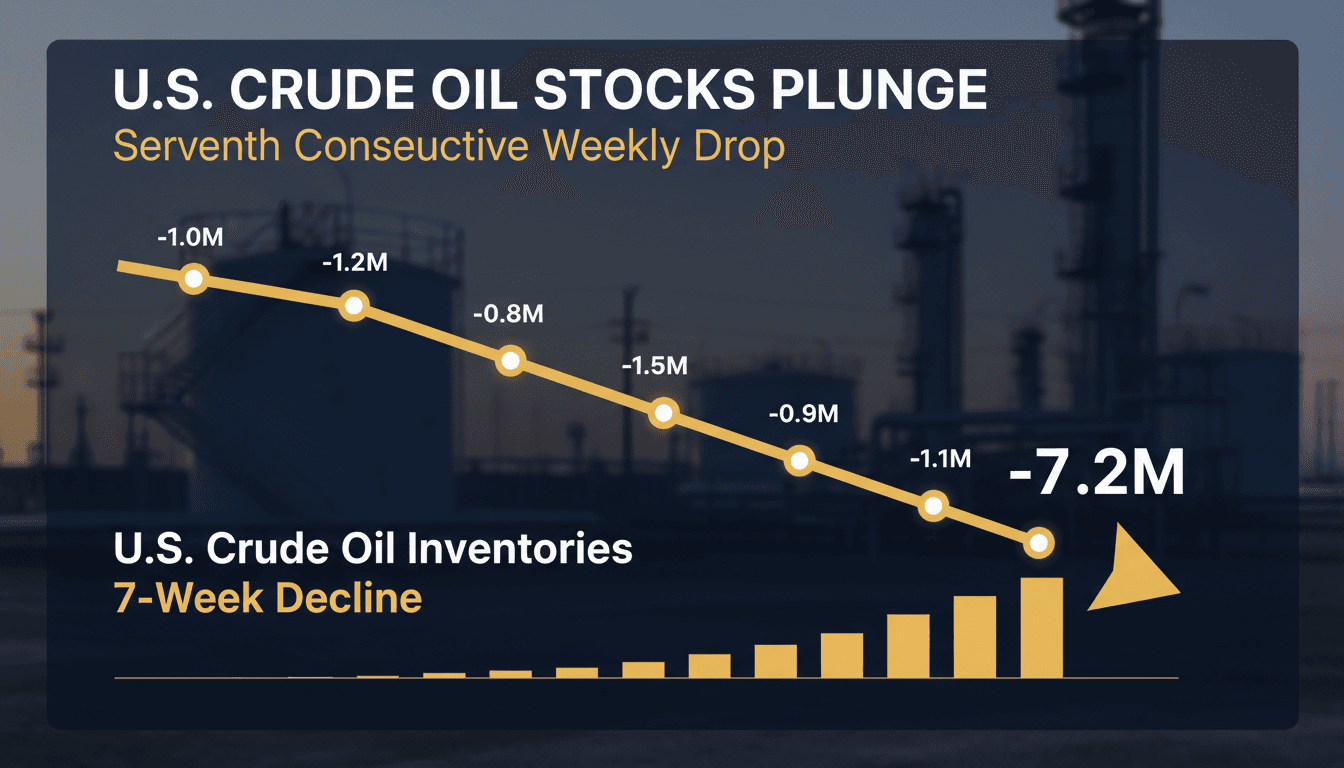
U.S. crude oil inventories decline by 7.2 million barrels for seventh consecutive week
Here's what it means for you.
The recent decline in U.S. crude oil inventories signals a tightening market, which could lead to upward pressure on oil prices. As demand remains strong, stakeholders in the energy sector should prepare for potential shifts in trading strategies. This trend may also influence policy discussions around energy production and consumption. The significant drop of 7.2 million barrels, exceeding analysts' expectations, highlights the need for close monitoring of supply dynamics. Market participants should be aware of the implications for pricing and availability in the coming weeks.
What happened
U.S. crude oil stocks fell by 7.2 million barrels for the week ending June 5, marking the seventh consecutive week of inventory declines. This drop surpassed analysts' expectations, which had anticipated a decrease of only 2.9 million barrels. The data was released by the U.S. Energy Information Administration, underscoring the ongoing trend of reduced inventories.
This significant reduction indicates tighter supply conditions in the oil market, suggesting either increasing demand or reduced production levels. The implications of this trend are likely to resonate throughout the energy sector as market participants adjust their strategies accordingly.
The Context
The decline in crude oil inventories is a critical indicator of market dynamics, reflecting shifts in supply and demand. As inventories continue to fall, it raises questions about the sustainability of current production levels from major oil-producing countries. The timing of this report is particularly relevant, given the ongoing discussions around energy policies and market stability.
Stakeholders, including producers, traders, and policymakers, will need to assess the potential impacts on oil prices and overall market conditions. The data from the U.S. Energy Information Administration serves as a vital resource for understanding these trends and their implications for the broader economy.
Takeaway
As crude oil inventories continue to decline, market participants should prepare for potential price increases. The ongoing trend may lead to shifts in trading strategies, particularly if demand remains robust or production does not keep pace with consumption. Analysts will be closely monitoring upcoming EIA reports for further insights into inventory trends and market dynamics.
Changes in production levels from major oil-producing countries will also be critical to watch. The interplay between supply and demand will ultimately shape the future landscape of the oil market.
Arabic-language coverage of international news and geopolitics.
"RT Arabic is a Russian state-funded outlet often criticized for promoting Kremlin-aligned narratives."
— A47 Editor
مخزونات النفط الأمريكي تسجل هبوطا يفوق التوقعات
U.S. crude oil inventories experienced a decline exceeding expectations last week, as reported by the Energy Information Administration on Wednesday. This drop indicates a tightening supply in the market, which could impact pricing and availability.
U.S. business news, corporate developments, and economy.
"The Wall Street Journal is respected for deep financial and economic reporting with a center-right editorial perspective."
— A47 Editor
U.S. Crude Oil Inventories Fall for Seventh Straight Week
U.S. commercial crude oil inventories, excluding the Strategic Petroleum Reserve, fell by 7.2 million barrels for the week ending June 5, marking the seventh consecutive weekly decline, which was significantly higher than the anticipated drop of 2.9 ...
Oil, metals, and agriculture: supply/demand headlines, OPEC chatter, inventories, and price action.
"Solid tape for energy and metals traders tracking macro and micro catalysts."
— A47 Editor
US crude oil inventories drop 7.2 million barrels last week
US crude oil inventories experienced a significant decline of 7.2 million barrels last week, reflecting a tightening supply in the market. This drop aligns with recent reports indicating robust demand for crude oil, as consumption continues to outpac...