
US Dollar Declines to Three-Month Lows as Euro Reaches Highest Level Since May
Why it matters
The shifting values of major currencies can influence global trade dynamics and economic stability.
What happened (in 30 seconds)
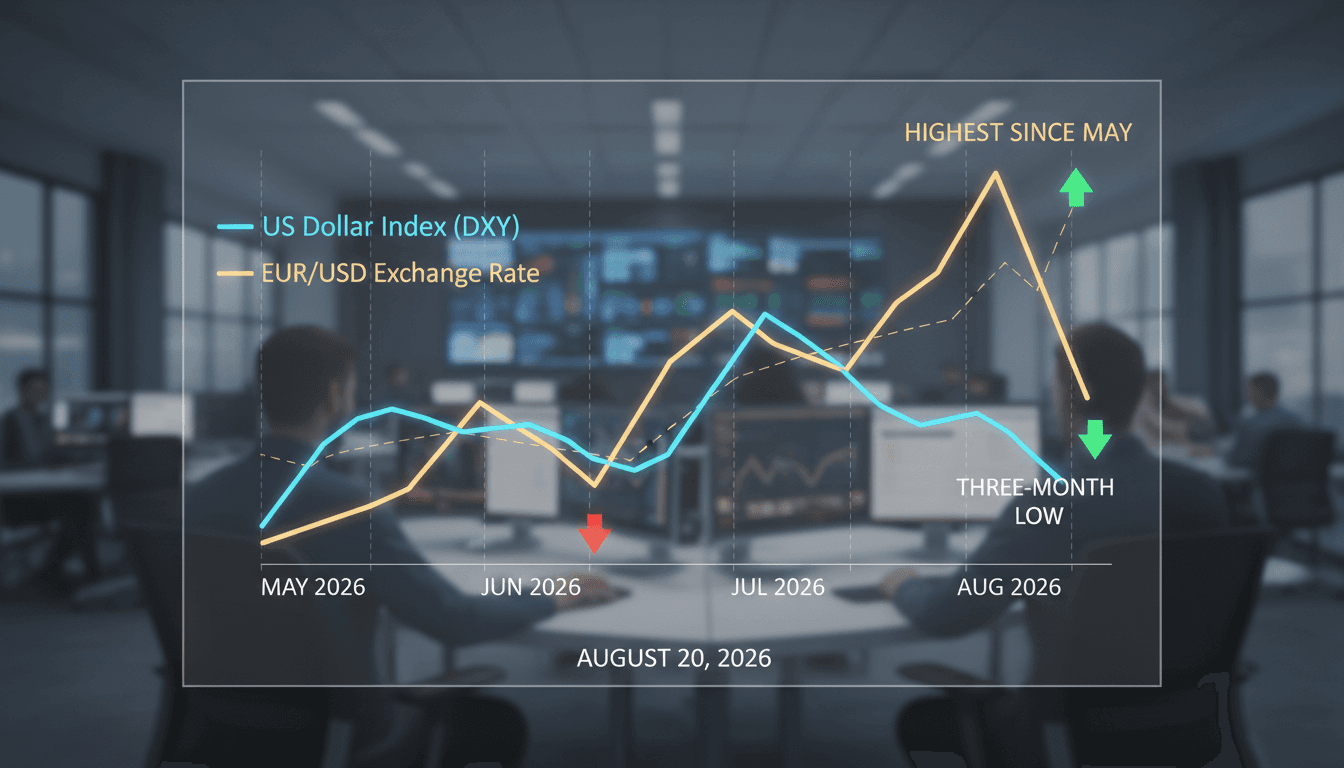
- US Dollar Index fell to 98.938, nearing three-month lows due to fiscal concerns.
- Euro rose to 1.1676 USD, reaching its highest level since late May amid a weakening dollar.
- US Treasury announced increased long-term debt buybacks, signaling a tolerance for higher fiscal deficits.
The context you actually need
- Previous trends showed the dollar strengthening due to earlier Federal Reserve policies and geopolitical factors.
- Recent data indicated softening inflation and employment figures, reducing expectations for further interest rate hikes.
- Market sensitivity heightened as fiscal deficit concerns grew, particularly in response to Treasury actions on debt management.
What's really happening
On August 20, 2026, the US Treasury's announcement of increasing long-term debt buyback operations to at least $4 billion per session sent ripples through the foreign exchange markets. This move was interpreted by traders as a signal of the government's willingness to tolerate a higher fiscal deficit, which in turn prompted a 'debasement trade.' Investors began favoring alternative assets like gold, leading to a sell-off of the US dollar.
As a result, the US Dollar Index dropped to 98.938, approaching levels not seen since mid-May. This decline was not just a reaction to the Treasury's announcement; it was also influenced by a backdrop of softer economic data from the US. Reports indicated that inflation was not rising as quickly as anticipated, and employment figures were underwhelming, leading to diminished expectations for further interest rate hikes by the Federal Reserve.
In contrast, the euro gained strength, climbing to 1.1676 USD, its highest point since late May. This rise can be attributed to the eurozone's relatively stable economic indicators compared to the US, as well as a growing confidence in the European Central Bank's monetary policy. The British pound also saw a slight increase, trading at 1.3603 USD, while the Swiss franc approached two-month highs.
The implications of these currency movements are significant. A weaker dollar can make US exports cheaper and more competitive abroad, but it also raises the cost of imports, potentially leading to inflationary pressures domestically. For investors, the shift in currency values may prompt a reevaluation of asset allocations, particularly in commodities and foreign equities.
Moreover, the dollar's decline could have broader implications for global markets, as many commodities are priced in dollars. A weaker dollar may lead to higher prices for oil and other essential goods, impacting consumers and businesses alike.
Who feels it first (and how)
- Importers: Higher costs for goods priced in euros or other currencies.
- Exporters: Potentially increased competitiveness abroad due to cheaper pricing.
- Travelers: Increased costs for travel to Europe as the euro strengthens.
- Investors: Shifts in asset allocations may occur as currency values fluctuate.
- Local businesses in Dubai: May benefit from lower costs for European imports due to euro strength.
What to watch next
- US economic data releases: Upcoming reports on inflation and employment will be crucial in shaping market expectations for interest rates.
- Treasury operations: Monitoring the frequency and scale of debt buybacks will provide insight into fiscal policy direction.
- Eurozone economic indicators: Continued strength in eurozone data could further bolster the euro against the dollar.
The US dollar is currently near three-month lows.
Continued volatility in currency markets as economic data is released.
The long-term impact of US fiscal policy on the dollar's strength.
Frequently Asked Questions
- Why it matters?
- The shifting values of major currencies can influence global trade dynamics and economic stability.
- What happened (in 30 seconds)?
- US Dollar Index fell to 98.938, nearing three-month lows due to fiscal concerns. Euro rose to 1.1676 USD, reaching its highest level since late May amid a weakening dollar. US Treasury announced increased long-term debt buybacks, signaling a tolerance for higher fiscal deficits.
- What's really happening?
- On August 20, 2026, the US Treasury's announcement of increasing long-term debt buyback operations to at least $4 billion per session sent ripples through the foreign exchange markets. This move was interpreted by traders as a signal of the government's willingness to tolerate a higher fiscal deficit, which in turn prompted a 'debasement trade.' Investors began favoring alternative assets like gold, leading to a sell-off of the US dollar. As a result, the US Dollar Index dropped to 98.938, appr
- Who feels it first (and how)?
- Importers: Higher costs for goods priced in euros or other currencies. Exporters: Potentially increased competitiveness abroad due to cheaper pricing. Travelers: Increased costs for travel to Europe as the euro strengthens. Investors: Shifts in asset allocations may occur as currency values fluctuate. Local businesses in Dubai: May benefit from lower costs for European imports due to euro strength.
- What to watch next?
- US economic data releases: Upcoming reports on inflation and employment will be crucial in shaping market expectations for interest rates. Treasury operations: Monitoring the frequency and scale of debt buybacks will provide insight into fiscal policy direction. Eurozone economic indicators: Continued strength in eurozone data could further bolster the euro against the dollar.
Arabic-language economic and business reporting with strong UAE market relevance.
"Emarat Al Youm business coverage often centers UAE property, banking, consumer issues, and economic policy."
— A47 Editor
الدولار قرب أدنى مستوياته في 3 أشهر واليورو عند أعلى مستوى منذ مايو الدولار قرب أدنى مستوياته في 3 أشهر واليورو عند أعلى مستوى منذ مايو
The US dollar has experienced significant losses, nearing its lowest levels in three months, as it declines against several currencies. This downturn reflects ongoing challenges for the American currency in the global market.
Sports reporting with a focus on Saudi and regional competitions.
"Okaz sports coverage is broad and audience-friendly, with strong attention to Saudi teams and leagues."
— A47 Editor
الدولار يتراجع قرب أدنى مستوياته في عدة أشهر
The dollar has declined to near its lowest levels in several months against a basket of major currencies, as U.S. Treasury yields have fallen from their recent highs. Investors are now awaiting the outcomes of the latest Federal Reserve meeting for i...
Pan-Arab news coverage spanning politics, business, sports, and regional affairs.
"Asharq Al-Awsat reflects a broad Arab editorial perspective with strong attention to regional geopolitics."
— A47 Editor
الدولار يتراجع مع انحسار رهانات رفع الفائدة... واليورو عند أعلى مستوى في شهرين
The US dollar remained near its lowest levels in several months against most major currencies on Tuesday, as traders scaled back their expectations for imminent monetary tightening.