
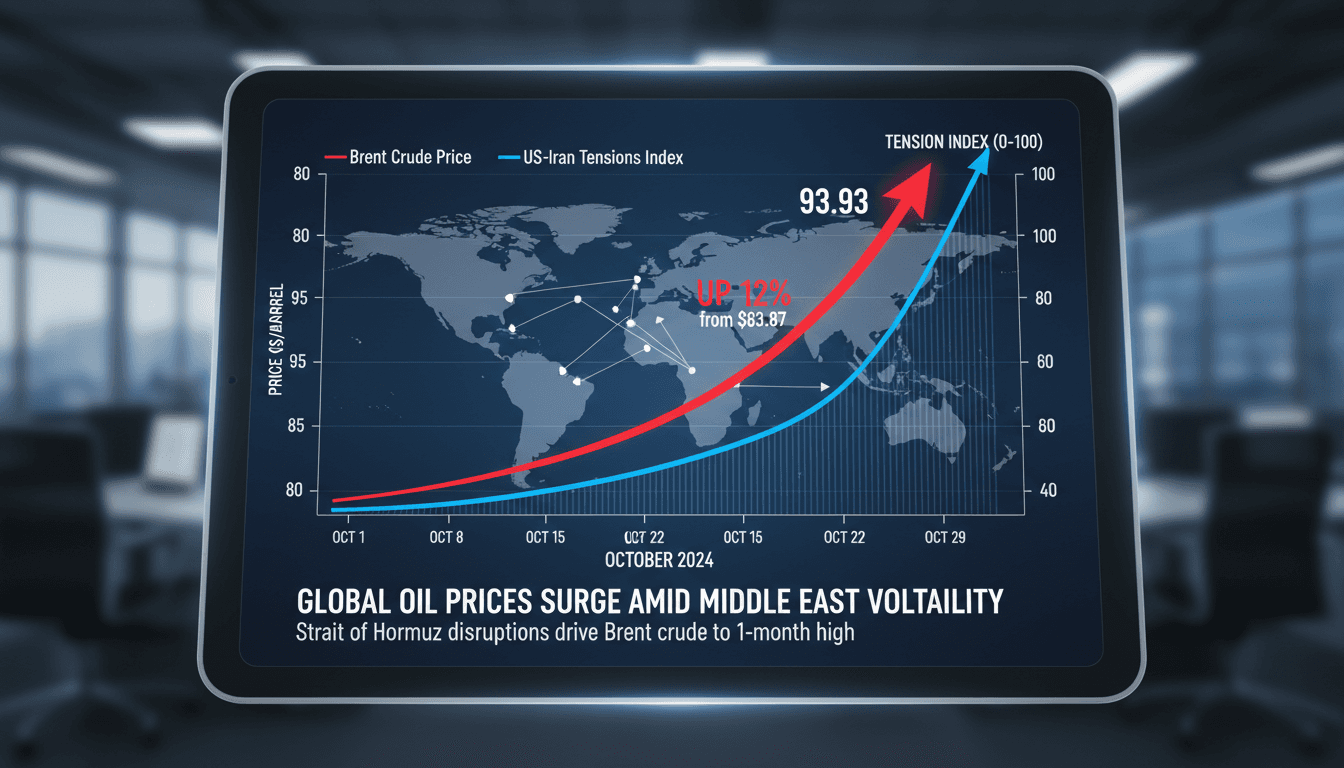
US-Iran tensions drive Brent crude prices up 12% amid shipping disruptions
Here's what it means for you.
If you rely on oil for your business or daily commute, expect higher costs as geopolitical tensions escalate.
Why it matters
The ongoing US-Iran standoff is significantly impacting global oil prices, which can affect everything from transportation costs to consumer goods.
What happened (in 30 seconds)
- Oil prices surged: Brent crude rose 12% over two weeks, settling at $93.93 per barrel amid heightened tensions.
- Reduced shipping traffic: Commercial traffic through the Strait of Hormuz has plummeted, with only seven vessels reported on a recent Thursday compared to normal averages.
- Sanctions threats loom: The Trump administration is threatening unprecedented sanctions against Iran, further complicating the situation.
The context you actually need
- Escalating conflict: The US-Iran conflict intensified in February 2026, leading to military strikes and a failed ceasefire in June.
- Strategic chokepoint: The Strait of Hormuz is crucial for global oil supply, handling about 18 million barrels per day under normal conditions.
- Economic isolation: The UAE has suspended economic ties with Iran, exacerbating supply constraints and driving up prices in the region.
What's really happening
The recent surge in oil prices is a direct consequence of the ongoing geopolitical tensions between the US and Iran, particularly concerning the Strait of Hormuz. This narrow waterway is a critical artery for global oil transport, and any disruption can have immediate and far-reaching effects on oil prices. As of August 2026, Brent crude has seen a notable increase of 12% over two weeks, settling at $93.93 per barrel. This price spike is largely attributed to the US's naval blockade and threats of severe sanctions against Iran, which have created a risk premium in the oil market.
The Trump administration's strategy appears to be one of economic isolation, aiming to pressure Iran into compliance with US demands. Treasury Secretary Scott Bessent has indicated that the sanctions being considered are among the toughest in history, which could further limit Iran's ability to export oil. In response, Iran has dismissed these threats, signaling a willingness to retaliate if its interests are threatened. This standoff has led to a significant reduction in commercial shipping traffic through the Strait, with reports indicating that only seven vessels were operating on a recent Thursday, compared to the usual flow.
The implications of this situation extend beyond immediate price increases. As oil prices rise, so do the costs of goods and services that rely on oil for transportation and production. This can lead to inflationary pressures in various economies, particularly in regions heavily dependent on oil imports. Additionally, the ongoing conflict has prompted Gulf producers to adapt by seeking alternative routing for their shipments, which may not only increase costs but also complicate logistics.
The situation remains fluid, with analysts expressing concerns about potential supply shocks and the long-term stability of oil prices. The market is currently pricing in a sustained risk premium, with Brent crude remaining above $90 per barrel. As the US continues to enforce its naval blockade and Iran maintains its defiance, the likelihood of further disruptions remains high.
Who feels it first (and how)
- Businesses reliant on oil: Companies in transportation, logistics, and manufacturing will face increased operational costs.
- Consumers: Higher fuel prices will translate to increased costs for goods and services, impacting household budgets.
- Gulf region residents: Residents in Dubai and the UAE will experience elevated fuel and energy costs due to regional supply constraints.
What to watch next
- Shipping traffic levels: Monitor changes in commercial shipping traffic through the Strait of Hormuz, as further reductions could indicate escalating tensions.
- US sanctions announcements: Keep an eye on any new sanctions from the Trump administration, as these could significantly impact oil supply and prices.
- Iran's response: Watch for Iran's reactions to US threats, as aggressive responses could lead to further disruptions in oil supply.
Oil prices are currently elevated due to geopolitical tensions.
Further sanctions and military posturing will continue to impact oil supply and prices.
The long-term resolution of the US-Iran conflict and its effects on global oil markets remain uncertain.
Frequently Asked Questions
- Why it matters?
- The ongoing US-Iran standoff is significantly impacting global oil prices, which can affect everything from transportation costs to consumer goods.
- What happened (in 30 seconds)?
- Oil prices surged: Brent crude rose 12% over two weeks, settling at $93.93 per barrel amid heightened tensions. Reduced shipping traffic: Commercial traffic through the Strait of Hormuz has plummeted, with only seven vessels reported on a recent Thursday compared to normal averages. Sanctions threats loom: The Trump administration is threatening unprecedented sanctions against Iran, further complicating the situation.
- What's really happening?
- The recent surge in oil prices is a direct consequence of the ongoing geopolitical tensions between the US and Iran, particularly concerning the Strait of Hormuz. This narrow waterway is a critical artery for global oil transport, and any disruption can have immediate and far-reaching effects on oil prices. As of August 2026, Brent crude has seen a notable increase of 12% over two weeks, settling at $93.93 per barrel. This price spike is largely attributed to the US's naval blockade and threats
- Who feels it first (and how)?
- Businesses reliant on oil: Companies in transportation, logistics, and manufacturing will face increased operational costs. Consumers: Higher fuel prices will translate to increased costs for goods and services, impacting household budgets. Gulf region residents: Residents in Dubai and the UAE will experience elevated fuel and energy costs due to regional supply constraints.
- What to watch next?
- Shipping traffic levels: Monitor changes in commercial shipping traffic through the Strait of Hormuz, as further reductions could indicate escalating tensions. US sanctions announcements: Keep an eye on any new sanctions from the Trump administration, as these could significantly impact oil supply and prices. Iran's response: Watch for Iran's reactions to US threats, as aggressive responses could lead to further disruptions in oil supply.
Oil, metals, and agriculture: supply/demand headlines, OPEC chatter, inventories, and price action.
"Solid tape for energy and metals traders tracking macro and micro catalysts."
— A47 Editor
Oil prices post weekly surge on Hormuz impasse, Brent now up 12% over two weeks
Oil prices have surged significantly, with Brent crude rising 12% over the past two weeks, primarily due to ongoing geopolitical tensions and an impasse regarding control of the Strait of Hormuz, a vital shipping route for global oil supplies. This i...
Pan-Arab news coverage spanning politics, business, sports, and regional affairs.
"Asharq Al-Awsat reflects a broad Arab editorial perspective with strong attention to regional geopolitics."
— A47 Editor
التوتر الأميركي - الإيراني يدفع النفط لثاني مكاسب أسبوعية
Oil prices fell on Friday but were on track to record their second consecutive weekly gain amid rising tensions between the United States and Iran. This fluctuation in oil prices reflects the ongoing geopolitical instability in the region, which ofte...
Regional and international reporting focused on Middle Eastern politics, diplomacy, and economics.
"Asharq Al-Awsat is a Saudi-owned international newspaper reflecting mainstream Gulf political perspectives."
— A47 Editor
Oil Set for Second Weekly Rise as Unsettled US-Iran War Crimps Supply
Oil prices are poised for a second consecutive weekly rise, driven by ongoing geopolitical tensions between the US and Iran, which have disrupted supply chains and created uncertainty in the market. The situation has been exacerbated by the expiratio...