
U.S. Retailers Receive Over $5 Billion in Tariff Refunds Following Supreme Court Ruling
Why it matters
The refunds highlight the ongoing impact of trade policies on consumer prices and corporate behavior in the retail sector.
What happened (in 30 seconds)
- U.S. retailers reported over $5 billion in tariff refunds following a Supreme Court ruling that invalidated the Trump administration's tariffs.
- Major companies like Walmart and Target disclosed significant amounts, with Walmart alone receiving $2.9 billion.
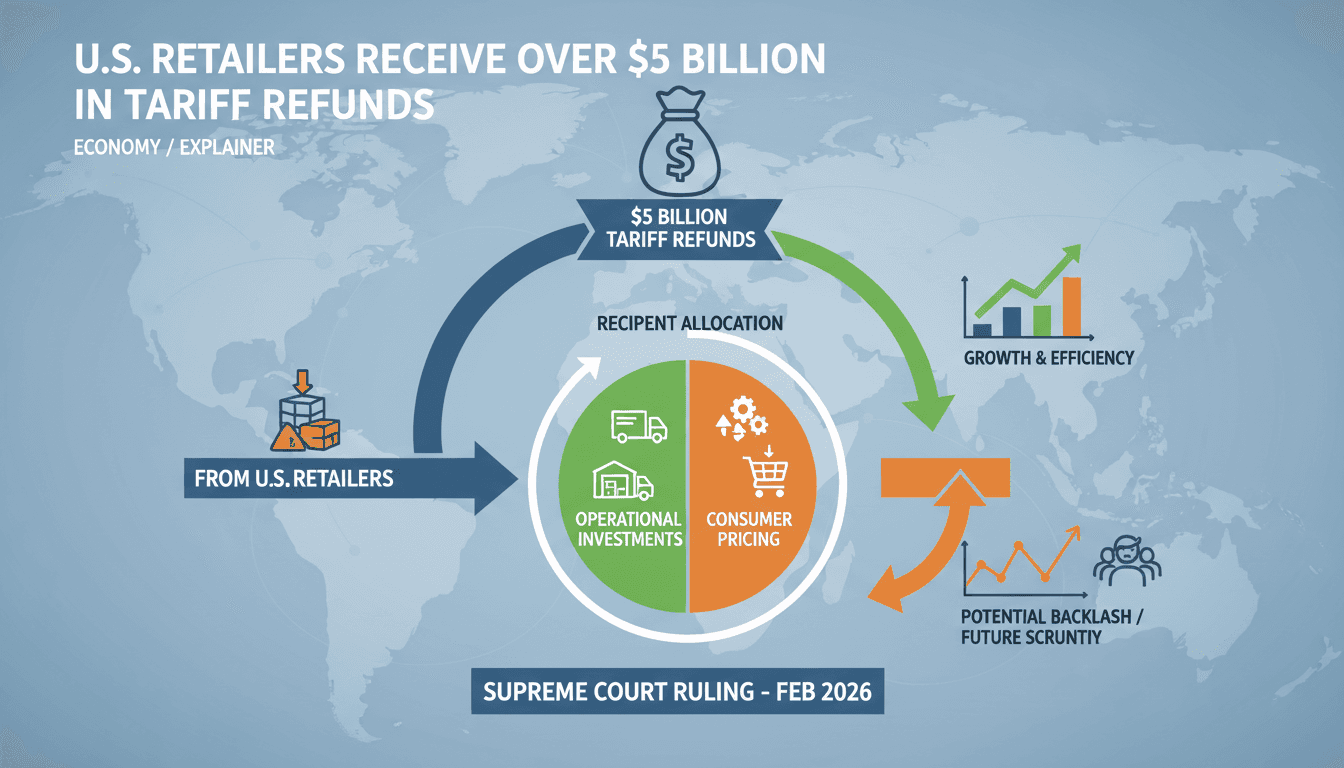
- Despite refunds, many retailers are not passing savings directly to consumers, focusing instead on operational investments.
The context you actually need
- The “Liberation Day” tariffs were imposed in April 2025, leading to approximately $166 billion collected from importers.
- The Supreme Court's February 2026 ruling determined that the Trump administration lacked authority for these tariffs, prompting the refund process.
- Consumers initially bore the costs through higher prices, but the current corporate retention of refunds raises questions about pricing transparency.
What's really happening
The recent disbursement of over $5 billion in tariff refunds to U.S. retailers marks a significant financial shift following the Supreme Court's February 2026 ruling against the Trump administration's “Liberation Day” tariffs. This policy, enacted under the International Emergency Economic Powers Act, had imposed sweeping tariffs on a wide range of imports, leading to approximately $166 billion collected from around 330,000 importers. The refunds, which began processing in May 2026, have already returned $100 billion by early August, with major retailers like Walmart, Target, and Home Depot reporting substantial amounts in their earnings.
Despite these refunds, the direct pass-through to consumers has been limited. Retailers are primarily using the funds for operational investments, cost offsets, or selective price reductions rather than broad consumer rebates. For instance, Walmart's $2.9 billion refund is being reinvested into operations, while Target's $994 million is similarly earmarked for strategic initiatives. This retention of funds has drawn criticism from lawmakers, including Senator Elizabeth Warren, who has urged corporations to provide more transparency regarding how these refunds are impacting consumer prices.
The structural implications of this situation are multifaceted. On one hand, the refunds could provide retailers with a financial cushion to navigate ongoing economic challenges, including inflation and supply chain disruptions. On the other hand, the lack of direct consumer relief raises concerns about corporate accountability and pricing practices. As retailers face pressure from both consumers and lawmakers, the balance between operational reinvestment and consumer pricing strategies will be critical in shaping the retail landscape moving forward.
Moreover, the ongoing class-action lawsuits from consumers seeking compensation for the higher prices they paid during the tariff period add another layer of complexity. The outcomes of these lawsuits could further influence how retailers approach pricing and refunds in the future, potentially leading to more significant changes in consumer pricing dynamics.
Who feels it first (and how)
- Consumers: Those shopping at major retailers may see limited immediate benefits from the refunds.
- Retail Employees: Workers may experience operational changes as companies reinvest the funds.
- Investors: Shareholders in major retail companies will be watching how these refunds impact stock performance and corporate strategies.
What to watch next
- Consumer Price Index (CPI): Monitoring changes in retail prices will indicate whether any savings from refunds are passed to consumers.
- Corporate Earnings Reports: Future earnings disclosures will reveal how retailers are allocating their tariff refunds and any shifts in pricing strategies.
- Legislative Actions: Watch for potential new regulations or pressures from lawmakers regarding corporate transparency and consumer pricing.
Major retailers have received over $5 billion in tariff refunds.
Retailers will use refunds for operational investments rather than broad consumer rebates.
The long-term impact on consumer prices and corporate accountability remains to be seen.
Frequently Asked Questions
- Why it matters?
- The refunds highlight the ongoing impact of trade policies on consumer prices and corporate behavior in the retail sector.
- What happened (in 30 seconds)?
- U.S. retailers reported over $5 billion in tariff refunds following a Supreme Court ruling that invalidated the Trump administration's tariffs. Major companies like Walmart and Target disclosed significant amounts, with Walmart alone receiving $2.9 billion. Despite refunds, many retailers are not passing savings directly to consumers, focusing instead on operational investments.
- What's really happening?
- The recent disbursement of over $5 billion in tariff refunds to U.S. retailers marks a significant financial shift following the Supreme Court's February 2026 ruling against the Trump administration's “Liberation Day” tariffs. This policy, enacted under the International Emergency Economic Powers Act, had imposed sweeping tariffs on a wide range of imports, leading to approximately $166 billion collected from around 330,000 importers. The refunds, which began processing in May 2026, have already
- Who feels it first (and how)?
- Consumers: Those shopping at major retailers may see limited immediate benefits from the refunds. Retail Employees: Workers may experience operational changes as companies reinvest the funds. Investors: Shareholders in major retail companies will be watching how these refunds impact stock performance and corporate strategies.
- What to watch next?
- Consumer Price Index (CPI): Monitoring changes in retail prices will indicate whether any savings from refunds are passed to consumers. Corporate Earnings Reports: Future earnings disclosures will reveal how retailers are allocating their tariff refunds and any shifts in pricing strategies. Legislative Actions: Watch for potential new regulations or pressures from lawmakers regarding corporate transparency and consumer pricing.
Business, investment, entrepreneurship, leadership, and innovation.
"Forbes is known for its coverage of business leaders, market trends, and entrepreneurial ventures with a pro-business editorial stance."
— A47 Editor
Americans’ Top Retailers Are Getting Billions In Tariff Refunds—Including Walmart, Target—But Many Consumers Still Aren’t
Major U.S. retailers, including Walmart and Target, have reported receiving substantial tariff refunds, significantly enhancing their financial performance. These refunds come in the wake of a Supreme Court ruling that deemed certain tariffs unlawful...
Corporate leadership, finance, technology, and market trends.
"Fortune covers financial trends, leadership, and innovation with a pragmatic editorial approach."
— A47 Editor
Facing weary customers, Walmart will use its nearly $3 billion in tariff refunds to lower prices
Walmart plans to utilize nearly $3 billion in tariff refunds to lower prices for customers, following a significant drop in its shares after reporting the slowest U.S. sales growth in six years, which fell nearly 9%. This move comes as the company se...
Corporate leadership, finance, technology, and market trends.
"Fortune covers financial trends, leadership, and innovation with a pragmatic editorial approach."
— A47 Editor
Fortune 500 companies got billions in tariff refunds. Here’s who’s giving customers a cut—and who isn’t
Major Fortune 500 companies, including Amazon, Target, and Nike, have received substantial tariff refunds following a Supreme Court ruling that deemed certain tariffs unlawful. Despite these financial gains, many of these companies have not committed...
Corporate leadership, finance, technology, and market trends.
"Fortune covers financial trends, leadership, and innovation with a pragmatic editorial approach."
— A47 Editor
Home Depot’s $730 million tariff refund was largely offset by rising costs
Home Depot has received a $730 million tariff refund, but this financial relief has been largely negated by rising operational costs, impacting the company's overall profitability. The contrasting approaches of major retailers like Amazon and Walmart...