
Oil Prices Rise Amid Ongoing US-Iran Tensions Over Strait of Hormuz
Here's what it means for you.
Rising oil prices could lead to increased costs for consumers and businesses, impacting everything from fuel to goods prices.
Why it matters
The ongoing geopolitical tensions directly influence global oil supply and pricing, affecting economies worldwide.
What happened (in 30 seconds)
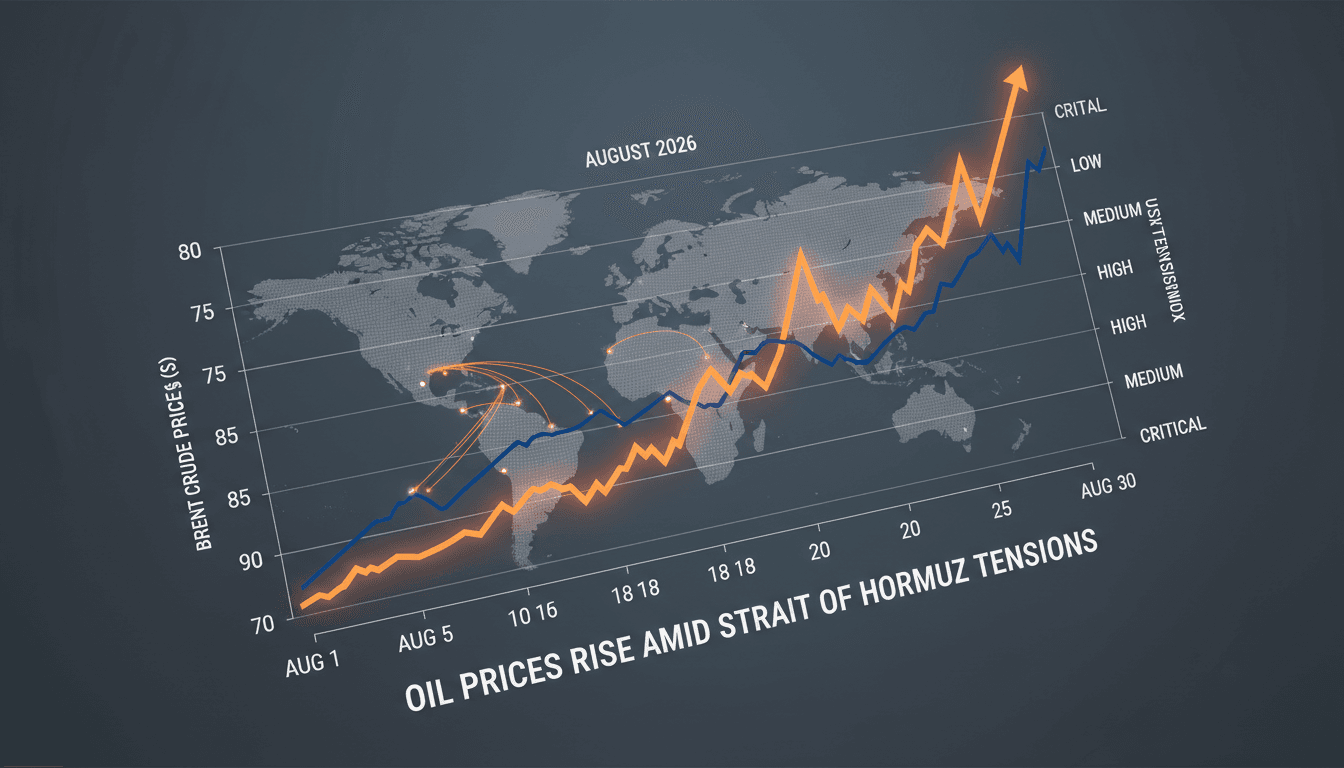
- Oil prices surged on August 18-19, 2026, with Brent crude reaching a four-week high of $91.54-$91.62 per barrel.
- US-Iran relations deteriorated further as diplomatic talks stalled, leading to reduced shipping traffic through the Strait of Hormuz.
- UAE-Iran trade was suspended following missile threats, exacerbating regional tensions and impacting oil market stability.
The context you actually need
- Strait of Hormuz significance: This waterway is a critical chokepoint for global oil transit, with about 20% of the world's oil passing through it.
- US naval presence: The US maintains a strong military presence in the region, asserting control over the strait amid rising tensions with Iran.
- Economic implications: The UAE's suspension of trade with Iran signals broader economic repercussions for the Gulf region, affecting local businesses and trade dynamics.
What's really happening
The recent spike in oil prices is a direct consequence of the ongoing impasse between the US and Iran over control of the Strait of Hormuz. This strategic waterway is vital for global oil transportation, and any disruption can lead to significant price fluctuations. As of August 18-19, 2026, Brent crude futures climbed to a four-week high, driven by a combination of geopolitical tensions and market dynamics.
The US has been vocal about its control over the strait, asserting that it can manage alternative oil supplies if necessary. This stance comes amid a backdrop of heightened military presence and a commitment to ensuring safe passage for vessels. However, Iran's insistence on preconditions for any negotiations complicates the situation further. The Iranian government has made it clear that it will not engage in talks unless hostilities cease and its assets are unfrozen, which adds layers of complexity to the diplomatic landscape.
Shipping data indicates a significant drop in vessel transits through the strait, with a 17% decrease reported, highlighting the immediate impact of these tensions on global shipping routes. The UAE's decision to suspend all trade with Iran following missile threats underscores the escalating risks in the region. This suspension not only affects bilateral trade but also has broader implications for regional commerce, as the UAE is a key player in Gulf trade networks.
Additionally, the US Energy Information Administration (EIA) reported a notable increase in US crude oil inventories, rising by 4.4 million barrels to a total of 428.8 million barrels. This inventory build suggests that while domestic supply may be stable, the market is still reacting to the uncertainties surrounding Middle Eastern oil supplies. The combination of reduced shipping traffic, heightened military tensions, and fluctuating inventory levels creates a volatile environment for oil prices, which are now being priced with elevated risk premiums.
As markets react to these developments, the potential for oil prices to reach three-digit levels looms, reflecting the uncertainty and risk associated with Middle Eastern geopolitics. The overall market sentiment remains cautious, with traders closely monitoring the situation for any signs of escalation or resolution.
Who feels it first (and how)
- Consumers: Higher fuel prices will directly impact transportation and goods costs.
- Businesses: Companies reliant on oil and gas may face increased operational costs, affecting profitability.
- Expatriates in Dubai: Those dependent on stable Gulf economies may experience financial strain due to rising costs and market volatility.
- Shipping companies: Reduced vessel transits can lead to delays and increased shipping costs, impacting global trade.
What to watch next
- US-Iran diplomatic developments: Any shifts in negotiations or military actions could significantly impact oil prices and market stability.
- Shipping traffic through the Strait of Hormuz: Monitoring vessel transits will provide insights into the ongoing tensions and their effects on oil supply.
- Global oil inventory levels: Changes in US crude inventories will indicate supply-demand dynamics and potential price adjustments.
Oil prices are currently elevated due to geopolitical tensions.
Continued volatility in oil markets as US-Iran relations remain strained.
The timeline for potential diplomatic resolutions or military escalations.
Frequently Asked Questions
- Why it matters?
- The ongoing geopolitical tensions directly influence global oil supply and pricing, affecting economies worldwide.
- What happened (in 30 seconds)?
- Oil prices surged on August 18-19, 2026, with Brent crude reaching a four-week high of $91.54-$91.62 per barrel. US-Iran relations deteriorated further as diplomatic talks stalled, leading to reduced shipping traffic through the Strait of Hormuz. UAE-Iran trade was suspended following missile threats, exacerbating regional tensions and impacting oil market stability.
- What's really happening?
- The recent spike in oil prices is a direct consequence of the ongoing impasse between the US and Iran over control of the Strait of Hormuz. This strategic waterway is vital for global oil transportation, and any disruption can lead to significant price fluctuations. As of August 18-19, 2026, Brent crude futures climbed to a four-week high, driven by a combination of geopolitical tensions and market dynamics. The US has been vocal about its control over the strait, asserting that it can manage a
- Who feels it first (and how)?
- Consumers: Higher fuel prices will directly impact transportation and goods costs. Businesses: Companies reliant on oil and gas may face increased operational costs, affecting profitability. Expatriates in Dubai: Those dependent on stable Gulf economies may experience financial strain due to rising costs and market volatility. Shipping companies: Reduced vessel transits can lead to delays and increased shipping costs, impacting global trade.
- What to watch next?
- US-Iran diplomatic developments: Any shifts in negotiations or military actions could significantly impact oil prices and market stability. Shipping traffic through the Strait of Hormuz: Monitoring vessel transits will provide insights into the ongoing tensions and their effects on oil supply. Global oil inventory levels: Changes in US crude inventories will indicate supply-demand dynamics and potential price adjustments.
Oil, metals, and agriculture: supply/demand headlines, OPEC chatter, inventories, and price action.
"Solid tape for energy and metals traders tracking macro and micro catalysts."
— A47 Editor
Oil rises, Brent hits four-week high as U.S. and Iran remain at odds over Hormuz
Oil prices have risen, with Brent crude reaching a four-week high, as tensions between the U.S. and Iran over the Strait of Hormuz continue to escalate. The ongoing geopolitical strife has led to concerns about shipping constraints in this critical m...
U.S. business news, corporate developments, and economy.
"The Wall Street Journal is respected for deep financial and economic reporting with a center-right editorial perspective."
— A47 Editor
Oil Rises on Persistent Hormuz Uncertainty
Oil prices have risen for a fourth consecutive day as negotiations to reopen the Strait of Hormuz and resolve the ongoing conflict in Iran have stalled, leading to increased uncertainty in the market.
Regional and international reporting focused on Middle Eastern politics, diplomacy, and economics.
"Asharq Al-Awsat is a Saudi-owned international newspaper reflecting mainstream Gulf political perspectives."
— A47 Editor
Oil Extends Climb on Prolonged Hormuz Export Uncertainty
Oil prices have continued to rise amid ongoing uncertainty regarding exports through the Strait of Hormuz, a crucial passage for global oil shipments. The recent geopolitical tensions, particularly between the U.S. and Iran, have contributed to this ...