
Oman Sees 13 Percent Increase in Public Revenues to $17.2 Billion in H1 2026
Here's what it means for you.
If you’re involved in the GCC market, Oman's revenue growth could signal increased regional economic stability and investment opportunities.
Why it matters
Oman's rising public revenues reflect a broader trend of fiscal strengthening in the GCC, which may influence investment flows and economic resilience across the region.
What happened (in 30 seconds)
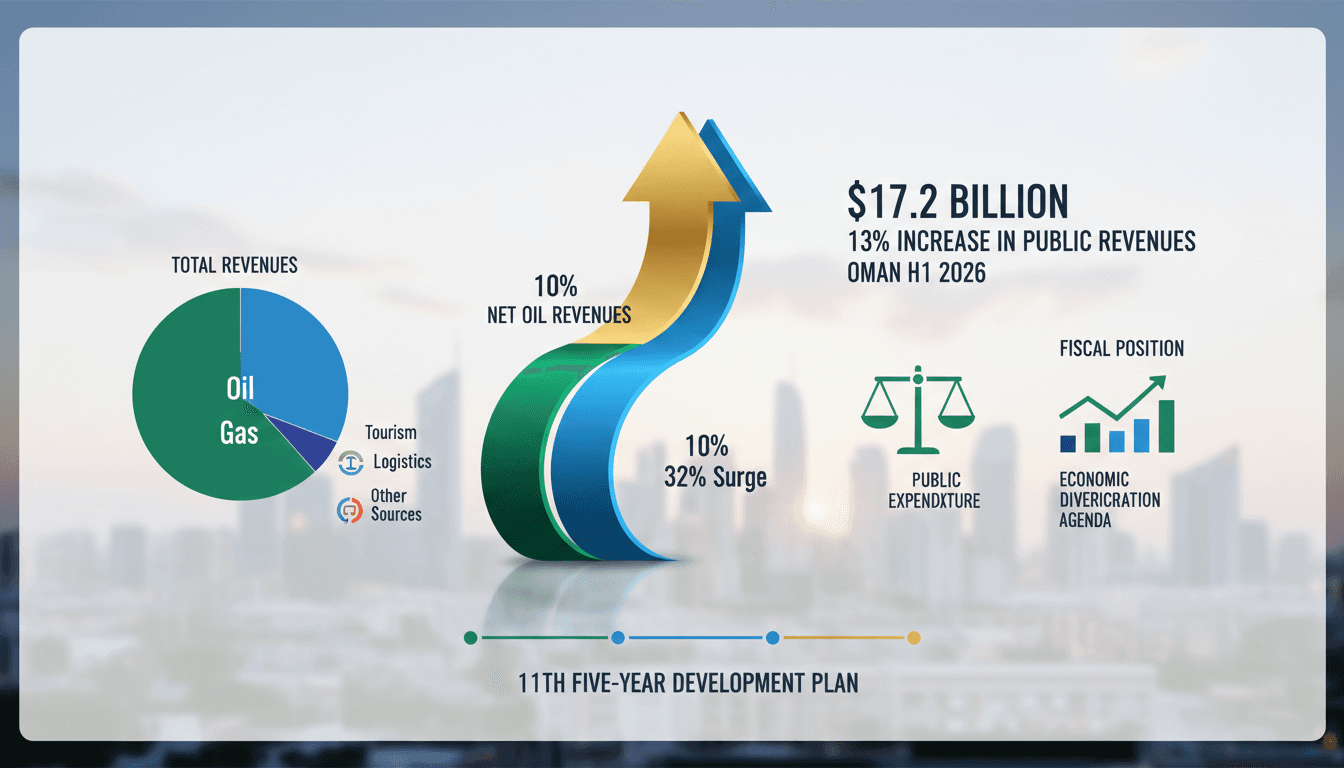
- Public revenues in Oman rose 13% to 6.60 billion Omani rials ($17.2 billion) in H1 2026, driven by higher oil and gas receipts.
- Net oil revenues increased by 10% to 3.33 billion rials, supported by an average oil price of $74 per barrel and production of 1.07 million barrels per day.
- Total public expenditure grew by 9% to 6.62 billion rials, reflecting ongoing investments in economic diversification.
The context you actually need
- Economic diversification is a priority for Oman, aimed at reducing reliance on oil amid fluctuating global prices.
- The 11th Five-Year Development Plan (2026-2030) is central to Oman's strategy, focusing on higher-value sectors and job creation.
- The International Monetary Fund (IMF) has noted Oman’s progress in diversification, albeit at a slower pace compared to other GCC countries.
What's really happening
Oman's public revenue growth in H1 2026 is a significant indicator of the country's economic health, primarily driven by its oil and gas sectors. The Ministry of Finance reported a 13% increase in revenues compared to the same period in the previous year, totaling 6.60 billion Omani rials ($17.2 billion). This growth is largely attributed to a 10% rise in net oil revenues, which reached 3.33 billion rials, and a remarkable 32% surge in net gas revenues, climbing to 1.16 billion rials. The average realized oil price stood at $74 per barrel, with daily production hitting 1.07 million barrels.
This increase in revenues comes at a time when Oman is actively pursuing economic diversification to mitigate the risks associated with oil price volatility. The government has been investing in various sectors as part of its 11th Five-Year Development Plan, which aims to enhance economic resilience through the development of higher-value industries and increased exports. Total public expenditure also rose by 9% to 6.62 billion rials, indicating a commitment to ongoing development projects and current spending.
Despite the revenue increase, public debt remained stable at 14.16 billion rials, reflecting a cautious approach to fiscal management. The development expenditure included significant allocations for economic transformation projects, with a disbursement rate of 61%. This suggests that while Oman is benefiting from higher oil and gas revenues, it is also strategically investing in its future economic landscape.
The overall fiscal performance indicates a narrowing of the fiscal deficit compared to the previous year, which is a positive sign for investors and stakeholders in the region. However, the IMF has pointed out that Oman’s pace of diversification is slower than that of its GCC counterparts, highlighting the need for continued focus on non-oil sectors to ensure long-term sustainability.
Who feels it first (and how)
- Investors: Increased revenues may attract more foreign investment into Oman's emerging sectors.
- Energy Sector Workers: Higher oil and gas revenues could lead to job stability and growth in these industries.
- Government Contractors: Increased public expenditure may result in more contracts for development projects.
- Local Businesses: Economic diversification efforts could create new opportunities in various sectors.
What to watch next
- Oil Prices: Continued fluctuations in global oil prices will directly impact Oman's revenue streams and fiscal health.
- Diversification Progress: Monitoring the implementation of the 11th Five-Year Development Plan will reveal how effectively Oman is reducing its oil dependency.
- Regional Economic Trends: Changes in fiscal policies across the GCC may influence investment flows and economic stability in Oman.
Oman's public revenues increased by 13% in H1 2026.
Continued investment in economic diversification will shape Oman's future fiscal landscape.
The long-term impact of global oil price fluctuations on Oman's economic stability remains uncertain.
Frequently Asked Questions
- Why it matters?
- Oman's rising public revenues reflect a broader trend of fiscal strengthening in the GCC, which may influence investment flows and economic resilience across the region.
- What happened (in 30 seconds)?
- Public revenues in Oman rose 13% to 6.60 billion Omani rials ($17.2 billion) in H1 2026, driven by higher oil and gas receipts. Net oil revenues increased by 10% to 3.33 billion rials, supported by an average oil price of $74 per barrel and production of 1.07 million barrels per day. Total public expenditure grew by 9% to 6.62 billion rials, reflecting ongoing investments in economic diversification.
- What's really happening?
- Oman's public revenue growth in H1 2026 is a significant indicator of the country's economic health, primarily driven by its oil and gas sectors. The Ministry of Finance reported a 13% increase in revenues compared to the same period in the previous year, totaling 6.60 billion Omani rials ($17.2 billion). This growth is largely attributed to a 10% rise in net oil revenues, which reached 3.33 billion rials, and a remarkable 32% surge in net gas revenues, climbing to 1.16 billion rials. The averag
- Who feels it first (and how)?
- Investors: Increased revenues may attract more foreign investment into Oman's emerging sectors. Energy Sector Workers: Higher oil and gas revenues could lead to job stability and growth in these industries. Government Contractors: Increased public expenditure may result in more contracts for development projects. Local Businesses: Economic diversification efforts could create new opportunities in various sectors.
- What to watch next?
- Oil Prices: Continued fluctuations in global oil prices will directly impact Oman's revenue streams and fiscal health. Diversification Progress: Monitoring the implementation of the 11th Five-Year Development Plan will reveal how effectively Oman is reducing its oil dependency. Regional Economic Trends: Changes in fiscal policies across the GCC may influence investment flows and economic stability in Oman.
Business, markets, finance, energy, and economic policy coverage.
"Arab News business coverage tends to emphasize Gulf economies, investment, and regional transformation stories."
— A47 Editor
Oman’s public revenues rise 13% to $17.2bn in H1
Oman’s public revenues increased by 13% to 6.60 billion Omani rials ($17.2 billion) in the first half of 2026, driven by a 10% rise in net oil revenues and a significant 32% surge in gas revenues, according to the Ministry of Finance.
Business and economy coverage focused on Dubai, the UAE, Saudi Arabia, and the wider Middle East.
"Arabian Business is a well-known regional business outlet with strong focus on Gulf markets, leadership, and investment stories."
— A47 Editor
Oman revenues jump 13% to $17.2bn as oil and gas income rises in 2026
Oman has reported a 13% increase in public revenues, reaching $17.2 billion in the first half of 2026, primarily driven by rising oil and gas income, while public debt has also risen to $36.82 billion.
Arabic-language coverage of international news and geopolitics.
"RT Arabic is a Russian state-funded outlet often criticized for promoting Kremlin-aligned narratives."
— A47 Editor
ارتفاع الإيرادات العامة لسلطنة عمان 13% في الربع الثاني من 2026 بدعم نفطي قوي
Oman’s public revenues increased by 13% in the second quarter of 2026, driven by a strong rise in oil revenues. This growth reflects the country’s reliance on oil exports as a significant contributor to its economy.
Pan-Arab news coverage spanning politics, business, sports, and regional affairs.
"Asharq Al-Awsat reflects a broad Arab editorial perspective with strong attention to regional geopolitics."
— A47 Editor
عوائد النفط تقود نمو مالية عُمان... الإيرادات تقفز 13 % إلى 17.2 مليار دولار
Oman’s public revenues surged by 13% in the first half of 2026, reaching approximately 6.6 billion Omani rials (17.2 billion USD), driven primarily by oil revenues. This increase reflects the country's ongoing economic recovery and reliance on its oi...