
Iranian Rial Hits Historic Low Amid US Economic Sanctions
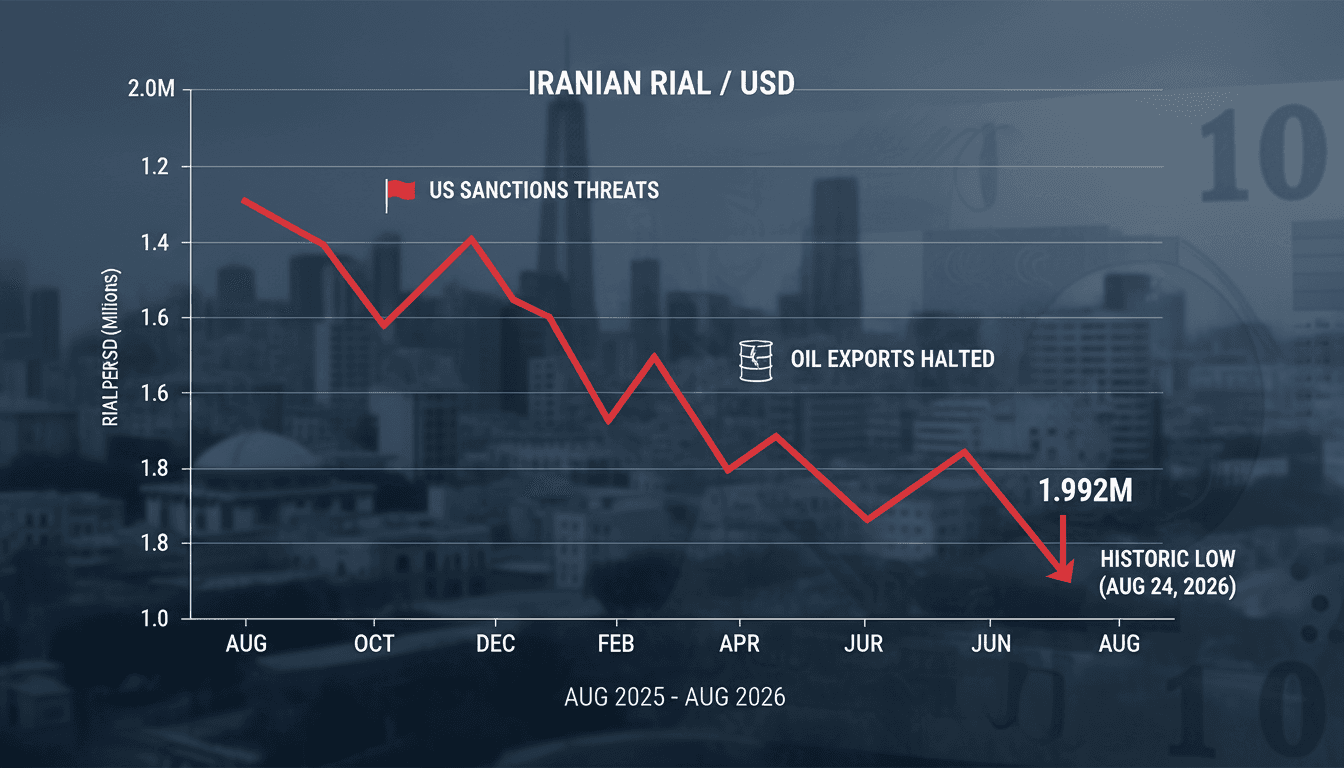
Here's what it means for you.
If you engage in international trade or investment, the Iranian rial's collapse could signal broader economic shifts affecting regional markets.
Why it matters
The Iranian rial's depreciation reflects escalating tensions and economic isolation that could ripple through global markets, impacting trade and investment strategies.
What happened (in 30 seconds)
- The rial hit a historic low of 1.992 million rials per USD on August 24, 2026, amid intensified US economic measures.
- US officials announced a "crushing economic operation" targeting Iran's remaining economic lifelines, including oil exports.
- Iran's Central Bank acknowledged the effective cessation of crude oil exports, exacerbating the currency's decline.
The context you actually need
- Pre-existing economic challenges: Iran's economy was already struggling with double-digit inflation and negative growth before the recent conflict escalated.
- US sanctions escalation: The expiration of a June 2026 memorandum without agreement on nuclear issues led to renewed sanctions and naval blockades.
- Market reactions: The rial's decline is attributed to disrupted foreign currency transfers, increased import demand, and rising inflation expectations.
What's really happening
The Iranian rial's plunge to 1.992 million rials per USD marks a significant economic event, driven by a combination of geopolitical tensions and domestic economic challenges. The US has ramped up its economic offensive against Iran, framing it as a strategy to isolate the regime by targeting its financial lifelines. This includes the reimposition of sanctions that have effectively halted Iran's oil exports, a critical source of foreign currency for the nation.
The rial's depreciation is not merely a reflection of market sentiment; it is a direct consequence of the US's strategic moves. The announcement of intensified sanctions by President Trump and Treasury Secretary Scott Bessent has created a climate of uncertainty, leading to a sharp decline in the currency's value. The Iranian Central Bank has described the currency's weakness as temporary, but the reality is that the economic pressures are mounting. With oil exports nearly ceased, the country faces a severe liquidity crisis, further exacerbating inflation and reducing purchasing power.
As the rial weakens, the Iranian government is caught in a bind. It must navigate the dual pressures of external sanctions and internal economic instability. The Iranian financial media has pointed to disrupted foreign currency transfers and rising import demand as key factors contributing to the rial's decline. This situation is compounded by heightened inflation expectations, which can lead to a vicious cycle of devaluation and economic hardship.
The US's commitment to maximum economic isolation of Iran suggests that these pressures will not ease soon. The Iranian government has warned of consequences for nations that align with US sanctions, indicating a potential escalation in regional tensions. The broader implications for the Gulf region and global markets are significant, as the fallout from Iran's economic struggles could affect oil prices and trade dynamics.
Who feels it first (and how)
- Iranian consumers: Facing skyrocketing prices and reduced purchasing power due to inflation.
- Local businesses: Struggling with increased import costs and disrupted supply chains.
- International traders: Experiencing uncertainty in trade relations with Iran and potential ripple effects in regional markets.
- Investors: Monitoring the situation closely for impacts on oil prices and regional stability.
What to watch next
- Oil export levels: Monitoring Iran's ability to resume oil exports will be crucial, as it directly impacts foreign currency availability.
- US sanctions announcements: Any new sanctions or changes in US policy could further influence the rial's value and regional economic stability.
- Inflation rates in Iran: Rising inflation will affect consumer behavior and economic conditions, potentially leading to social unrest.
The rial has reached a record low of 1.992 million rials per USD.
Continued economic isolation of Iran will exacerbate inflation and currency depreciation.
The potential for diplomatic negotiations to ease sanctions remains uncertain.
Frequently Asked Questions
- Why it matters?
- The Iranian rial's depreciation reflects escalating tensions and economic isolation that could ripple through global markets, impacting trade and investment strategies.
- What happened (in 30 seconds)?
- The rial hit a historic low of 1.992 million rials per USD on August 24, 2026, amid intensified US economic measures. US officials announced a "crushing economic operation" targeting Iran's remaining economic lifelines, including oil exports. Iran's Central Bank acknowledged the effective cessation of crude oil exports, exacerbating the currency's decline.
- What's really happening?
- The Iranian rial's plunge to 1.992 million rials per USD marks a significant economic event, driven by a combination of geopolitical tensions and domestic economic challenges. The US has ramped up its economic offensive against Iran, framing it as a strategy to isolate the regime by targeting its financial lifelines. This includes the reimposition of sanctions that have effectively halted Iran's oil exports, a critical source of foreign currency for the nation. The rial's depreciation is not me
- Who feels it first (and how)?
- Iranian consumers: Facing skyrocketing prices and reduced purchasing power due to inflation. Local businesses: Struggling with increased import costs and disrupted supply chains. International traders: Experiencing uncertainty in trade relations with Iran and potential ripple effects in regional markets. Investors: Monitoring the situation closely for impacts on oil prices and regional stability.
- What to watch next?
- Oil export levels: Monitoring Iran's ability to resume oil exports will be crucial, as it directly impacts foreign currency availability. US sanctions announcements: Any new sanctions or changes in US policy could further influence the rial's value and regional economic stability. Inflation rates in Iran: Rising inflation will affect consumer behavior and economic conditions, potentially leading to social unrest.
Sports reporting with a focus on Saudi and regional competitions.
"Okaz sports coverage is broad and audience-friendly, with strong attention to Saudi teams and leagues."
— A47 Editor
عملة إيران لأدنى مستوى تاريخي.. ضغوط الاقتصاد تتصاعد
The Iranian currency has fallen to its lowest historical level against the dollar, trading at 1.992 million rials per dollar in the unofficial market, amid increasing economic pressures from the U.S. following six months of conflict. The Iranian rial...
Conservative-leaning political and national coverage.
"The Washington Times is a conservative-leaning newspaper known for its political coverage and advocacy of right-of-center viewpoints."
— A47 Editor
Iran's rial currency hits new record low as U.S. prepares to announce more sanctions
Iran's rial currency has reached a new record low as the U.S. prepares to announce additional sanctions, further exacerbating the economic challenges faced by the nation, which is already struggling under the weight of previous sanctions and a naval ...
Business, markets, economy, and corporate news with strong UAE and regional relevance.
"Emirates 24|7 business coverage tends to center UAE markets, property, regulation, and regional economic developments."
— A47 Editor
Iran's rial sinks to record low ahead of new US sanctions
Iran's currency, the rial, has plunged to a record low of 2.02 million rials per US dollar on the informal market, driven by investor concerns over impending US sanctions aimed at intensifying economic pressure on the country. This decline follows ne...
UAE-based English-language newspaper covering regional politics, economics, and global affairs.
"The National reflects Emirati policy perspectives while maintaining international editorial standards."
— A47 Editor
Iran's currency hits record low as US prepares to hit Tehran with economic offensive
Iran's currency, the rial, has plunged to a record low, with the US dollar surpassing 2 million rials in the open market, amid escalating tensions with the United States and impending economic sanctions. This decline reflects severe economic distress...
Pan-Arab news coverage spanning politics, business, sports, and regional affairs.
"Asharq Al-Awsat reflects a broad Arab editorial perspective with strong attention to regional geopolitics."
— A47 Editor
العملة الإيرانية تكسر حاجز المليوني ريال للدولار قبل «الهجوم الاقتصادي» الأميركي
The Iranian rial has reached a new record low, surpassing two million rials against the dollar in the unofficial market as the United States prepares to announce a new package of sanctions. This significant drop reflects ongoing economic challenges f...
Regional and international reporting focused on Middle Eastern politics, diplomacy, and economics.
"Asharq Al-Awsat is a Saudi-owned international newspaper reflecting mainstream Gulf political perspectives."
— A47 Editor
Iran’s Currency Hits New Record Low as US Prepares to Announce More Sanctions
Iran's currency, the rial, has plunged to a record low, with the US dollar surpassing 2 million rials in the open market, amid escalating tensions and impending economic sanctions from the United States. This decline reflects severe economic distress...