
Iran's Rial Plummets to Over 2 Million per USD Amid US Sanctions and Inflation Crisis
Why it matters
The collapse of the rial signals severe economic distress in Iran, which could have ripple effects on regional stability and global oil markets.
What happened (in 30 seconds)
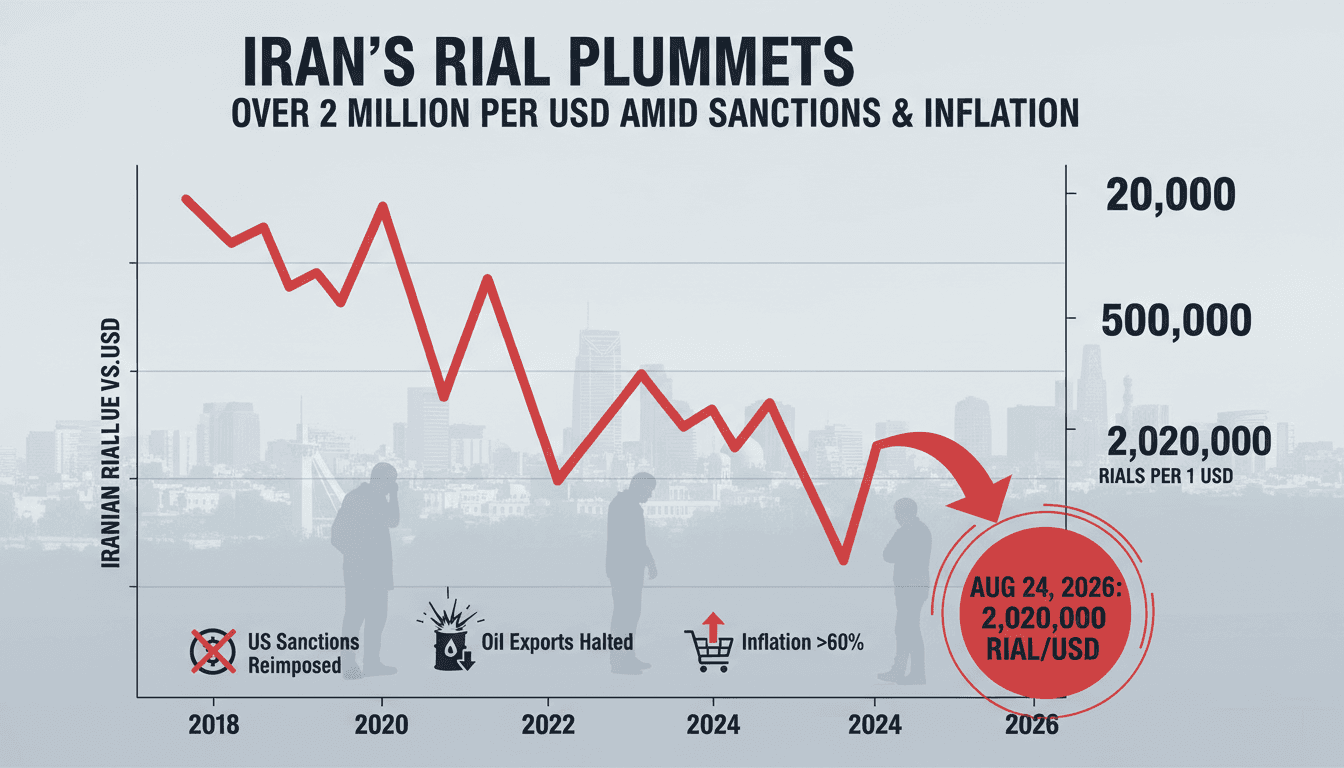
- On August 24, 2026, Iran's rial fell to over 2.02 million rials per USD, marking a record low.
- Intensified US sanctions targeting Iran's oil revenues and financial networks exacerbated the situation amid ongoing military conflict.
- Inflation exceeded 66%, leading to skyrocketing prices for essential goods, prompting public outcry for government intervention.
The context you actually need
- Cumulative sanctions: The US has imposed escalating sanctions since early 2026, severely limiting Iran's oil exports and access to foreign currency.
- Economic vulnerabilities: Iran's economy has long been hampered by structural issues, including import dependency and geopolitical tensions with the US and Israel.
- Public unrest: Citizens are facing a cost-of-living crisis, with essential items like food and medicine seeing price increases of up to 300%.
What's really happening
The Iranian rial's depreciation is a culmination of multiple factors, primarily driven by intensified US sanctions that have targeted Iran's oil revenues and financial networks. As of August 2026, the rial's value plummeted to over 2.02 million rials per USD, a stark decline from previous rates of 1.5-1.9 million rials. This rapid depreciation reflects a loss of confidence in the Iranian economy, exacerbated by a six-month military conflict that has effectively halted oil exports, a critical revenue source for the nation.
The sanctions, announced on August 24-25, specifically target entities involved in oil trade, digital assets, and shipping, further isolating Iran from international financial systems. The Iranian Central Bank has acknowledged the shortfalls in exports but has denied claims of hyperinflation, attributing the crisis to external media pressure. However, the reality on the ground tells a different story, with citizens reporting drastic increases in the prices of food staples—bread, chicken, and beef have doubled or tripled in price, while medicine costs have surged by as much as 300%.
The economic landscape is characterized by panic buying and increased demand for gold and foreign currencies, as citizens seek to protect their savings from the rapidly devaluing rial. The International Monetary Fund (IMF) has projected a 5.4% contraction in GDP and inflation rates nearing 70% for 2026, indicating a dire economic outlook. Iranian authorities have attempted to reassure the public, claiming that the downturn is temporary and part of a broader two-year contingency plan. However, the lack of immediate policy reversals and the ongoing risk of further sanctions suggest that the situation may worsen before it improves.
The UAE's suspension of financial transactions with Iran has also disrupted banking channels, affecting Dubai-based businesses and Iranian expatriates. This disruption could lead to increased costs for remittances and cross-border commerce, further complicating the economic landscape for those involved in trade with Iran.
Who feels it first (and how)
- Iranian citizens: Facing skyrocketing prices for essential goods, leading to public unrest and demands for government intervention.
- Merchants and businesses: Experiencing reduced purchasing power and increased operational costs due to inflation.
- UAE financial institutions: Disrupted banking channels affecting trade flows and remittances with Iran.
What to watch next
- US policy changes: Any adjustments in US sanctions could significantly impact Iran's economic recovery and currency stability.
- Inflation trends: Continued monitoring of inflation rates in Iran will provide insights into the economic situation and potential for unrest.
- Public sentiment: Observing citizen reactions and protests may indicate the level of social unrest and pressure on the Iranian government.
The rial has reached a record low of over 2.02 million rials per USD.
Continued inflation and economic contraction in Iran, with potential for increased public unrest.
The long-term effects of US sanctions on Iran's economy and regional stability.
Frequently Asked Questions
- Why it matters?
- The collapse of the rial signals severe economic distress in Iran, which could have ripple effects on regional stability and global oil markets.
- What happened (in 30 seconds)?
- On August 24, 2026, Iran's rial fell to over 2.02 million rials per USD, marking a record low. Intensified US sanctions targeting Iran's oil revenues and financial networks exacerbated the situation amid ongoing military conflict. Inflation exceeded 66%, leading to skyrocketing prices for essential goods, prompting public outcry for government intervention.
- What's really happening?
- The Iranian rial's depreciation is a culmination of multiple factors, primarily driven by intensified US sanctions that have targeted Iran's oil revenues and financial networks. As of August 2026, the rial's value plummeted to over 2.02 million rials per USD, a stark decline from previous rates of 1.5-1.9 million rials. This rapid depreciation reflects a loss of confidence in the Iranian economy, exacerbated by a six-month military conflict that has effectively halted oil exports, a critical rev
- Who feels it first (and how)?
- Iranian citizens: Facing skyrocketing prices for essential goods, leading to public unrest and demands for government intervention. Merchants and businesses: Experiencing reduced purchasing power and increased operational costs due to inflation. UAE financial institutions: Disrupted banking channels affecting trade flows and remittances with Iran.
- What to watch next?
- US policy changes: Any adjustments in US sanctions could significantly impact Iran's economic recovery and currency stability. Inflation trends: Continued monitoring of inflation rates in Iran will provide insights into the economic situation and potential for unrest. Public sentiment: Observing citizen reactions and protests may indicate the level of social unrest and pressure on the Iranian government.
Arabic-language coverage of international news and geopolitics.
"RT Arabic is a Russian state-funded outlet often criticized for promoting Kremlin-aligned narratives."
— A47 Editor
إيران.. هبوط العملة وارتفاع تكاليف العيش
The Iranian currency has experienced a significant decline in value against the US dollar, coinciding with the onset of intensified economic warfare by the United States. This situation has been observed by RT's team in Tehran, highlighting the chall...
Jordanian news and regional updates.
"Roya News is a Jordanian outlet focused on breaking news and local affairs."
— A47 Editor
العملة الإيرانية تهوي لمستوى قياسي أمام الدولار مع تصعيد الضغوط الاقتصادية الأمريكية
The Iranian currency has plummeted to a record low against the dollar, marking a critical decline amid escalating American economic pressures. This significant drop reflects ongoing challenges faced by the Iranian economy, exacerbated by external san...
Sports reporting with a focus on Saudi and regional competitions.
"Okaz sports coverage is broad and audience-friendly, with strong attention to Saudi teams and leagues."
— A47 Editor
عملة إيران لأدنى مستوى تاريخي.. ضغوط الاقتصاد تتصاعد
The Iranian currency has fallen to its lowest historical level against the dollar, trading at 1.992 million rials per dollar in the unofficial market, amid increasing economic pressures from the U.S. following six months of conflict. The Iranian rial...
Arabic-language coverage of international news and geopolitics.
"RT Arabic is a Russian state-funded outlet often criticized for promoting Kremlin-aligned narratives."
— A47 Editor
انهيار تاريخي للعملة الإيرانية
The Iranian currency has experienced an unprecedented historical decline, surpassing the 200,000 tomans (two million rials) mark against the US dollar for the first time. This significant drop highlights the ongoing economic challenges faced by Iran.
Pan-Arab news coverage spanning politics, business, sports, and regional affairs.
"Asharq Al-Awsat reflects a broad Arab editorial perspective with strong attention to regional geopolitics."
— A47 Editor
الريال الإيراني يهبط إلى قاع جديد… والحكومة تتعهد بتأمين العملة
The Iranian rial has reached a new record low, surpassing two million rials per dollar, as reported on Monday. In response to this significant depreciation, the government has pledged to secure foreign currency for essential goods.