
Trump Announces 50% Tariffs on Canadian Automotive and Steel Imports Effective January 2027 After Trade Talks Fail
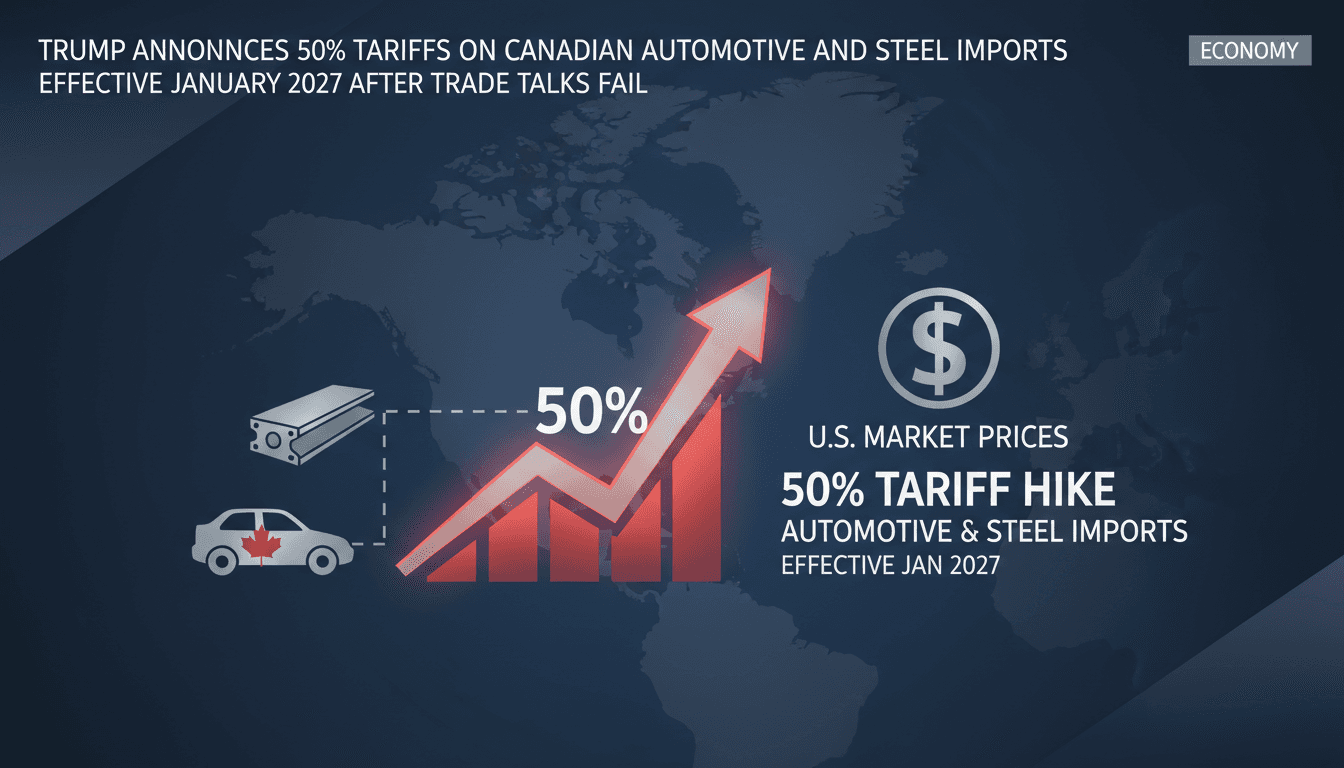
Here's what it means for you.
If you rely on automotive or steel products, prepare for potential price increases and supply chain disruptions.
Why it matters
This tariff escalation could significantly impact North American trade dynamics and consumer prices.
What happened (in 30 seconds)
- Trump announced a 50% tariff on Canadian automotive and steel imports effective January 1, 2027, following failed trade negotiations.
- Canada plans retaliatory tariffs on U.S. goods starting September 8, 2026, in response to the U.S. threat.
- Industry leaders express skepticism about the tariffs' implementation, citing previous unfulfilled threats.
The context you actually need
- Trade tensions between the U.S. and Canada have been escalating since 2025, primarily over tariffs on vehicles, dairy, and steel.
- Negotiations aimed at reducing tariffs collapsed over disputes regarding medium- and heavy-duty trucks, leading to Trump's announcement.
- Existing tariffs of 50% on approximately $20 billion in Canadian goods were already in effect as of August 19, 2026.
What's really happening
The recent announcement by President Trump to impose a 50% tariff on Canadian automotive and steel imports is a culmination of escalating trade tensions that have characterized U.S.-Canada relations over the past two years. The backdrop of this decision is a claimed annual trade deficit of $60 billion that Trump attributes to unfair practices by Canada. This assertion has been a recurring theme in his administration's trade policy, which seeks to recalibrate what it perceives as imbalances in international trade.
The breakdown of negotiations aimed at reducing tariffs to 15% on cars and 25% on aluminum and steel underscores the complexities involved in these discussions. The U.S. has been particularly focused on addressing what it sees as discriminatory practices by Canada, including the 25% tariffs Canada maintains on certain U.S. vehicles that do not qualify for USMCA preferences. This tit-for-tat approach has led to a cycle of retaliatory measures that threaten to escalate further.
Industry executives have expressed skepticism regarding the feasibility of implementing such high tariffs, recalling previous instances where Trump threatened similar actions but did not follow through. However, the timing of this announcement—just before the midterm elections—suggests a strategic move to rally support among his base by taking a hardline stance on trade.
The implications of these tariffs are significant, particularly for the automotive industry, which relies heavily on cross-border supply chains. Canadian auto parts are integral to U.S. assembly operations, and a sudden increase in tariffs could disrupt production and lead to higher costs for consumers. Importers, rather than exporters, will bear the brunt of these tariff costs, potentially leading to increased prices for vehicles and parts in the U.S. market.
As Canada prepares to retaliate with its own tariffs on U.S. goods, including steel and dairy, the potential for a full-blown trade war looms. This could have far-reaching consequences not only for the U.S. and Canadian economies but also for global supply chains that are already under strain from various geopolitical tensions.
Who feels it first (and how)
- Automotive manufacturers: Increased costs for parts could lead to higher vehicle prices and production delays.
- Steel producers: U.S. steel companies may face retaliatory tariffs, impacting their market position.
- Consumers: Higher prices for vehicles and related products could affect purchasing decisions.
- Importers: Businesses importing Canadian goods will see increased costs, potentially leading to reduced margins.
- Workers in affected industries: Job security may be threatened in sectors reliant on cross-border trade.
What to watch next
- Implementation details: Watch for specifics on how and when the tariffs will be enforced, as this will impact market reactions.
- Retaliatory measures: Monitor Canada's response and any additional tariffs they may impose on U.S. goods.
- Market reactions: Keep an eye on automotive and steel market trends as companies adjust to the new tariff landscape.
Tariffs on Canadian automotive and steel imports are set to increase to 50% on January 1, 2027.
Canada will implement retaliatory tariffs on U.S. goods starting September 8, 2026.
The long-term effects on consumer prices and supply chains remain uncertain as negotiations may resume.
Frequently Asked Questions
- Why it matters?
- This tariff escalation could significantly impact North American trade dynamics and consumer prices.
- What happened (in 30 seconds)?
- Trump announced a 50% tariff on Canadian automotive and steel imports effective January 1, 2027, following failed trade negotiations. Canada plans retaliatory tariffs on U.S. goods starting September 8, 2026, in response to the U.S. threat. Industry leaders express skepticism about the tariffs' implementation, citing previous unfulfilled threats.
- What's really happening?
- The recent announcement by President Trump to impose a 50% tariff on Canadian automotive and steel imports is a culmination of escalating trade tensions that have characterized U.S.-Canada relations over the past two years. The backdrop of this decision is a claimed annual trade deficit of $60 billion that Trump attributes to unfair practices by Canada. This assertion has been a recurring theme in his administration's trade policy, which seeks to recalibrate what it perceives as imbalances in in
- Who feels it first (and how)?
- Automotive manufacturers: Increased costs for parts could lead to higher vehicle prices and production delays. Steel producers: U.S. steel companies may face retaliatory tariffs, impacting their market position. Consumers: Higher prices for vehicles and related products could affect purchasing decisions. Importers: Businesses importing Canadian goods will see increased costs, potentially leading to reduced margins. Workers in affected industries: Job security may be threatened in sectors
- What to watch next?
- Implementation details: Watch for specifics on how and when the tariffs will be enforced, as this will impact market reactions. Retaliatory measures: Monitor Canada's response and any additional tariffs they may impose on U.S. goods. Market reactions: Keep an eye on automotive and steel market trends as companies adjust to the new tariff landscape.
Pan-Arab political news and analysis.
"Al-Quds Al-Arabi is a London-based Arabic newspaper known for political coverage."
— A47 Editor
ترامب يهدد برفع الرسوم على السيارات والشاحنات إلى 50% وسط خلاف مع كندا
U.S. President Donald Trump announced on Monday that tariffs on all cars, trucks, auto parts, and steel will increase to 50% starting January 1, 2027, following the collapse of trade talks with Canada over the weekend. Trump emphasized on social medi...
Market-moving headlines impacting equities, bonds, and related risk assets.
"Real-time catalysts and volatility drivers across indices and sectors."
— A47 Editor
Trump threatens 50% tariffs on all cars and trucks from Canada amid trade fight
President Trump has threatened to impose a 50% tariff on all cars and trucks imported from Canada, escalating trade tensions between the two nations. This announcement follows the failure to reach a trade agreement and comes amid ongoing negotiations...
Global coverage of politics, crises, and international affairs.
"HuffPost provides progressive-oriented reporting on international developments, often focusing on humanitarian and social justice issues."
— A47 Editor
Trump Threatens Tariffs On All Cars And Trucks To 50% Amid Canada Trade Spat
U.S. President Donald Trump has announced a significant increase in tariffs on all cars, trucks, automotive parts, and steel to 50%, effective January 1, 2027, amid ongoing trade disputes with Canada. This decision follows the collapse of trade negot...