
Iran War Causes Major Rerouting of Global Oil Traffic to U.S. Gulf Coast
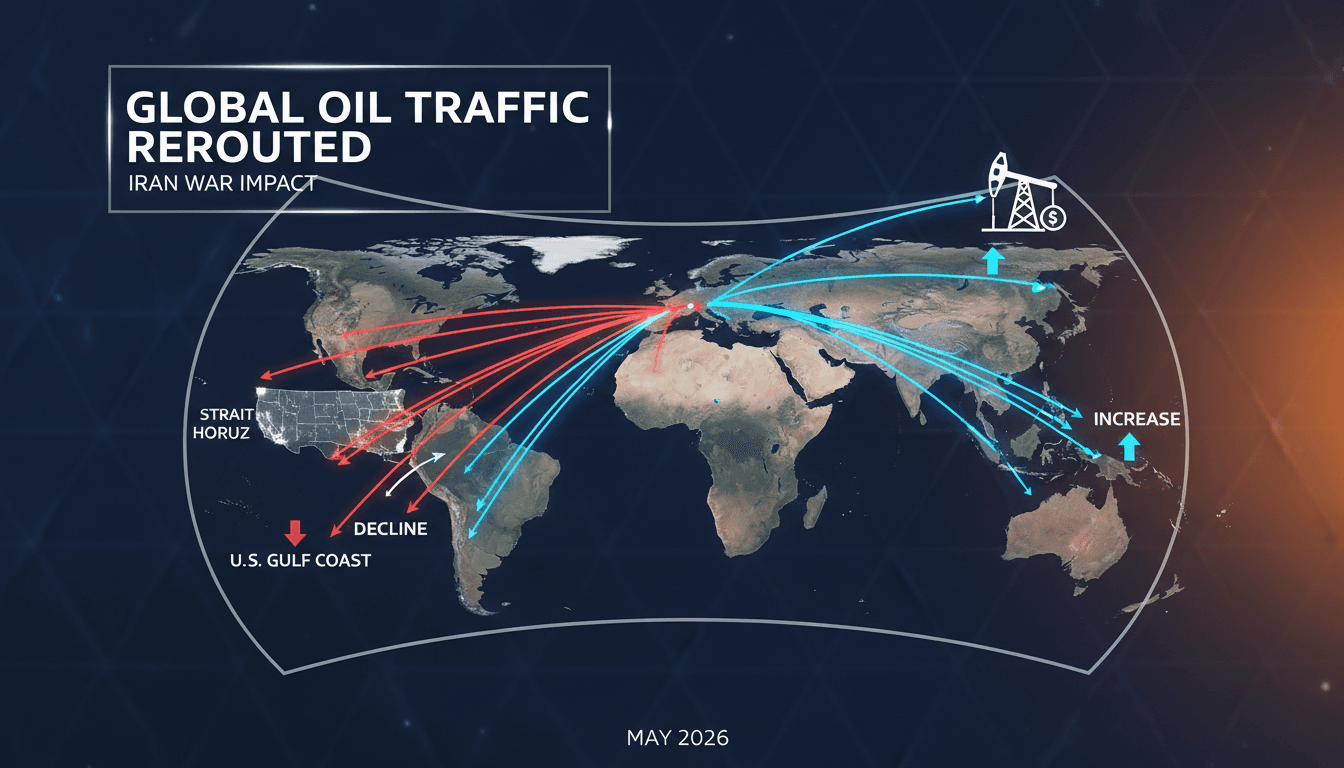
Here's what it means for you.
If you rely on oil or energy markets, the ongoing disruptions could affect prices and availability in your region.
Why it matters
The rerouting of oil traffic significantly alters global supply chains and pricing dynamics, impacting economies worldwide.
What happened (in 30 seconds)
- The Iran war has led to a drastic reduction in oil shipments through the Strait of Hormuz, from 21 million barrels per day to as low as 2-8 million barrels per day.
- U.S. crude exports surged to a record 5.7 million barrels per day in May 2026 as international buyers sought alternatives amid the conflict.
- Maritime traffic has been redirected, with U.S. Gulf Coast ports becoming a primary destination for crude oil shipments.
The context you actually need
- Prior to the war, the Strait of Hormuz was a critical chokepoint for global oil, facilitating about one-fifth of the world's supply.
- The U.S. shale revolution positioned the United States as the largest crude producer, averaging 13.6 million barrels per day in 2025, allowing it to absorb disruptions.
- Global markets have adapted by increasing imports from the U.S., Brazil, and Russia, preventing extreme price spikes despite the conflict.
What's really happening
Since the onset of hostilities in late February 2026, the Strait of Hormuz has faced severe restrictions, effectively closing off a vital artery for oil transport. This chokepoint previously enabled the transit of approximately 18-20 million barrels of oil daily, primarily destined for Asian markets such as China, India, Japan, and South Korea. The conflict has led to a staggering drop in Middle Eastern crude exports, with figures plummeting to between 2 and 8 million barrels per day by August 2026.
In response to these disruptions, international buyers have turned to U.S. crude, resulting in record exports. In May 2026, U.S. crude exports reached an unprecedented 5.7 million barrels per day, showcasing the U.S.'s ability to fill the supply gap left by Middle Eastern producers. This shift not only highlights the U.S.'s growing role as a reliable supplier but also reflects a broader trend of diversification in global oil sourcing.
The situation has been fluid, with a temporary easing of restrictions in June 2026 due to a U.S.-Iran interim agreement, which allowed for a brief increase in oil flows through the Strait. However, renewed tensions in July and August have prompted a resurgence in redirection of oil traffic, with many Very Large Crude Carriers (VLCCs) heading to U.S. ports for loading. This ongoing volatility underscores the precarious nature of global oil supply chains and the potential for lasting shifts in trade patterns.
The aftermath of the conflict has seen global markets adapt, with increased exports from the U.S., Brazil, and Russia preventing extreme price spikes beyond Brent crude's peak of approximately $126 per barrel. The U.S. has gained enhanced geopolitical leverage as a reliable supplier, while shipowners increasingly favor safer routes to U.S. ports. The situation remains dynamic, with temporary diplomatic openings demonstrating supply responsiveness, yet the persistent volatility indicates that the global oil landscape may be undergoing a fundamental transformation.
Who feels it first (and how)
- Energy consumers: Higher prices at the pump and increased energy costs for households.
- Businesses reliant on oil: Increased operational costs affecting profit margins, particularly in transportation and manufacturing.
- Investors in energy markets: Fluctuating prices and potential shifts in investment strategies as new suppliers emerge.
What to watch next
- U.S. crude export trends: Continued increases could solidify the U.S.'s position as a primary supplier, impacting global pricing.
- Geopolitical developments: Any shifts in U.S.-Iran relations could either stabilize or further disrupt oil flows through the Strait of Hormuz.
- Market adaptations: Watch for how global buyers adjust their sourcing strategies in response to ongoing volatility.
The Strait of Hormuz has seen a significant reduction in oil traffic due to the Iran war.
U.S. crude exports will continue to rise as international buyers seek reliable alternatives.
The long-term implications of these shifts on global oil pricing and supply chains remain uncertain.
Frequently Asked Questions
- Why it matters?
- The rerouting of oil traffic significantly alters global supply chains and pricing dynamics, impacting economies worldwide.
- What happened (in 30 seconds)?
- The Iran war has led to a drastic reduction in oil shipments through the Strait of Hormuz, from 21 million barrels per day to as low as 2-8 million barrels per day. U.S. crude exports surged to a record 5.7 million barrels per day in May 2026 as international buyers sought alternatives amid the conflict. Maritime traffic has been redirected, with U.S. Gulf Coast ports becoming a primary destination for crude oil shipments.
- What's really happening?
- Since the onset of hostilities in late February 2026, the Strait of Hormuz has faced severe restrictions, effectively closing off a vital artery for oil transport. This chokepoint previously enabled the transit of approximately 18-20 million barrels of oil daily, primarily destined for Asian markets such as China, India, Japan, and South Korea. The conflict has led to a staggering drop in Middle Eastern crude exports, with figures plummeting to between 2 and 8 million barrels per day by August 2
- Who feels it first (and how)?
- Energy consumers: Higher prices at the pump and increased energy costs for households. Businesses reliant on oil: Increased operational costs affecting profit margins, particularly in transportation and manufacturing. Investors in energy markets: Fluctuating prices and potential shifts in investment strategies as new suppliers emerge.
- What to watch next?
- U.S. crude export trends: Continued increases could solidify the U.S.'s position as a primary supplier, impacting global pricing. Geopolitical developments: Any shifts in U.S.-Iran relations could either stabilize or further disrupt oil flows through the Strait of Hormuz. Market adaptations: Watch for how global buyers adjust their sourcing strategies in response to ongoing volatility.
Capitol Hill news, legislation, and policy insight.
"The Hill specializes in U.S. politics and policy, with a focus on Capitol Hill developments and a reputation for insider reporting."
— A47 Editor
Global oil traffic shifts toward the US amid Iran war disruptions
Global oil traffic is increasingly shifting toward the United States due to disruptions in the Strait of Hormuz, which have been exacerbated by the ongoing conflict involving Iran. This rerouting reflects significant changes in global oil supply chai...
Global business headlines with AI angles.
"General business outlet that frequently covers AI."
— A47 Editor
Iran Accused The U.S. Of Blocking a Deal To Set Up a Safe Route Through Hormuz. Oil Is Dropping Anyway.
Iran has accused the United States of obstructing negotiations aimed at establishing a safe maritime route through the Strait of Hormuz, a critical passage for global oil shipments. This accusation comes amid ongoing tensions and military clashes in ...
Regional coverage and analysis focused on politics, diplomacy, and business across the Middle East.
"Al-Monitor is known for analytical reporting on Middle East politics and policy developments."
— A47 Editor
Iran and Oman discuss temporary Hormuz corridor as impasse with US drags on
Iran has resumed discussions with Oman regarding the management of the Strait of Hormuz, a critical maritime corridor for global oil and gas shipments, amid ongoing economic pressures from the United States. These talks aim to establish a temporary s...
English-language news from Qatar covering domestic and regional affairs.
"Gulf Times reflects Qatari perspectives on regional developments."
— A47 Editor
Six months into Iran war, almost half of global oil flows from war zones
Six months into the ongoing conflict in Iran, nearly half of the world's oil supply is sourced from countries embroiled in warfare, highlighting the unprecedented scale of current energy disruptions. This situation has arisen as Iran's blockade of th...
Business, markets, finance, energy, and economic policy coverage.
"Arab News business coverage tends to emphasize Gulf economies, investment, and regional transformation stories."
— A47 Editor
Fewer than 20 ships transit key Strait of Hormuz over weekend, data shows
Over the weekend, fewer than 20 commodity vessels transited the Strait of Hormuz, with only four ships crossing on Sunday and 13 on Saturday, according to shipping data from Kpler. This decline in maritime traffic reflects ongoing geopolitical tensio...