
Goldman Sachs Reports Recovery of Oil Flows Through Strait of Hormuz to Two-Thirds of Pre-War Levels
Here's what it means for you.
The recovery of oil flows through the Strait of Hormuz is stabilizing global oil prices, which can impact fuel costs and economic conditions in your region.
Why it matters
The Strait of Hormuz is a critical chokepoint for global oil trade, and its recovery affects supply chains and energy prices worldwide.
What happened (in 30 seconds)
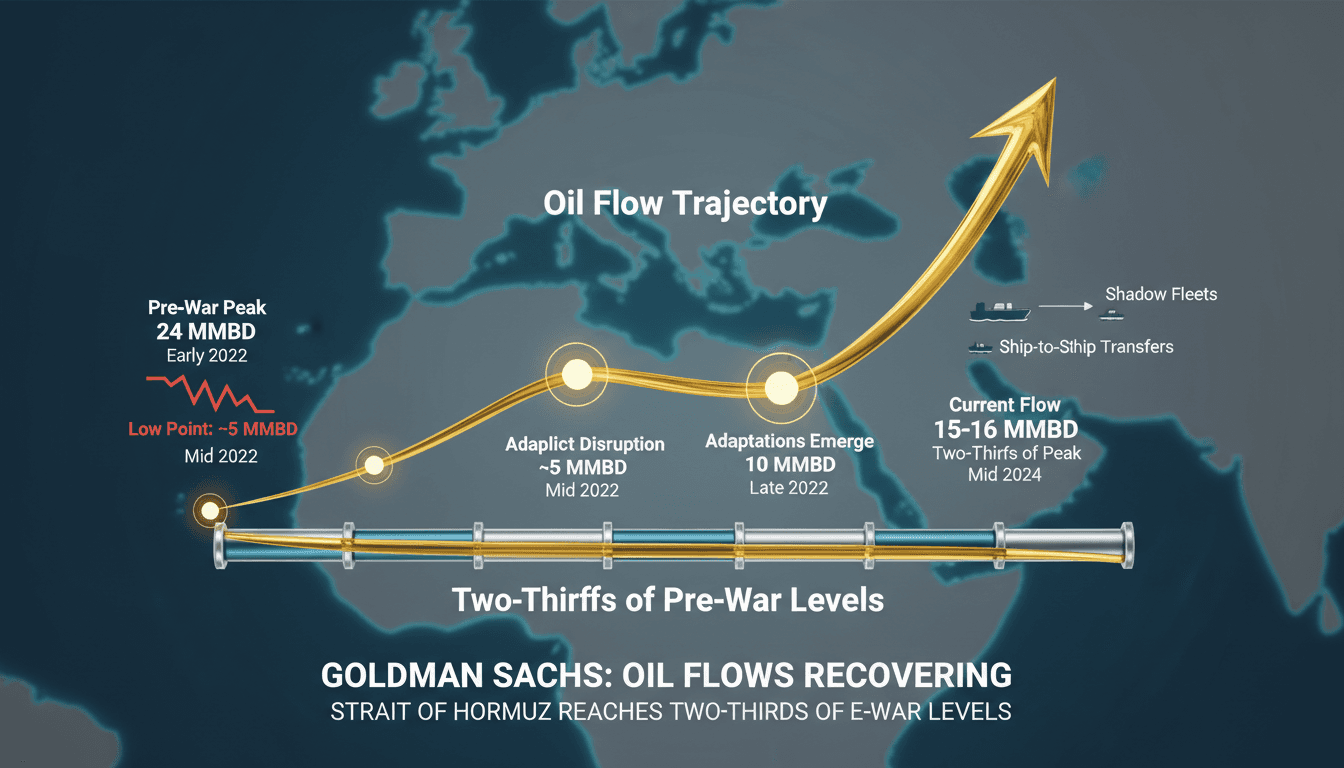
- Goldman Sachs reported that oil flows through the Strait of Hormuz have rebounded to 15-16 million barrels per day, about two-thirds of pre-war levels.
- This recovery follows a significant drop to 5-6 million barrels per day in March 2026 due to the ongoing US-Iran conflict.
- Adaptations by producers and shippers, including shadow fleets and ship-to-ship transfers, have helped mitigate disruptions.
The context you actually need
- The US-Iran war, which began in February 2026, severely impacted navigation and exports through the Strait of Hormuz, affecting roughly one-fifth of global oil trade.
- Producers have shifted to alternative routes, such as Saudi pipelines and Iraqi exports, to maintain supply despite regional tensions.
- Oil prices have declined from over $120 per barrel in April 2026 to approximately $89 per barrel by late August, reflecting the partial recovery of supply.
What's really happening
The recent report from Goldman Sachs highlights a significant rebound in oil flows through the Strait of Hormuz, a vital artery for global energy supply. As of late August 2026, exports of crude and refined products have reached approximately 15-16 million barrels per day, recovering to about two-thirds of pre-war levels. This recovery is notable given the severe disruptions caused by the US-Iran conflict, which began in February 2026 and led to a dramatic drop in oil flows to as low as 5-6 million barrels per day in March.
The recovery can be attributed to several adaptive strategies employed by Gulf oil producers and shipping companies. These include the use of shadow fleets—vessels that operate outside of traditional tracking systems—and ship-to-ship transfers, which allow for more flexible and discreet transport of oil. Such adaptations have proven essential in mitigating the broader disruptions to global supply chains, demonstrating the resilience of the Gulf oil sector.
Despite this recovery, the current export levels remain 7-8 million barrels below pre-conflict benchmarks, indicating that while progress has been made, the situation is still precarious. The ongoing geopolitical tensions in the region continue to pose risks to stability, and traders are closely monitoring developments. The partial recovery of oil flows has contributed to a stabilization of global crude prices, which have seen a decline from their peak earlier in the year.
For consumers and businesses, this stabilization is crucial. Lower oil prices can lead to reduced fuel costs, which can have a cascading effect on transportation and logistics expenses. This is particularly relevant for regions like Dubai, where the economy is heavily reliant on imported energy. The recovery in Hormuz flows has eased immediate supply disruption risks for UAE energy markets, supporting relative stability in local fuel availability and contributing to downward pressure on global oil prices.
As the situation evolves, the ability of Gulf producers to maintain these levels of output will be critical. Continued adaptations and strategic shifts will determine the future of oil flows through this vital chokepoint, impacting not just regional economies but global markets as well.
Who feels it first (and how)
- Energy producers in the Gulf region, who are adapting to maintain supply.
- Shipping companies that are implementing new strategies to navigate the conflict.
- Consumers and businesses in oil-importing countries, particularly in the UAE, who may see fluctuations in fuel prices.
What to watch next
- Geopolitical developments: Continued tensions between the US and Iran could impact oil flows and prices.
- Adaptation strategies: Monitor how Gulf producers and shipping companies evolve their operations in response to ongoing challenges.
- Global oil prices: Watch for fluctuations as supply stabilizes, which could affect economic conditions in oil-dependent regions.
Oil flows through the Strait of Hormuz have recovered to 15-16 million barrels per day.
Continued geopolitical tensions will influence future oil supply and pricing.
The long-term sustainability of current oil flow levels amid ongoing conflict.
Frequently Asked Questions
- Why it matters?
- The Strait of Hormuz is a critical chokepoint for global oil trade, and its recovery affects supply chains and energy prices worldwide.
- What happened (in 30 seconds)?
- Goldman Sachs reported that oil flows through the Strait of Hormuz have rebounded to 15-16 million barrels per day, about two-thirds of pre-war levels. This recovery follows a significant drop to 5-6 million barrels per day in March 2026 due to the ongoing US-Iran conflict. Adaptations by producers and shippers, including shadow fleets and ship-to-ship transfers, have helped mitigate disruptions.
- What's really happening?
- The recent report from Goldman Sachs highlights a significant rebound in oil flows through the Strait of Hormuz, a vital artery for global energy supply. As of late August 2026, exports of crude and refined products have reached approximately 15-16 million barrels per day, recovering to about two-thirds of pre-war levels. This recovery is notable given the severe disruptions caused by the US-Iran conflict, which began in February 2026 and led to a dramatic drop in oil flows to as low as 5-6 mill
- Who feels it first (and how)?
- Energy producers in the Gulf region, who are adapting to maintain supply. Shipping companies that are implementing new strategies to navigate the conflict. Consumers and businesses in oil-importing countries, particularly in the UAE, who may see fluctuations in fuel prices.
- What to watch next?
- Geopolitical developments: Continued tensions between the US and Iran could impact oil flows and prices. Adaptation strategies: Monitor how Gulf producers and shipping companies evolve their operations in response to ongoing challenges. Global oil prices: Watch for fluctuations as supply stabilizes, which could affect economic conditions in oil-dependent regions.
Sports reporting with a focus on Saudi and regional competitions.
"Okaz sports coverage is broad and audience-friendly, with strong attention to Saudi teams and leagues."
— A47 Editor
«جولدمان ساكس»: تدفقات النفط عبر «هرمز» تتعافى إلى ثلثي مستوياتها
Oil flows through the Strait of Hormuz have recovered to about two-thirds of pre-war levels between the United States and Iran, with current exports ranging between 15 to 16 million barrels per day, according to Goldman Sachs. This recovery comes des...
Arabic-language coverage of international news and geopolitics.
"RT Arabic is a Russian state-funded outlet often criticized for promoting Kremlin-aligned narratives."
— A47 Editor
"غولدمان ساكس": صادرات النفط من الخليج عادت إلى ثلثي مستواها قبل الحرب
A report from the American investment bank Goldman Sachs indicates that oil exports from the Gulf region have significantly recovered, returning to two-thirds of their pre-war winter levels. This recovery highlights the resilience of the Gulf oil mar...
Pan-Arab news coverage spanning politics, business, sports, and regional affairs.
"Asharq Al-Awsat reflects a broad Arab editorial perspective with strong attention to regional geopolitics."
— A47 Editor
حركة الملاحة عبر مضيق هرمز ترتفع قليلاً رغم استمرار التوترات
Maritime traffic through the Strait of Hormuz has seen a slight increase, despite ongoing geopolitical tensions between the United States and Iran. This development highlights the resilience of shipping routes in a region that is critical for global ...