
Canada Announces Retaliatory Tariffs on $20 Billion of U.S. Imports Following Trade Dispute
Here's what it means for you.
If you’re involved in international trade or supply chains, this escalating trade dispute could impact costs and availability of goods.
Why it matters
This trade conflict signals a significant shift in North American economic relations, potentially affecting global supply chains.
What happened (in 30 seconds)
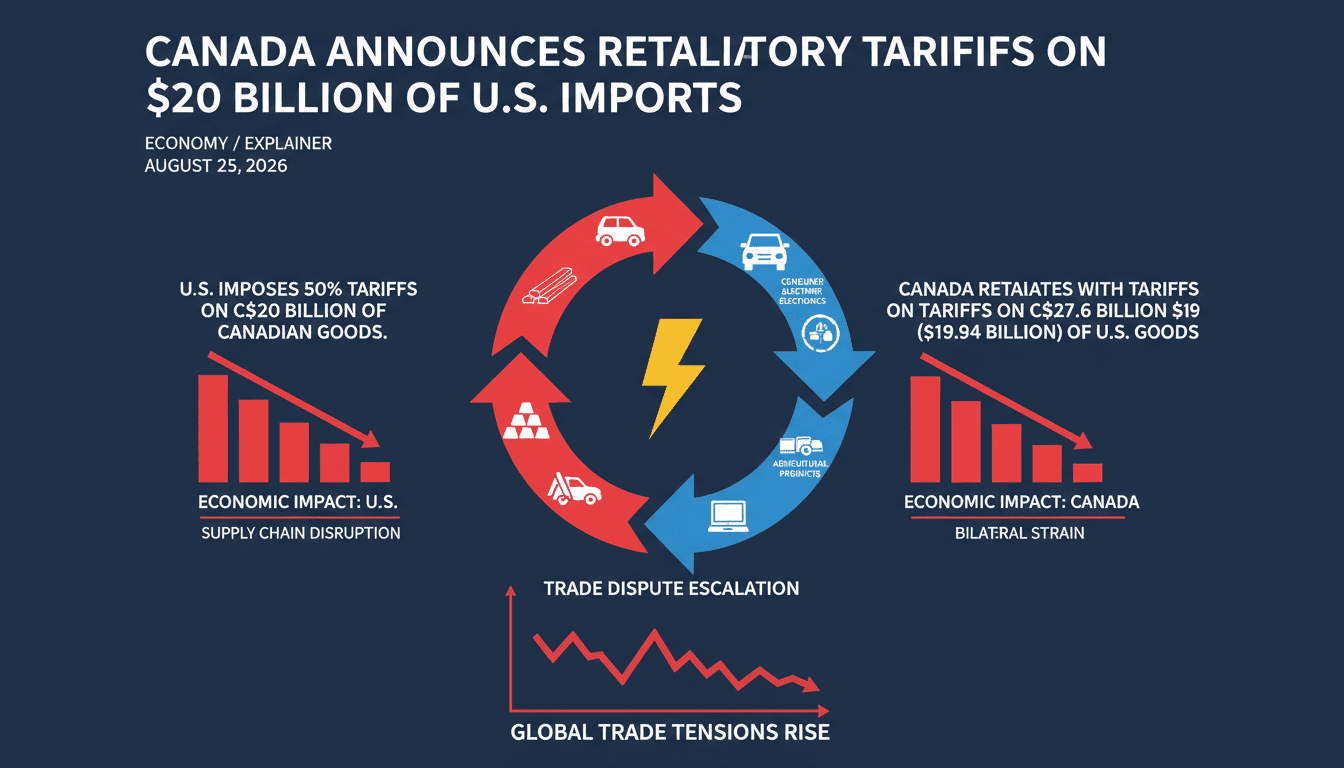
- Canada announced retaliatory tariffs on C$27.6 billion ($19.94 billion) of U.S. imports effective September 8, 2026.
- The tariffs mirror U.S. duties imposed on Canadian goods, with rates of 15%, 25%, and 50% across approximately 700 products.
- A C$7.5 billion support package was introduced to assist affected Canadian businesses and workers.
The context you actually need
- Failed negotiations between Canada and the U.S. led to the imposition of U.S. tariffs on Canadian imports, escalating tensions.
- Previous tariffs on Canadian steel and aluminum under U.S. trade law have already strained bilateral relations.
- The retaliatory measures are designed to protect Canadian industries while targeting U.S. exporters, indicating a strategic economic response.
What's really happening
The recent announcement by Canada to impose dollar-for-dollar retaliatory tariffs on U.S. imports is a direct response to escalating trade tensions that have been brewing for years. The U.S. government, under President Donald Trump, implemented 50% tariffs on approximately $20 billion worth of Canadian goods, a move that Canada deemed unacceptable. This escalation follows a breakdown in negotiations aimed at averting new tariffs, highlighting the fragility of trade relations between the two countries.
Canada's response is structured to match the U.S. tariffs, applying duties of 15%, 25%, and 50% on a wide range of products, including steel, aluminum, furniture, clothing, cheese, appliances, seafood, electronics, and tools. By targeting around 700 products, Canada aims to minimize the impact on its consumers while maximizing pressure on U.S. exporters. This strategic approach is designed to protect Canadian workers, farmers, and businesses from the adverse effects of U.S. tariffs.
In addition to the tariffs, Canada has introduced a C$7.5 billion support package aimed at assisting small and medium enterprises, providing cash flow funding, and offering worker assistance. This package is crucial for mitigating the economic fallout from the tariffs and ensuring that affected sectors can adapt to the new trade landscape.
The implications of these tariffs extend beyond Canada and the U.S. They could disrupt global supply chains, particularly in sectors like metals, agriculture, and manufacturing, where both countries play significant roles. As businesses adjust to these new tariffs, the ripple effects may be felt in other markets, including those in Europe and Asia, where U.S. and Canadian goods are integral to supply chains.
Moreover, the ongoing trade conflict raises concerns about potential further escalations, including additional U.S. tariffs on Canadian autos, which could deepen the economic rift. The situation remains fluid, and both countries are likely to continue monitoring the impacts of these tariffs on their economies and on global trade dynamics.
Who feels it first (and how)
- Canadian exporters: Facing increased costs and reduced competitiveness in the U.S. market.
- U.S. manufacturers: Potentially losing market access and facing retaliatory measures on their exports.
- Consumers in both countries: Likely to see higher prices on affected goods.
- Workers in affected sectors: May experience job insecurity and reduced hours due to decreased demand.
What to watch next
- Further U.S. tariffs: Watch for announcements regarding additional tariffs on Canadian autos, which could escalate tensions further.
- Market reactions: Monitor how stock markets and commodity prices respond to these tariffs, as they may indicate broader economic impacts.
- Negotiation developments: Keep an eye on any renewed talks between Canada and the U.S. that could lead to a resolution or further escalation.
Canada has implemented retaliatory tariffs on U.S. imports.
The trade conflict will continue to evolve, with potential for further tariffs or negotiations.
The long-term impact on global supply chains and economic relations remains uncertain.
Frequently Asked Questions
- Why it matters?
- This trade conflict signals a significant shift in North American economic relations, potentially affecting global supply chains.
- What happened (in 30 seconds)?
- Canada announced retaliatory tariffs on C$27.6 billion ($19.94 billion) of U.S. imports effective September 8, 2026. The tariffs mirror U.S. duties imposed on Canadian goods, with rates of 15%, 25%, and 50% across approximately 700 products. A C$7.5 billion support package was introduced to assist affected Canadian businesses and workers.
- What's really happening?
- The recent announcement by Canada to impose dollar-for-dollar retaliatory tariffs on U.S. imports is a direct response to escalating trade tensions that have been brewing for years. The U.S. government, under President Donald Trump, implemented 50% tariffs on approximately $20 billion worth of Canadian goods, a move that Canada deemed unacceptable. This escalation follows a breakdown in negotiations aimed at averting new tariffs, highlighting the fragility of trade relations between the two coun
- Who feels it first (and how)?
- Canadian exporters: Facing increased costs and reduced competitiveness in the U.S. market. U.S. manufacturers: Potentially losing market access and facing retaliatory measures on their exports. Consumers in both countries: Likely to see higher prices on affected goods. Workers in affected sectors: May experience job insecurity and reduced hours due to decreased demand.
- What to watch next?
- Further U.S. tariffs: Watch for announcements regarding additional tariffs on Canadian autos, which could escalate tensions further. Market reactions: Monitor how stock markets and commodity prices respond to these tariffs, as they may indicate broader economic impacts. Negotiation developments: Keep an eye on any renewed talks between Canada and the U.S. that could lead to a resolution or further escalation.
Macro commentary, policy analysis, growth/inflation themes, and global outlooks.
"Contextual macro coverage that complements day-to-day market headlines."
— A47 Editor
Canada slaps retaliatory tariffs on US goods worth $20 billion as trade war intensifies
Canada has announced retaliatory tariffs on U.S. goods worth $20 billion in response to the U.S. imposing a 50% tariff on similar value of Canadian imports, following the collapse of trade negotiations. This escalation marks a significant intensifica...
Macro commentary, policy analysis, growth/inflation themes, and global outlooks.
"Contextual macro coverage that complements day-to-day market headlines."
— A47 Editor
Canada to announce retaliatory tariffs on US goods today
Canada is set to announce retaliatory tariffs on U.S. goods today, following the U.S. implementation of a 50% tariff on approximately $20 billion worth of Canadian imports. This decision comes after trade negotiations between the two nations collapse...
Corporate leadership, finance, technology, and market trends.
"Fortune covers financial trends, leadership, and innovation with a pragmatic editorial approach."
— A47 Editor
‘We’re going to hit back’ — Canada does what many other U.S. allies have avoided: risk economic pain rather than yield to tariff pressure
Canada has announced its intention to impose retaliatory tariffs in response to the U.S. government's decision to implement a 50% tariff on a wide range of Canadian goods, citing unfair trade practices. This escalation follows the collapse of trade n...
Global news coverage with extensive reporting on Middle Eastern conflicts and geopolitics.
"Al Jazeera is a Qatar-based broadcaster known for wide regional coverage and alternative perspectives."
— A47 Editor
Canada to hit US with retaliatory tariffs as trade war escalates
Canada has announced it will impose retaliatory tariffs on imports from the United States, effective September 8, following the U.S. decision to levy a 50% tariff on $20 billion worth of Canadian goods after trade negotiations collapsed. Prime Minist...
Comprehensive coverage of Middle Eastern and global issues.
"Al Jazeera is a prominent voice from the Global South, especially the Middle East, with an emphasis on underreported stories."
— A47 Editor
Canada to hit US with retaliatory tariffs as trade war escalates
Canada has announced it will impose retaliatory tariffs on imports from the United States, effective September 8, following the U.S. decision to levy a 50% tariff on $20 billion worth of Canadian goods after trade negotiations collapsed. Prime Minist...