
Oil Prices Stabilize as U.S. Expands Sanctions on Iran
Here's what it means for you.
If you’re in the energy sector or rely on oil prices, the recent stabilization of oil markets amid U.S. sanctions on Iran could impact your costs and revenues.
Why it matters
The U.S. sanctions on Iran are reshaping global oil supply dynamics, influencing prices and economic stability across regions.
What happened (in 30 seconds)
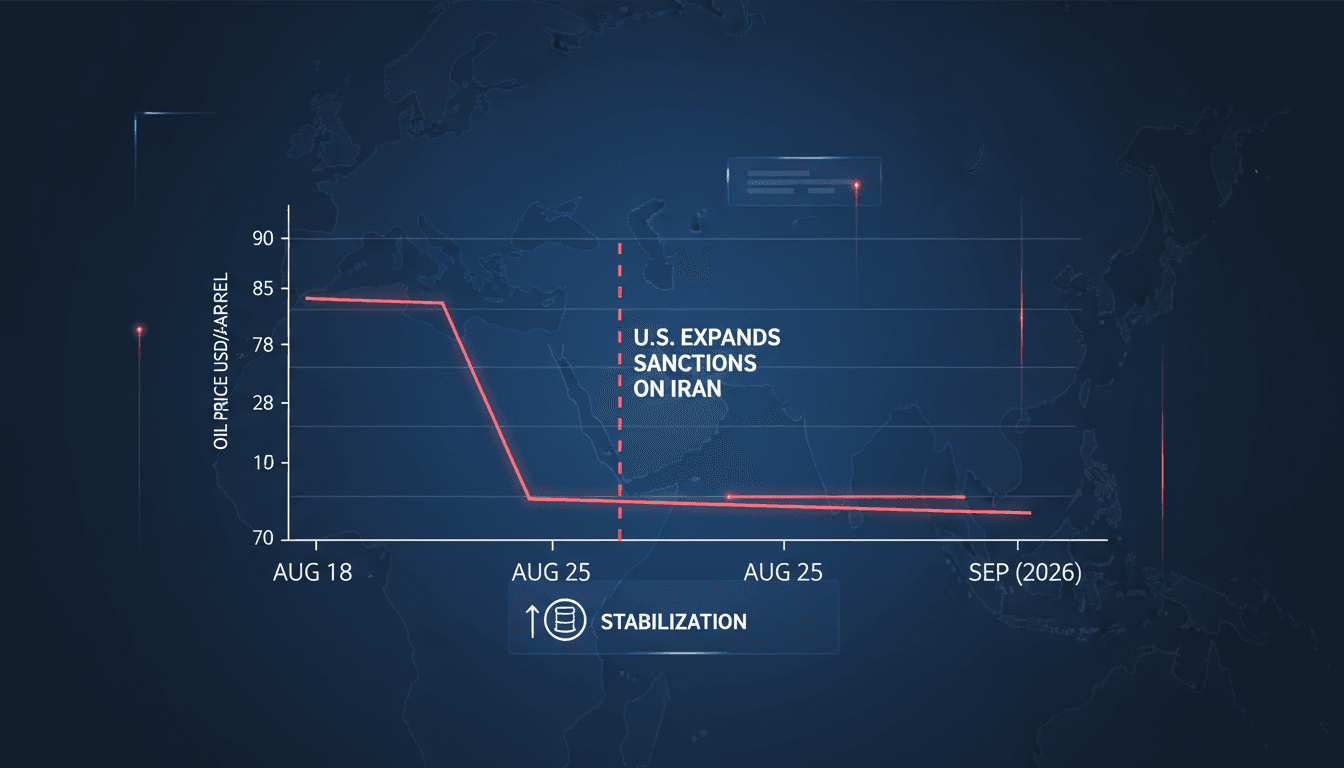
- Oil prices stabilized on August 25, 2026, after a more than 2% decline the previous day due to new U.S. sanctions on Iran.
- U.S. Treasury Secretary Scott Bessent announced expanded sanctions aimed at isolating Iran economically, shifting focus from military action to economic pressure.
- Market analysts assessed the sanctions as having a marginal short-term impact on oil supplies, leading to a rebound in prices.
The context you actually need
- The U.S.-Israeli conflict with Iran, which began on February 28, 2026, has disrupted regional oil supplies and led to drawdowns from strategic reserves.
- Oil prices had been rising prior to the sanctions announcement due to concerns over supply disruptions in the Strait of Hormuz, a critical shipping route.
- The U.S. administration's pivot to economic measures reflects a strategy to exert pressure on Iran without escalating military tensions.
What's really happening
On August 24, 2026, U.S. Treasury Secretary Scott Bessent announced expanded secondary sanctions targeting Iran, warning trading partners of exclusion from the dollar-based financial system. This announcement triggered a wave of profit-taking in oil markets, causing prices to drop by over 2%. However, by August 25, oil prices began to stabilize, with Brent crude futures hovering around $92.44 per barrel and WTI crude at approximately $85.38. Analysts from ING and KCM noted that the sanctions would likely have a limited immediate impact on oil supplies, which contributed to the stabilization.
The sanctions are designed to sever Iran's economic lifelines, but the immediate market reaction suggests that traders are not anticipating significant disruptions to oil supply in the short term. Instead, the focus has shifted from military risks to economic pressures, which analysts believe pose a lower risk to supply chains. This shift is crucial as it indicates a broader market sentiment that may prioritize economic stability over geopolitical tensions.
Moreover, the situation in the Strait of Hormuz remains precarious. A recent incident involving a tanker near Oman highlighted the ongoing risks in this vital shipping corridor, where Iran has threatened non-compliant vessels. Despite these threats, the overall market response has been one of cautious optimism, as traders assess the sanctions' potential to isolate Iran without triggering immediate supply crises.
The U.S. Strategic Petroleum Reserve has also seen a significant drawdown, falling to 289.7 million barrels—the lowest level since November 1982. This reduction reflects the ongoing conflict-related supply disruptions and the U.S. administration's strategy to manage domestic oil supplies amid international tensions. As the situation evolves, the balance between economic sanctions and military action will continue to shape oil market dynamics.
Who feels it first (and how)
- Energy sector professionals: Fluctuations in oil prices directly affect revenues and operational costs.
- Shipping and logistics companies: Increased insurance and logistics costs due to heightened risks in the Strait of Hormuz.
- Consumers: Potential increases in fuel prices could impact transportation and goods costs.
What to watch next
- Iran's response to sanctions: Watch for any retaliatory measures that could disrupt oil supply or shipping routes.
- Global oil demand trends: Monitor how global economic conditions influence oil consumption and prices.
- U.S. Strategic Petroleum Reserve levels: Keep an eye on reserve levels as they indicate the U.S. government's response to market pressures.
Oil prices stabilized after initial declines due to sanctions.
Continued economic pressure on Iran will shape oil market dynamics.
The long-term impact of sanctions on Iran's oil production capabilities.
Frequently Asked Questions
- Why it matters?
- The U.S. sanctions on Iran are reshaping global oil supply dynamics, influencing prices and economic stability across regions.
- What happened (in 30 seconds)?
- Oil prices stabilized on August 25, 2026, after a more than 2% decline the previous day due to new U.S. sanctions on Iran. U.S. Treasury Secretary Scott Bessent announced expanded sanctions aimed at isolating Iran economically, shifting focus from military action to economic pressure. Market analysts assessed the sanctions as having a marginal short-term impact on oil supplies, leading to a rebound in prices.
- What's really happening?
- On August 24, 2026, U.S. Treasury Secretary Scott Bessent announced expanded secondary sanctions targeting Iran, warning trading partners of exclusion from the dollar-based financial system. This announcement triggered a wave of profit-taking in oil markets, causing prices to drop by over 2%. However, by August 25, oil prices began to stabilize, with Brent crude futures hovering around $92.44 per barrel and WTI crude at approximately $85.38. Analysts from ING and KCM noted that the sanctions wou
- Who feels it first (and how)?
- Energy sector professionals: Fluctuations in oil prices directly affect revenues and operational costs. Shipping and logistics companies: Increased insurance and logistics costs due to heightened risks in the Strait of Hormuz. Consumers: Potential increases in fuel prices could impact transportation and goods costs.
- What to watch next?
- Iran's response to sanctions: Watch for any retaliatory measures that could disrupt oil supply or shipping routes. Global oil demand trends: Monitor how global economic conditions influence oil consumption and prices. U.S. Strategic Petroleum Reserve levels: Keep an eye on reserve levels as they indicate the U.S. government's response to market pressures.
Pan-Arab political news and analysis.
"Al-Quds Al-Arabi is a London-based Arabic newspaper known for political coverage."
— A47 Editor
النفط يستقر مع تقييم تأثير العقوبات الأمريكية على إيران
Oil prices stabilized on Tuesday after a decline of over two percent in the previous session, as investors assessed the impact of new U.S. sanctions targeting Iran. Brent crude futures rose by 27 cents, or 0.3 percent, to $92.44 per barrel, while Wes...
Pan-Arab news coverage spanning politics, business, sports, and regional affairs.
"Asharq Al-Awsat reflects a broad Arab editorial perspective with strong attention to regional geopolitics."
— A47 Editor
النفط يستقر مع تقييم المستثمرين تداعيات تشديد العقوبات الأميركية على إيران
Oil prices stabilized on Tuesday as investors assessed the implications of tightening U.S. sanctions on Iran. The market reacted cautiously to the potential impact these sanctions could have on oil supply and prices.
Arabic-language coverage of international news and geopolitics.
"RT Arabic is a Russian state-funded outlet often criticized for promoting Kremlin-aligned narratives."
— A47 Editor
استقرار أسعار النفط بعد تراجعها بأكثر من 2% وسط ترقب تداعيات العقوبات على إيران
Oil prices stabilized in early Asian trading on Tuesday after a decline of more than 2%, as investors assess the impact of new U.S. secondary sanctions on Iran and their potential implications for crude supplies.