
Iran Faces Escalating Fuel Crisis Amid US Sanctions and War Damage
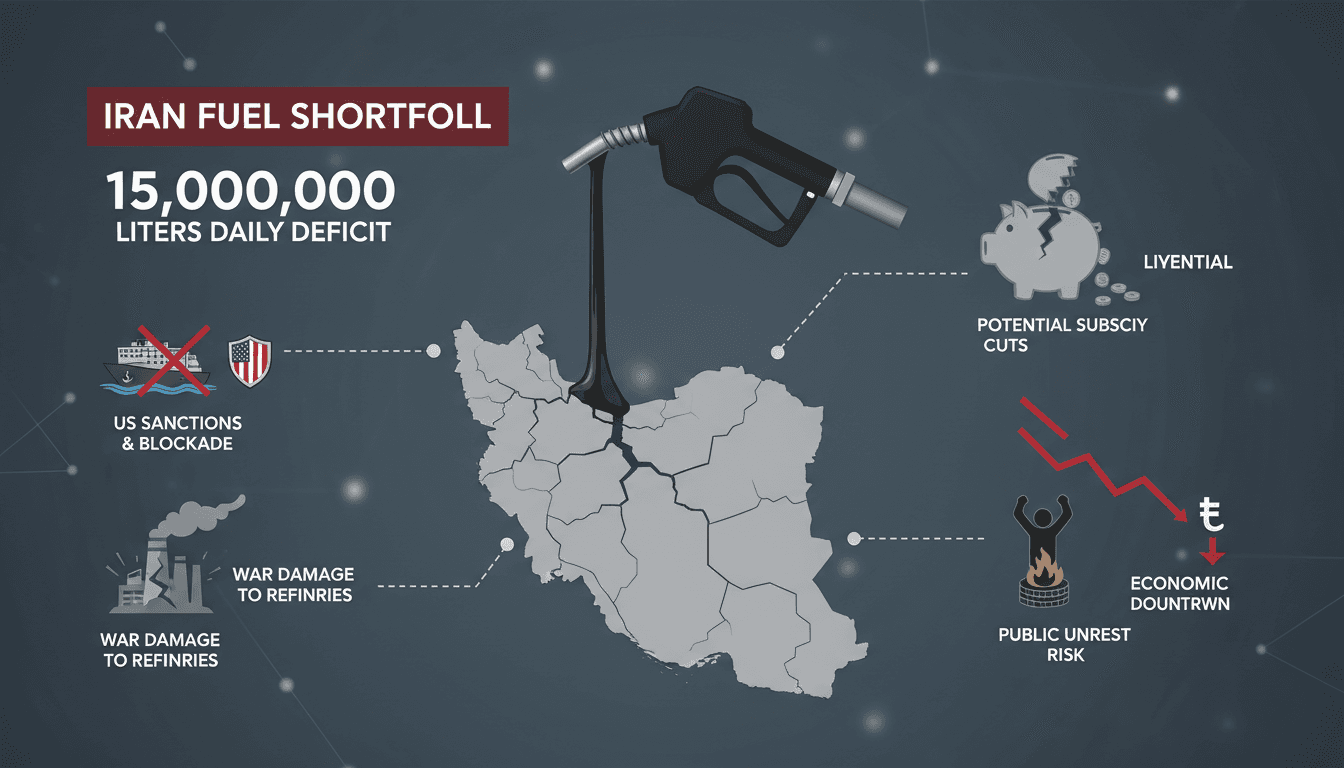
Here's what it means for you.
If you rely on global oil markets, the Iranian fuel crisis could signal volatility that affects prices and availability.
Why it matters
The ongoing fuel crisis in Iran could disrupt regional stability and impact global oil supply chains.
What happened (in 30 seconds)
- Fuel shortages: As of August 26, 2026, Iran faces a daily gasoline shortfall of 15 million liters against a demand of 135 million liters.
- Subsidy pressures: Iranian officials are considering reducing heavy fuel subsidies, which have historically kept gasoline prices among the lowest in the world.
- Protest risks: Past price hikes have led to deadly protests, raising concerns about potential unrest as economic discontent grows.
The context you actually need
- Sanctions and blockade: US sanctions and a maritime blockade since July 14 have severely restricted Iran's ability to import gasoline, compounding existing supply issues.
- War impact: The war that began on February 28, 2026, has damaged Iran's refining infrastructure, exacerbating fuel shortages.
- Economic strain: Record inflation and a depreciating rial have put additional pressure on the Iranian government, making subsidy maintenance increasingly unsustainable.
What's really happening
The fuel crisis in Iran is a complex interplay of geopolitical tensions, economic mismanagement, and infrastructural challenges. The Iranian government has long relied on heavy subsidies to keep gasoline prices low—between 15,000 and 50,000 rials per liter (approximately $0.0075 to $0.025)—to support its population of about 90 million. However, this system is now under severe strain due to a combination of factors.
The war that erupted on February 28, 2026, has inflicted significant damage on Iran's refining capacity, leading to a daily gasoline shortfall of 15 million liters against a total demand of 135 million liters. This shortfall is compounded by US sanctions that have restricted imports and a maritime blockade that began on July 14, further limiting the country's ability to meet its fuel needs. As a result, long queues have formed at gas stations in Tehran and other urban centers, with drivers waiting hours for subsidized gasoline.
In response to the crisis, Iranian officials, including President Masoud Pezeshkian, have begun to signal the need for subsidy reductions. However, the government is acutely aware of the risks involved; previous attempts to raise fuel prices have led to widespread protests, including deadly unrest in 2019 and demonstrations earlier in 2026. A pilot program to adjust fuel prices in Kerman province was halted within hours due to public backlash, highlighting the precariousness of the situation.
Despite the economic discontent, no widespread protests have materialized as of late August 2026. However, localized labor demonstrations have emerged, particularly among oil workers, pensioners, and teachers, indicating growing frustration with the economic situation. The Iranian government has responded by appealing for reduced consumption and reliance on strategic reserves, but these measures may not be sufficient to quell public unrest if the situation continues to deteriorate.
The Iranian authorities are caught in a difficult position: they must balance the need to maintain subsidies to support their population against the fiscal realities of a collapsing economy. The ongoing rial depreciation and rising inflation further complicate this equation, making it increasingly difficult for the government to sustain its subsidy program without risking social unrest.
Who feels it first (and how)
- Iranian citizens: Drivers and families relying on subsidized fuel are directly impacted by shortages and potential price hikes.
- Oil workers: Labor protests indicate that those employed in the oil sector are feeling the strain of economic pressures.
- Regional economies: Neighboring countries may experience indirect effects through shifts in Iranian expatriate communities and regional economic volatility.
What to watch next
- Subsidy decisions: Watch for any announcements regarding subsidy reductions or price hikes, as these could trigger public unrest.
- Protest activity: Monitor for signs of escalating protests or labor demonstrations, which could indicate growing discontent among the populace.
- Economic indicators: Keep an eye on inflation rates and the value of the rial, as these will provide insight into the overall economic health of Iran.
Iran is experiencing a significant fuel shortage due to sanctions and war damage.
The government will continue to face pressure to reduce subsidies, risking public unrest.
The extent to which protests will escalate or how the government will respond to growing economic discontent.
Frequently Asked Questions
- Why it matters?
- The ongoing fuel crisis in Iran could disrupt regional stability and impact global oil supply chains.
- What happened (in 30 seconds)?
- Fuel shortages: As of August 26, 2026, Iran faces a daily gasoline shortfall of 15 million liters against a demand of 135 million liters. Subsidy pressures: Iranian officials are considering reducing heavy fuel subsidies, which have historically kept gasoline prices among the lowest in the world. Protest risks: Past price hikes have led to deadly protests, raising concerns about potential unrest as economic discontent grows.
- What's really happening?
- The fuel crisis in Iran is a complex interplay of geopolitical tensions, economic mismanagement, and infrastructural challenges. The Iranian government has long relied on heavy subsidies to keep gasoline prices low—between 15,000 and 50,000 rials per liter (approximately $0.0075 to $0.025)—to support its population of about 90 million. However, this system is now under severe strain due to a combination of factors. The war that erupted on February 28, 2026, has inflicted significant damage on I
- Who feels it first (and how)?
- Iranian citizens: Drivers and families relying on subsidized fuel are directly impacted by shortages and potential price hikes. Oil workers: Labor protests indicate that those employed in the oil sector are feeling the strain of economic pressures. Regional economies: Neighboring countries may experience indirect effects through shifts in Iranian expatriate communities and regional economic volatility.
- What to watch next?
- Subsidy decisions: Watch for any announcements regarding subsidy reductions or price hikes, as these could trigger public unrest. Protest activity: Monitor for signs of escalating protests or labor demonstrations, which could indicate growing discontent among the populace. Economic indicators: Keep an eye on inflation rates and the value of the rial, as these will provide insight into the overall economic health of Iran.
Arabic-language coverage of political affairs and current events.
"Okaz political coverage typically follows mainstream Saudi framing on national and regional affairs."
— A47 Editor
أزمة الوقود تتفاقم.. هل يشعل رفع الدعم شرارة الاحتجاجات في إيران؟
The fuel crisis in Iran is worsening, with long queues forming at gas stations in Tehran as drivers wait for hours to obtain gasoline. This situation is exacerbated by tightening US sanctions and an ongoing economic war, leading officials to consider...
English-language reporting on Saudi politics, policy, and society.
"Saudi Gazette reflects mainstream Saudi institutional perspectives."
— A47 Editor
Iran’s gas lines are growing, but there’s no sign of its leaders bowing to US pressure
Iran is experiencing significant fuel shortages, with long lines forming at gas stations in Tehran as the United States intensifies its economic blockade and threatens further sanctions. Reports indicate that drivers are preemptively filling their ta...
Regional coverage and analysis focused on politics, diplomacy, and business across the Middle East.
"Al-Monitor is known for analytical reporting on Middle East politics and policy developments."
— A47 Editor
Iranians queue for petrol after US announces new sanctions
Long queues formed at petrol stations in Tehran as Iranians rushed to secure fuel following the announcement of new U.S. sanctions aimed at pressuring Iran. These sanctions come amid a military stalemate and stalled peace talks, exacerbating the alre...