
Syria Conducts First Visa Card Payment After U.S. Delisting from Terrorism Sponsors
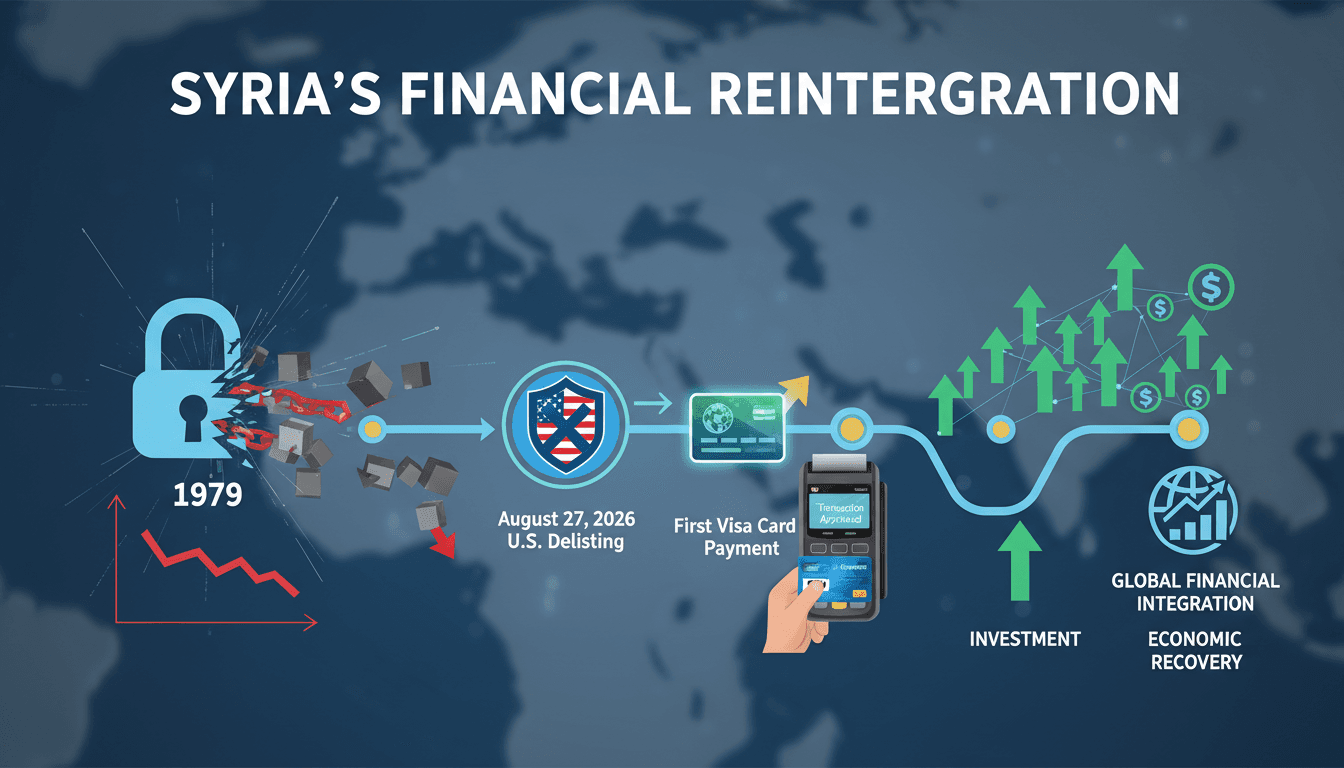
Here's what it means for you.
If you have business or family ties to Syria, expect smoother financial transactions and potential investment opportunities.
Why it matters
This marks a significant step toward Syria's reintegration into the global economy, impacting regional financial dynamics.
What happened (in 30 seconds)
- On August 26, 2026, the U.S. removed Syria from its list of state sponsors of terrorism.
- The following day, President Ahmed al-Sharaa made the first Visa card payment in Syria in over 15 years.
- This transaction symbolizes Syria's renewed access to international financial networks and potential economic recovery.
The context you actually need
- Syria has faced international sanctions since 1979, severely limiting its financial interactions and economic growth.
- The Assad regime was overthrown in December 2024, leading to a shift in governance and financial policy under President al-Sharaa.
- In May 2026, the Central Bank of Syria authorized dealings with global payment networks, paving the way for this historic transaction.
What's really happening
The recent Visa card payment by President Ahmed al-Sharaa in Old Damascus is more than just a symbolic gesture; it represents a pivotal moment in Syria's financial landscape. Following the U.S. delisting of Syria as a state sponsor of terrorism, the country is now positioned to re-enter the global financial system after decades of isolation. This delisting, effective August 26, 2026, followed a 45-day review period and is a direct result of the political changes initiated by the fall of the Assad regime in late 2024.
The Central Bank of Syria's decision in May 2026 to authorize transactions with international payment networks was a crucial step toward modernizing the country's financial infrastructure. The transaction itself, conducted via a point-of-sale terminal connected to the Visa network through Paymera, highlights the technological advancements being made in the region. This infrastructure activation is expected to facilitate not only consumer transactions but also international trade and investment.
The implications of this shift are profound. For years, Syrian citizens and businesses have been unable to engage in standard financial practices, limiting their ability to participate in the global economy. The reintroduction of Visa and similar payment systems will likely lead to increased consumer confidence and spending, as well as attract foreign investment. Local banks, such as Fransabank, are already preparing to partner with international entities to enhance their service offerings.
Moreover, the symbolic nature of this payment has resonated widely, with officials emphasizing a commitment to building a modern financial system. The event has been positively received in international media, suggesting a favorable market sentiment toward Syria's potential economic recovery. As the country begins to rebuild, the focus will be on establishing a stable financial environment that can support growth and development.
In summary, this transaction is not just a financial milestone; it is a signal of Syria's renewed engagement with the global economy, which could have far-reaching effects on regional stability and economic opportunities.
Who feels it first (and how)
- Syrian businesses: They will benefit from easier access to international payment systems, enhancing trade capabilities.
- Consumers: Individuals will experience improved financial services and the ability to make international purchases.
- Investors: Foreign investors may find new opportunities in a re-emerging market, potentially leading to increased capital inflows.
- Residents in Dubai: Those with ties to Syria may see improved remittance options and financial transactions.
What to watch next
- Increased financial transactions: Monitor the volume of international payments processed in Syria as new systems are implemented. This will indicate the pace of economic recovery.
- Foreign investment announcements: Look for news on foreign companies entering the Syrian market, which could signal confidence in the country's stability.
- Regulatory developments: Keep an eye on any new financial regulations or partnerships formed between Syrian banks and international entities, as these will shape the future financial landscape.
The U.S. has officially removed Syria from its list of state sponsors of terrorism.
Increased international financial transactions and potential foreign investments in Syria.
The long-term stability of the new financial systems and their ability to attract sustained investment.
Frequently Asked Questions
- Why it matters?
- This marks a significant step toward Syria's reintegration into the global economy, impacting regional financial dynamics.
- What happened (in 30 seconds)?
- On August 26, 2026, the U.S. removed Syria from its list of state sponsors of terrorism. The following day, President Ahmed al-Sharaa made the first Visa card payment in Syria in over 15 years. This transaction symbolizes Syria's renewed access to international financial networks and potential economic recovery.
- What's really happening?
- The recent Visa card payment by President Ahmed al-Sharaa in Old Damascus is more than just a symbolic gesture; it represents a pivotal moment in Syria's financial landscape. Following the U.S. delisting of Syria as a state sponsor of terrorism, the country is now positioned to re-enter the global financial system after decades of isolation. This delisting, effective August 26, 2026, followed a 45-day review period and is a direct result of the political changes initiated by the fall of the Assa
- Who feels it first (and how)?
- Syrian businesses: They will benefit from easier access to international payment systems, enhancing trade capabilities. Consumers: Individuals will experience improved financial services and the ability to make international purchases. Investors: Foreign investors may find new opportunities in a re-emerging market, potentially leading to increased capital inflows. Residents in Dubai: Those with ties to Syria may see improved remittance options and financial transactions.
- What to watch next?
- Increased financial transactions: Monitor the volume of international payments processed in Syria as new systems are implemented. This will indicate the pace of economic recovery. Foreign investment announcements: Look for news on foreign companies entering the Syrian market, which could signal confidence in the country's stability. Regulatory developments: Keep an eye on any new financial regulations or partnerships formed between Syrian banks and international entities, as these will shape
Pan-Arab news coverage spanning politics, business, sports, and regional affairs.
"Asharq Al-Awsat reflects a broad Arab editorial perspective with strong attention to regional geopolitics."
— A47 Editor
الشرع يجرب أول تحويل عبر «فيزا» لدفع ثمن قهوته في دمشق القديمة
The company Bimera announced its connection to the global Visa network, marking a significant advancement in Syria's national electronic payment infrastructure. This development was highlighted during a trial transaction for purchasing coffee in the ...
Regional and international reporting focused on Middle Eastern politics, diplomacy, and economics.
"Asharq Al-Awsat is a Saudi-owned international newspaper reflecting mainstream Gulf political perspectives."
— A47 Editor
Visa, Mastercard Launch International Card Payments in Syria after US Lifts Terrorism Designation
Visa and Mastercard have launched international card payment services in Syria following the United States' recent decision to remove the country from its list of state sponsors of terrorism, a designation that had been in place for 47 years. This po...
Regional coverage and analysis focused on politics, diplomacy, and business across the Middle East.
"Al-Monitor is known for analytical reporting on Middle East politics and policy developments."
— A47 Editor
Sharaa taps Visa as Syria reconnects to global finance: What to know
Visa and Mastercard have announced that their networks can now facilitate international card payments in Syria, marking a significant step in the country's reintegration into the global financial system after years of economic isolation.